Introduction to the English Language
Origins of English
A Family of Languages
Languages, like people, have families. Many languages spoken across Europe and Asia today are distant cousins, all descended from a single ancestor spoken thousands of years ago. Linguists call this mother tongue Proto-Indo-European, or PIE. We have no written records of PIE, but we can reconstruct it by comparing its daughter languages, from Hindi and Persian to Russian and Spanish.
English belongs to the Germanic branch of this massive family tree. This branch began to split from the others as tribes migrated, developing their own distinct sounds and grammar. Think of it like a game of telephone played over centuries. The original message of PIE was passed down and changed a little by each generation, eventually becoming unrecognizable from one branch to another.
From Germany to Britain
Around the 5th century AD, after the Roman Empire withdrew from Britain, new groups arrived from mainland Europe. These were Germanic tribes, primarily the Angles, Saxons, and Jutes, who came from areas in modern-day Germany and Denmark. They crossed the North Sea and settled in the land that would eventually be named after them: Angle-land, or England.
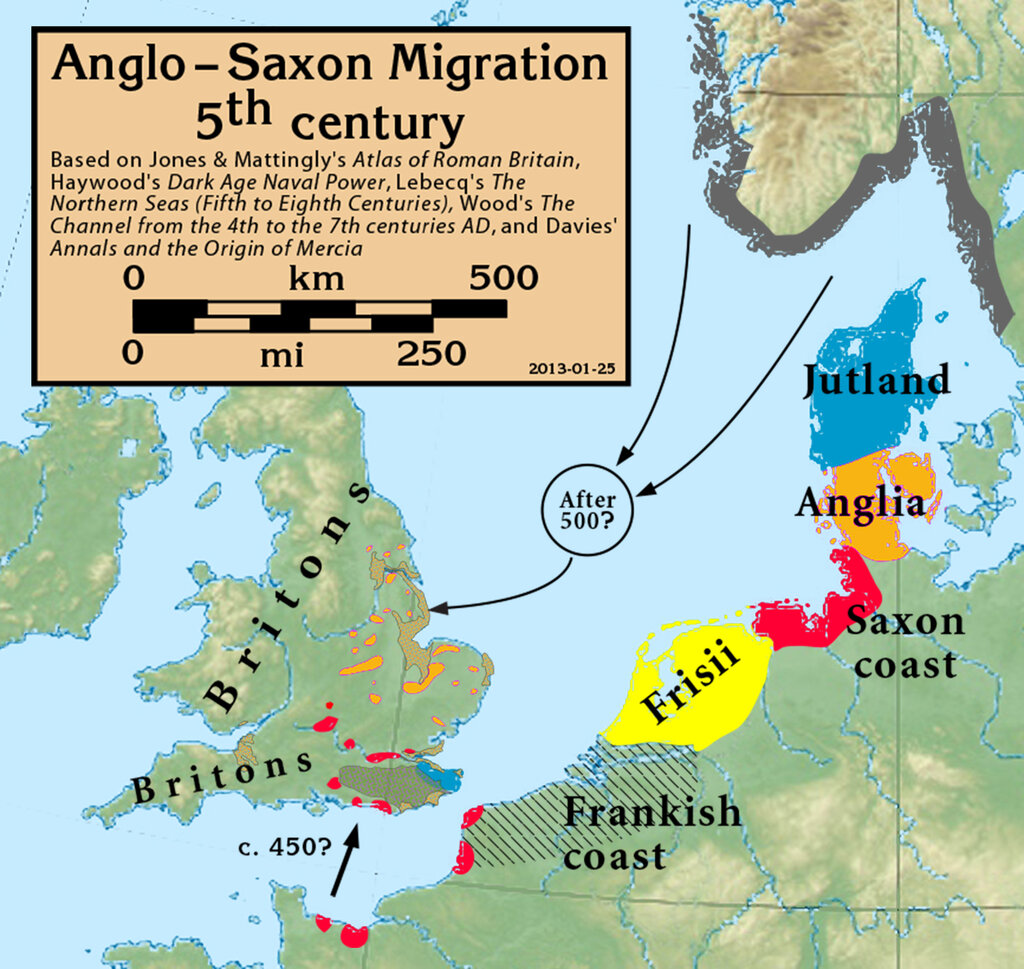
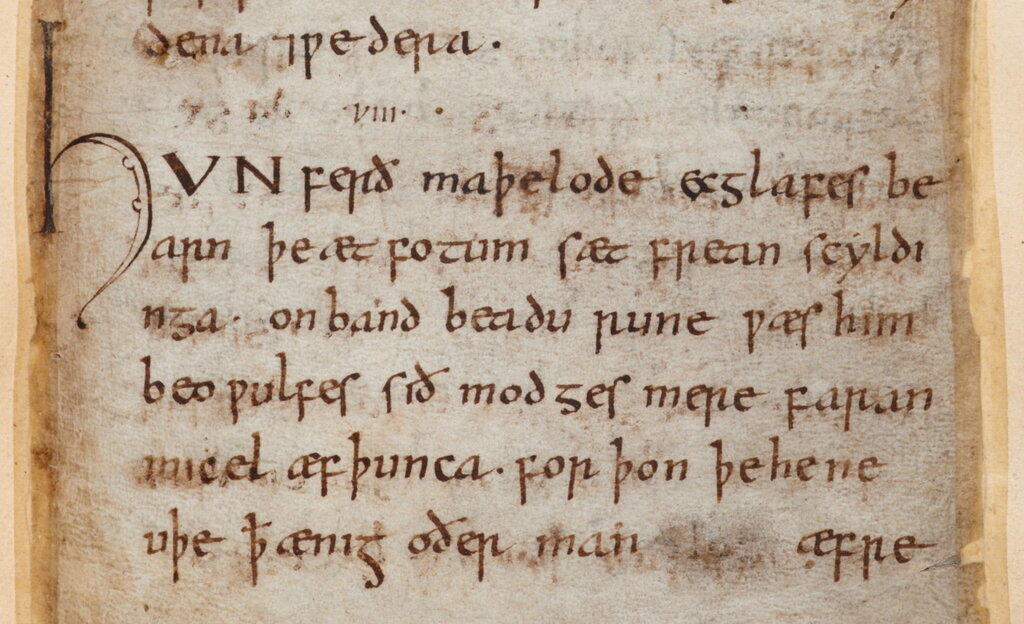
The dialects they spoke were closely related, and over time they merged to form a new language: Old English. This was the language of the epic poem Beowulf and the everyday speech of the Anglo-Saxons for over 600 years. It would sound almost completely foreign to a modern English speaker, full of guttural sounds and complex grammar that has since faded away.
Waves of Change
Old English didn't develop in a vacuum. It was shaped by contact with other languages. The first major influence was Latin. Romans had ruled Britain for centuries, but Latin's biggest impact came later with the arrival of Christian missionaries in 597 AD. The church introduced a host of new words for religious concepts and learning, such as priest, altar, and school.
Latin has been one of the most enduring influences on English, primarily through religious, legal and scientific terminology.
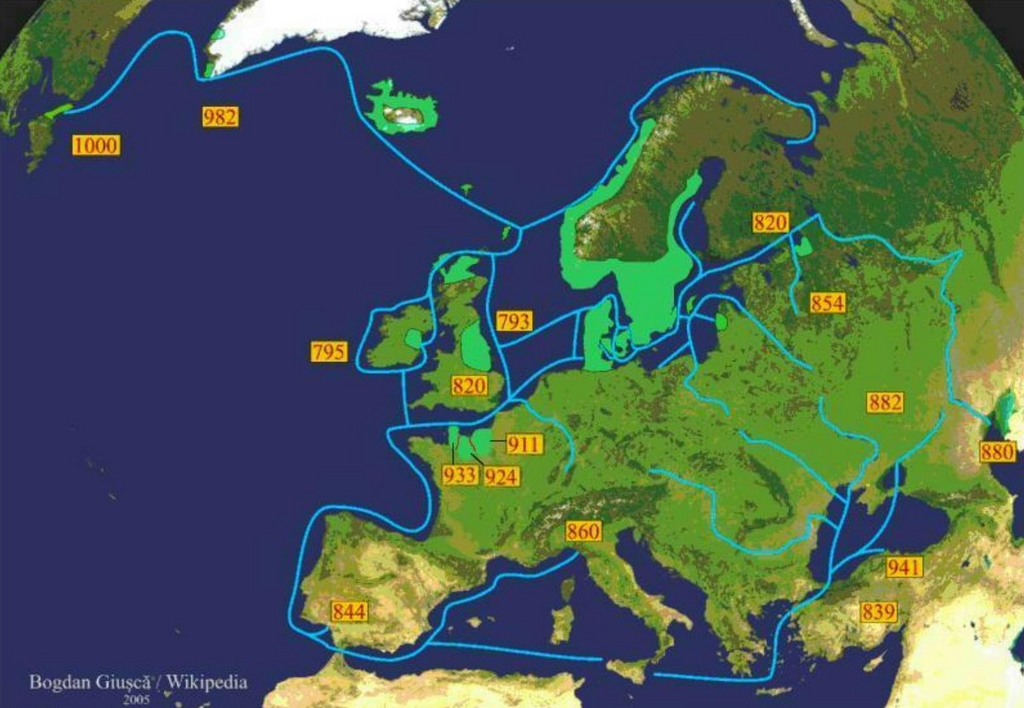
Next came the Vikings. Starting in the late 8th century, Norsemen from Scandinavia began raiding and then settling in large parts of England. They spoke Old Norse, another Germanic language. Because Old Norse and Old English were related, they could understand each other, and their languages began to mix.
The Norse influence was profound. They gave English many basic, everyday words like sky, leg, skin, and window. They even gave us the pronouns they, them, and their, which replaced their Old English equivalents. This contact simplified English grammar, stripping away many of the complex endings for nouns and verbs.
The final, transformative event for Old English was the Norman Conquest in 1066. William the Conqueror, from Normandy in France, invaded and seized the English throne. The new ruling class spoke Norman French, a dialect of Old French. For the next 300 years, French was the language of the court, law, and government, while English was the language of the common people.
This created a linguistic class divide. The people who farmed the animals used the Old English words: swīn (swine), cū (cow), and dēor (deer). But the nobles who ate the meat used the French words: porc (pork), bœuf (beef), and venaison (venison).
Thousands of French words flooded into English, especially related to administration (government, parliament, justice), the military (army, soldier, battle), and high culture (art, music, fashion). This massive influx of vocabulary fundamentally changed the character of the language. While its grammar and core words remained Germanic, its vocabulary became a rich mix of Germanic, Latin, and French.
Time to see what you've learned about the early history of English.
English belongs to which branch of the Proto-Indo-European language family?
The language that would become Old English was brought to Britain in the 5th century AD by which groups?
This blend of influences set the stage for the next phase of the language's development. Old English, reshaped by Latin, Norse, and French, was ready to become Middle English.