Introduction to the Chinese Language
Pinyin and Tones
The Sound of Mandarin
Let's start with a foundational tool for learning Mandarin: Pinyin. Instead of learning to read characters right away, we begin with a system that uses the Roman alphabet to represent Mandarin sounds. This bridge allows you to start speaking and understanding the language from day one.
Pinyin
noun
The official system for transcribing Mandarin Chinese sounds into the Roman alphabet. It was developed in the 1950s and is used for teaching Chinese and typing characters into computers and phones.
Pinyin is straightforward, but it has one feature that's crucial for English speakers to master: tones. Mandarin is a tonal language. This means the pitch you use to say a syllable changes its meaning entirely. The word ma can mean 'mother', 'hemp', 'horse', or 'to scold', depending on how you say it.
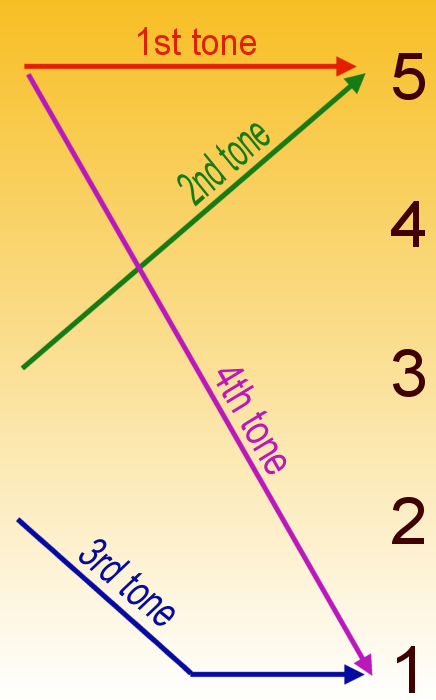
In Mandarin Chinese, there are four basic tones and a fifth neutral tone.
Getting the tones right is non-negotiable for being understood. There are four main tones, plus a fifth neutral tone which is unstressed and short. Let's look at the four main ones.
Here’s a breakdown of what each tone sounds like:
- First Tone (mā): A high, flat pitch. Imagine a doctor asking you to say "Ahhh." It's sustained and level.
- Second Tone (má): A rising pitch. It sounds like you're asking a question, like "Huh?"
- Third Tone (mǎ): A dipping pitch. It falls and then rises. It's the most complex tone for beginners.
- Fourth Tone (mà): A sharp, falling pitch. Think of a short, firm command, like "Stop!"
Tones in Practice
Hearing tones in isolation is one thing, but using them in conversation is another. Words in Mandarin are often composed of two syllables, so it's essential to practice tone pairs. The way you transition from one tone to the next is key to sounding natural.
For example, the word for 'airplane' is 飞机 (fēijī). It combines a first tone with another first tone. The word for 'hello' is 你好 (nǐ hǎo), a pair of third tones.
Practicing these pairs helps build muscle memory for your vocal cords. You start to feel the rhythm and melody of the language. A common mistake is to pronounce each tone separately, with a pause in between. Instead, they should flow together smoothly, like notes in a song.
Another frequent error is not hitting the full range of the pitch. The first tone needs to be high, and the fourth tone needs to fall decisively. Don't be shy! Exaggerating the tones at first can help you lock them in. Record yourself speaking and compare it to a native speaker. This simple feedback loop is one of the most effective ways to improve.
Key Sounds
To get started, here are a few simple words that show how tones work. Notice how the Pinyin spelling stays the same, but the tone mark and meaning change dramatically.
| Pinyin | Tone | Character | Meaning |
|---|---|---|---|
tāng | 1st | 汤 | Soup |
táng | 2nd | 糖 | Sugar |
tǎng | 3rd | 躺 | To lie down |
tàng | 4th | 烫 | Hot (to the touch) |
And here's another classic example:
| Pinyin | Tone | Character | Meaning |
|---|---|---|---|
mā | 1st | 妈 | Mom |
má | 2nd | 麻 | Hemp |
mǎ | 3rd | 马 | Horse |
mà | 4th | 骂 | To scold |
Mastering Pinyin and tones is your first major step. It takes time and patient practice, but it's the foundation upon which all your future learning will be built. Get this right, and everything else becomes easier.
Ready to test your knowledge?
What is the primary purpose of the Pinyin system for learning Mandarin?
The word "mǎ" is an example of which Mandarin tone?
Keep practicing these sounds. Soon, the melody of Mandarin will start to feel natural.