Introduction to the Bhagavad Gita
Historical Context
An Epic Within an Epic
The Bhagavad Gita, one of the most revered Hindu scriptures, wasn't written as a standalone book. It’s a 700-verse dialogue tucked inside a much larger story: the Mahabharata, one of the longest epic poems ever written. Composed between the 5th and 2nd centuries BCE, the Gita captures a pivotal moment in the religious and philosophical landscape of ancient India.
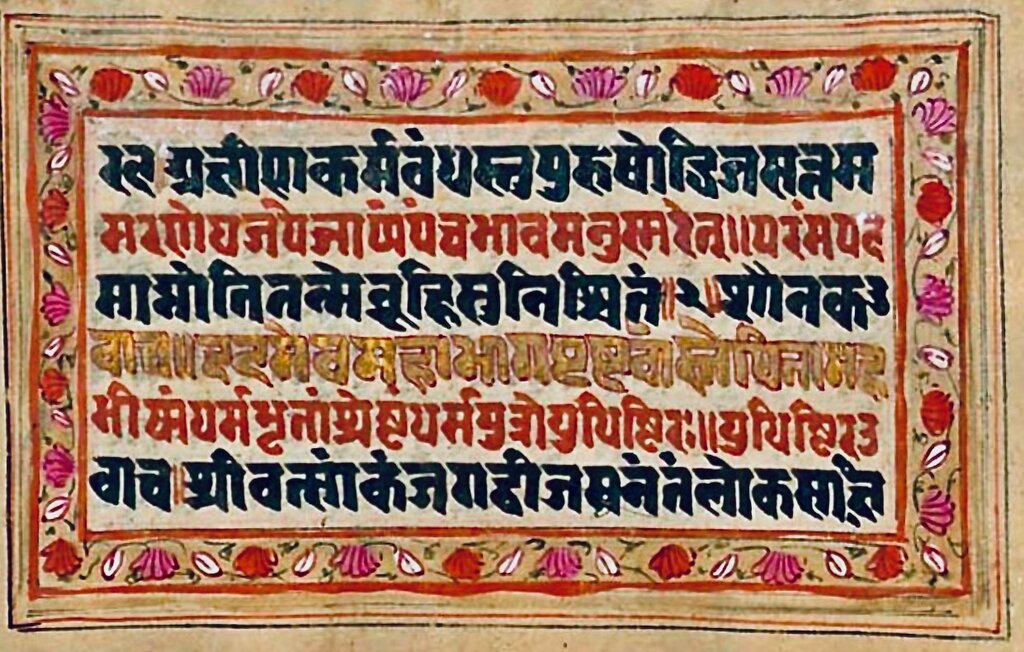
To understand the Gita, we have to understand the world that created it. This was a time of great change. The old ways of thinking were being challenged, and new ideas about the nature of reality, the self, and one's purpose in the world were emerging. The Mahabharata itself is a sprawling tale of a dynastic struggle, a war between two sets of cousins, the Pandavas and the Kauravas. The Gita takes place on the battlefield, just as the fighting is about to begin.
From Ritual to Reflection
The period leading up to the Gita's composition saw a major shift in spiritual thought. For centuries, the dominant tradition was that of the Vedas, ancient texts focused on elaborate rituals, hymns, and sacrifices meant to maintain cosmic order and appease the gods. This was a very external, action-oriented form of religion.
Vedic practice centered on performing the correct rituals to achieve specific outcomes, from good harvests to victory in battle.
But a new movement began to grow, one focused on internal reflection. Thinkers and sages started asking deeper questions: What is the ultimate reality? What is the nature of the self, or soul? How are they connected? This new wave of philosophical inquiry was captured in texts called the Upanishads.
The Upanishads turned the focus inward. Instead of complex external rites, they emphasized meditation, self-discipline, and the pursuit of spiritual knowledge. They introduced core concepts like Brahman (the ultimate, unchanging reality) and Atman (the individual self or soul), and proposed that the two were ultimately one and the same.
The Bhagavad Gita is a brilliant synthesis of these two major traditions. It doesn’t reject the Vedic emphasis on action and duty, nor does it dismiss the Upanishadic quest for wisdom. Instead, it weaves them together. It takes place on a battlefield, the ultimate arena of action, but its core message is a deep philosophical and spiritual discourse.
A World of Kingdoms
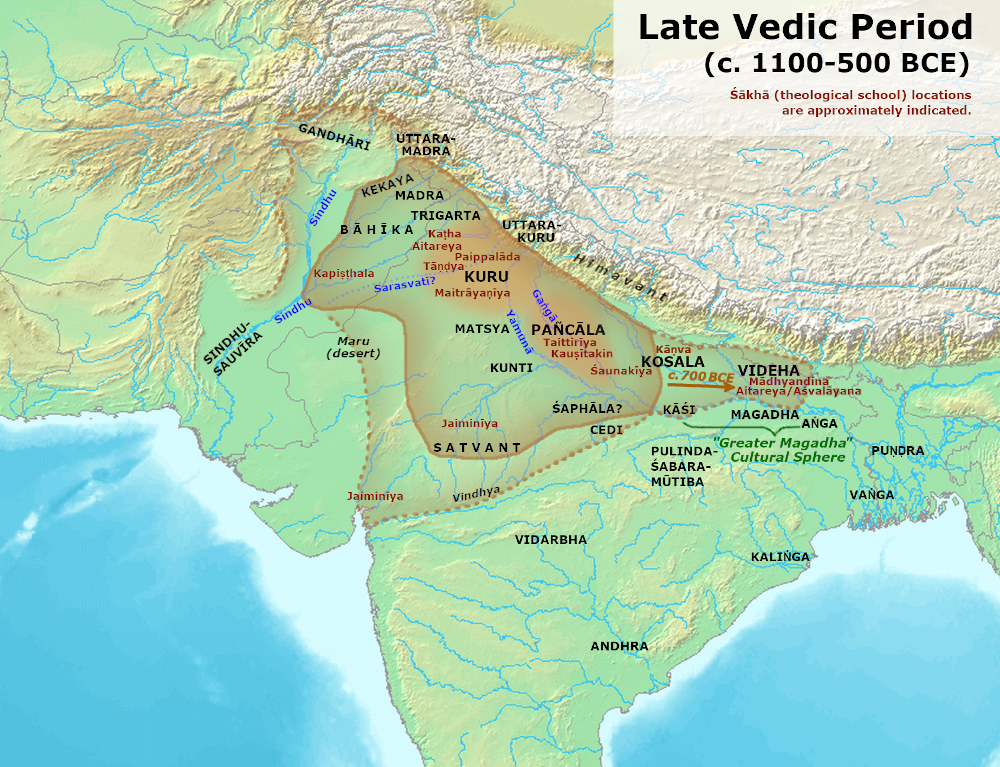
The socio-political setting of the Mahabharata is the late Vedic period, a time of small kingdoms and tribal republics (jana-padas) across the Gangetic plain of northern India. The epic's central conflict is the war for control of the Kuru kingdom, with its capital at Hastinapura.
This was a society structured around duty, or dharma. Every person had a specific role and set of responsibilities based on their social standing, and fulfilling this duty was considered paramount. The crisis that sparks the Gita's conversation is precisely a conflict of dharma. The hero, Arjuna, is a warrior, and his duty is to fight. But he looks across the battlefield and sees his own relatives—cousins, uncles, and teachers. His personal feelings clash with his societal duty, leading him to a moment of profound despair.
It is this very human crisis—a conflict between duty, love, and morality—that sets the stage for the divine wisdom of the Bhagavad Gita. The historical and cultural tensions of the era are mirrored in Arjuna's personal struggle on the battlefield.
The Bhagavad Gita is a standalone holy book written independently of other Hindu epics.
The central conflict that triggers the dialogue in the Bhagavad Gita for the hero, Arjuna, is a clash between his personal feelings and his societal duty, known as...
With this context in mind, we can better appreciate the Gita's timeless teachings.