Introduction to Testing
Introduction to Testing
What is Testing?
At its core, testing is the process of evaluating something to see if it works as expected. Think of a chef tasting a sauce before sending it out to the dining room. They're checking for flavor, consistency, and temperature to ensure it meets their standards. In the world of products and systems, testing does the same thing: it verifies quality, finds problems, and confirms that everything meets the requirements.
The main goal isn't just to find flaws, though that's a big part of it. The ultimate objective of testing is to provide confidence. When a product is thoroughly tested, its creators and users can be confident that it's reliable, functional, and safe.
Testing is an investigation performed to provide stakeholders with information about the quality of the product or service under test.
Why Testing Matters
Testing is a fundamental part of quality assurance. Without it, releasing a product is like navigating a ship in the dark—you might reach your destination, or you might hit an iceberg. It has serious economic and safety implications that can't be ignored.
From a financial perspective, finding and fixing a problem early is always cheaper. Imagine building a house. Fixing a crack in the foundation when it's first poured costs far less than fixing it after the entire house has been built on top of it. The same is true for software, cars, or any complex product. A bug found in the design phase might take an hour to fix, but that same bug found after launch could cost thousands or even millions of dollars in recalls, repairs, and lost customer trust.
Testing is a critical phase in product development.
Safety is another critical reason for testing. In industries like aerospace, automotive, and medicine, a system failure isn't just an inconvenience; it can be catastrophic. Rigorous testing ensures that a car's brakes will work in an emergency, a medical device will deliver the correct dosage, and an airplane's software won't fail mid-flight. Effective testing protects lives and prevents disasters.
The General Testing Process
While the specifics vary by industry, most testing follows a structured process to ensure nothing is missed. It's a cycle that moves from planning to execution and analysis.
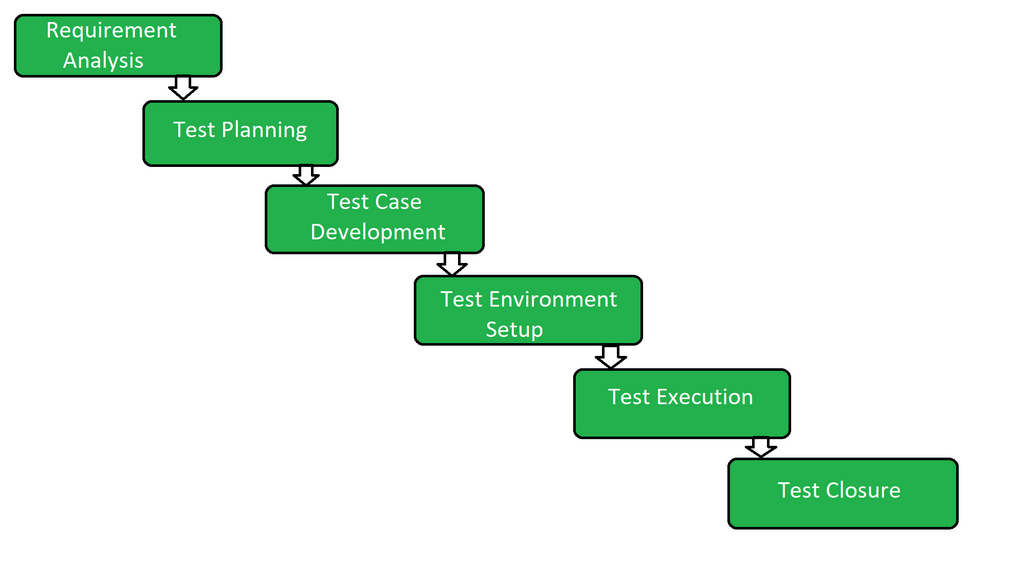
This process generally includes these key stages:
- Planning and Analysis: Before any test is run, the team must understand what needs to be tested. This involves reviewing requirements, defining goals, and creating a strategy.
- Test Design: Here, testers create the specific test cases. Each test case is like a recipe, outlining the steps to take, the data to use, and the expected outcome.
- Environment Setup: Testing requires a specific environment that mimics how the product will be used in the real world. This stage involves preparing all the necessary hardware, software, and data.
- Test Execution: This is the active phase where the planned tests are run. Testers follow the test cases, execute the steps, and record the actual outcomes.
- Reporting and Evaluation: After execution, the results are analyzed. Did the product pass or fail? Any defects are documented and reported to the development team for fixing.
- Test Closure: Once testing is complete, the team summarizes the process, archives the test materials, and formally closes the cycle.
An Overview of Methodologies
There isn't a one-size-fits-all approach to testing. Different situations call for different methods. These methodologies can be grouped into broad categories based on what they aim to achieve and how they are performed.
| Category | Description | Example |
|---|---|---|
| Functional Testing | Verifies that the product does what it's supposed to do. | Testing if the 'Add to Cart' button on a website actually adds the item to the cart. |
| Non-Functional Testing | Evaluates aspects like performance, security, and usability. | Checking how quickly a webpage loads or if it's vulnerable to cyberattacks. |
| Manual Testing | A human tester interacts with the product directly to find defects. | A person clicking through an app to check its features. |
| Automated Testing | Uses software scripts to execute tests and compare results. | A program that automatically logs into a website and verifies the homepage content. |
The choice of methodology depends on factors like the project's budget, timeline, complexity, and risks. Most projects use a combination of these approaches to achieve comprehensive quality assurance.
Beyond finding flaws, what is the ultimate objective of the testing process?
According to the principles of testing, when is it most cost-effective to find and fix a defect?
Testing isn't just an afterthought; it's a planned, systematic process essential for building confidence, saving money, and ensuring safety in the products we use every day.