Introduction to Tennis
Tennis Basics
The Court
A tennis court is a rectangle, split perfectly in half by a net. Each player or team defends one side. The main goal is to hit the ball over the net so that your opponent can't return it legally. This usually means making it bounce twice on their side before they can hit it.
The lines on the court define the playing area. The very back line is the baseline. The outer side lines are for doubles matches, while the inner ones are for singles. A ball that lands outside these lines is considered "out."
To start a point, a player serves the ball into the diagonal service box on the other side. This is the smaller box closest to the net. If the serve lands outside that box, it's a fault.
The Gear
You don't need much to play tennis, but the right equipment is key. The two essentials are a racket and tennis balls.
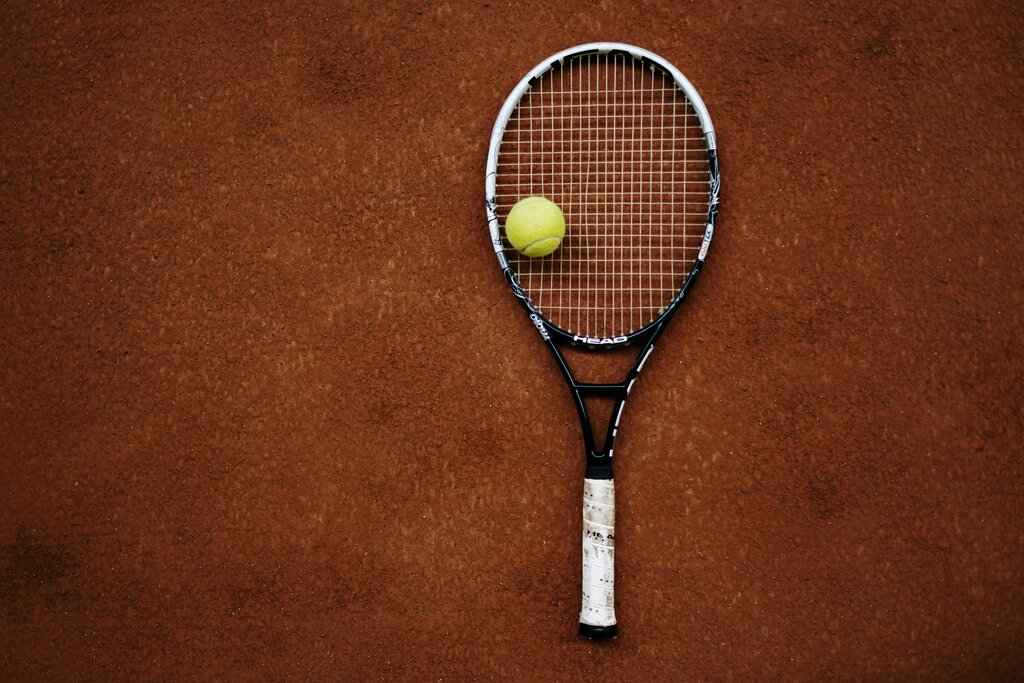
Tennis rackets come in various weights, sizes, and string tensions, designed for different skill levels and playing styles. For beginners, a lighter racket with a larger head size is often recommended because it's more forgiving. The strings do the work of launching the ball, and their tension can be adjusted for more power or control.
Tennis balls are pressurized rubber spheres covered in felt. The fuzzy exterior helps control the ball's speed and bounce. They're almost always a bright yellow-green color, which makes them highly visible against most court surfaces.
Basic Rules of Play
Before you can rally, you need to know how a point begins and what keeps it going. Every point starts with a serve.
The server stands behind the baseline and must hit the ball into the service box diagonally opposite them. They get two chances to make a successful serve. Failing on both attempts results in a 'double fault,' and they lose the point.
Once the serve is successfully returned, the players hit the ball back and forth over the net. This is called a rally. A rally continues until one player fails to return the ball legally.
A shot is illegal if:
- The ball is hit into the net.
- The ball lands outside the designated court boundaries (the singles or doubles lines).
- The ball bounces more than once on a player's side before they hit it.
- A player touches the net or the opponent's side of the court during the point.
By adhering to these etiquette guidelines, players not only demonstrate respect for their opponents but also for the game of tennis itself.
Beyond the formal rules, tennis has a strong culture of sportsmanship. Players typically wait for their opponent to be ready before serving and will call out the score before starting a point to avoid confusion. It's all part of the game's tradition of respect.
Ready to check your understanding?
What is the name of the very back line on a tennis court from which players often hit groundstrokes?
To start a point, a player serves the ball. Where must the serve land for it to be considered legal?
With these fundamentals in mind, you have the building blocks to understand and enjoy the game of tennis.