Introduction to Tecvid
Introduction to Tecvid
The Art of Recitation
When you open the Quran, you're not just reading words; you're engaging with a divine message that has been preserved for over 1400 years. The way it's recited is just as important as the words themselves. This is where Tecvid, or Tajweed, comes in.
Tajweed
noun
The set of linguistic and phonetic rules for the correct pronunciation of the words of the Quran. The Arabic root of the word means 'to make well,' 'to improve,' or 'to make beautiful.'
Think of Tajweed as the musical notation for the Quran. Just as a musician reads notes to play a melody exactly as the composer intended, a reciter uses Tajweed to pronounce the Quran exactly as it was revealed to the Prophet Muhammad. It's the science of articulating each letter correctly, from its specific point of origin in the mouth or throat, and giving it its rightful qualities.
Why is this so important? In Arabic, a slight change in pronunciation can completely alter the meaning of a word. Preserving the sound preserves the message.
| Arabic Word | Correct Pronunciation | Meaning | Incorrect Pronunciation | Meaning |
|---|---|---|---|---|
| قَلْب (Qalb) | With a heavy 'Q' sound | Heart | كَلْب (Kalb) - with a light 'K' sound | Dog |
| عَلِيم ('Alīm) | With a deep 'A' sound | All-Knowing | أَلِيم ('Alīm) - with a light 'A' sound | Painful |
A Tradition of Precision
The rules of Tajweed were not invented later on. They are based on the recitation of the Prophet Muhammad himself. As Islam spread beyond the Arabian Peninsula, many new Muslims were not native Arabic speakers. Scholars worried that the precise pronunciation of the Quran could be lost.
To prevent this, they began to formally document the rules of recitation, carefully describing how each sound was made. This oral tradition, passed down from teacher to student in an unbroken chain (called sanad), was codified into the science of Tajweed we study today. It ensures that a Muslim in Indonesia and a Muslim in Morocco can recite the same verse and have it sound identical, preserving the Quran's original form.
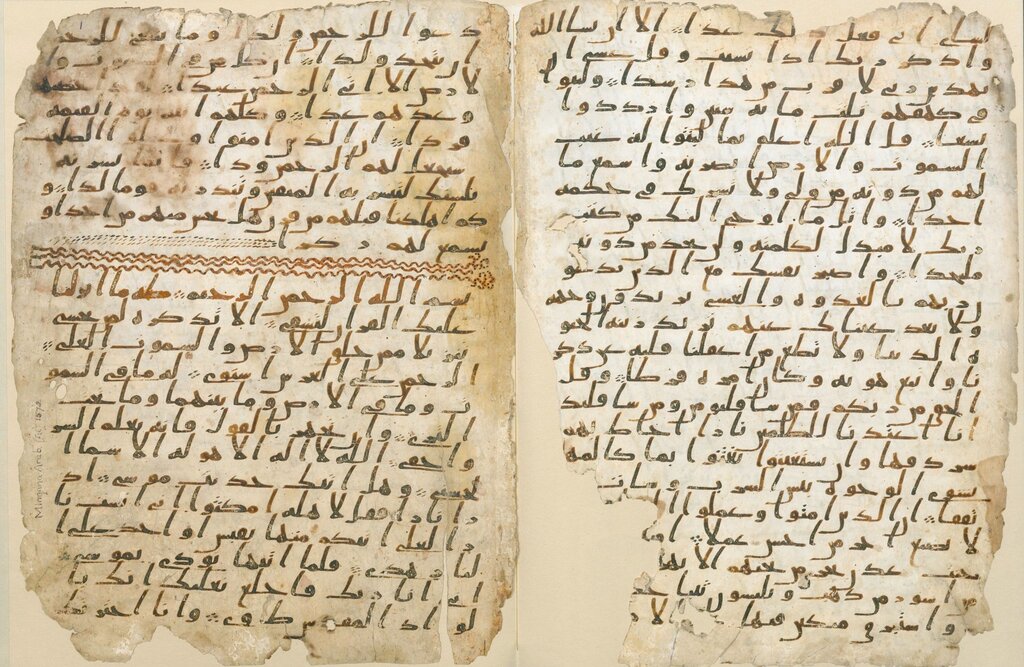
Practice each verse with a focus on correct pronunciation, elongation, and rhythm, following Tajweed guidelines to refine your recitation skills.
Learning Tajweed connects you to this chain of preservation. It’s a way of honoring the sacred text by taking the time to learn how to articulate its sounds with beauty and precision. It’s less about just reading and more about experiencing the text as it was meant to be heard.
Ready to check your understanding?
What is the primary purpose of Tajweed?
The text compares the rules of Tajweed to:
Mastering Tajweed is a journey. It begins with understanding its purpose and history. In the next sections, we will start to explore the specific rules that bring the words of the Quran to life.