Introduction to Tarot
Introduction to Tarot
A Mirror for Your Journey
At its heart, Tarot is a deck of 78 cards used as a tool for self-reflection and gaining perspective. Think of it less like a crystal ball predicting a fixed future and more like a mirror reflecting the energies, patterns, and possibilities that surround you right now. The cards don't dictate your fate; they offer a language of symbols and archetypes to help you understand your own story.
Each card is a chapter, and a reading helps you see how these chapters connect to tell the story of your life.
People use Tarot for many reasons. Some seek clarity on a specific question, like a career change or a relationship dilemma. This is often called divination, where the cards provide insight into a situation's potential outcome. Others use the cards for personal growth, drawing a card daily to meditate on its theme or explore their inner world. It's a versatile practice that adapts to your needs.
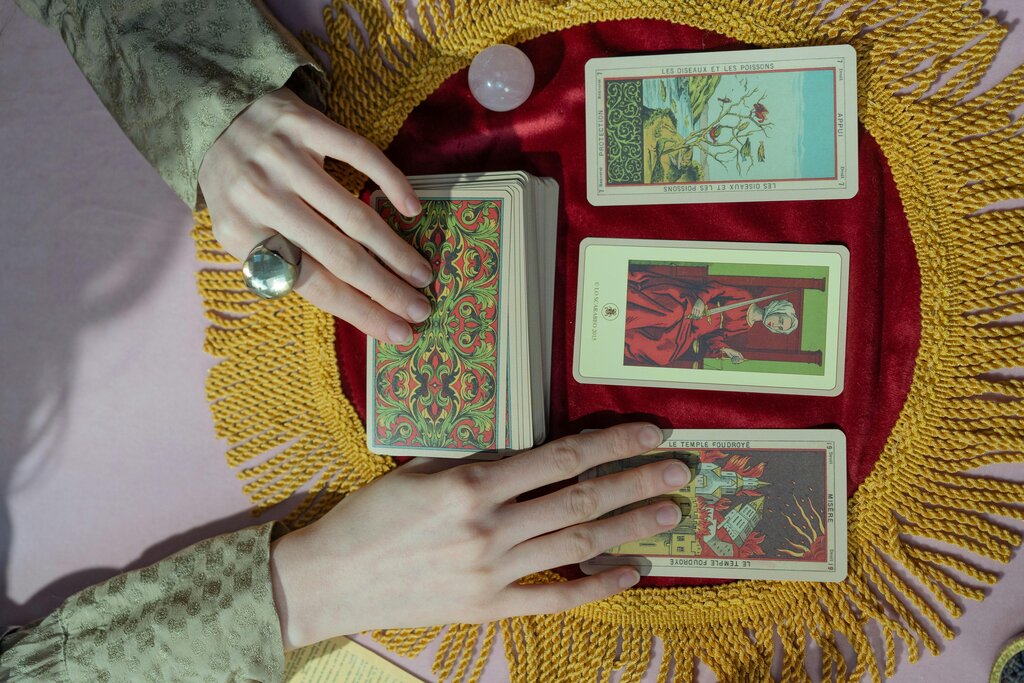
The Deck's Two Halves
A Tarot deck is split into two distinct parts: the Major Arcana and the Minor Arcana.
Arcana
noun
From the Latin word arcanum, meaning "secret" or "mystery."
The Major Arcana consists of 22 cards that represent the big, universal themes of life. These are the major milestones and spiritual lessons we all encounter on our journey, like The Fool (new beginnings), The Lovers (choices and relationships), and Death (endings and transformation). When a Major Arcana card appears in a reading, it signals a significant life event or a powerful lesson at play.
The Major Arcana represent the important aspects of your life.
The Minor Arcana, on the other hand, is made up of 56 cards that deal with the details of daily life. They reflect the practical, day-to-day situations, feelings, and challenges we face. While the Major Arcana paints the big picture, the Minor Arcana fills in the details.
Suits and Court Cards
The Minor Arcana is further divided into four suits, much like a standard deck of playing cards. Each suit corresponds to a different area of human experience.
| Suit | Element | Represents |
|---|---|---|
| Wands | Fire | Passion, creativity, energy, willpower |
| Cups | Water | Emotions, relationships, intuition |
| Swords | Air | Thoughts, challenges, communication |
| Pentacles | Earth | The material world, finances, work, health |
Within each suit, there are ten numbered cards (Ace through 10) and four Court Cards. The numbered cards show the progression of the suit's energy, from the initial spark of the Ace to the culmination of the 10.
The Court Cards are the Page, Knight, Queen, and King. These cards often represent people in your life, different aspects of your own personality, or a particular approach you might need to take in a situation. For example, a King might represent maturity and control, while a Page could symbolize curiosity and a new message.
Ready to test your knowledge? This quiz will cover the basic structure and purpose of the Tarot deck.
According to the provided text, what is the primary modern purpose of using a Tarot deck?
A Tarot deck is split into two main sections: the Major Arcana and the Minor Arcana.
Understanding this basic structure is the first step. By learning the roles of the Major and Minor Arcana, the four suits, and the Court Cards, you build the foundation for reading and interpreting the stories the Tarot has to tell.