Introduction to Systems Thinking
Introduction to Systems Thinking
Seeing the Whole Picture
Have you ever tried to fix a problem, only to find you’ve created two new ones? This often happens when we focus on a single piece of a puzzle without seeing how it connects to everything else. Systems thinking is a way to step back and see the entire puzzle at once.
Systems thinking is a holistic approach to analysis that focuses on the way a system's constituent parts interrelate and how systems work over time and within the context of larger systems.
Instead of breaking things down into smaller and smaller parts, this approach looks at the relationships between them. It’s less about the individual notes and more about the melody they create together. This way of thinking isn't new; it grew out of fields like biology and engineering in the mid-20th century, as scientists and thinkers realized that many of the world's most complex challenges couldn't be understood in isolation.
What Makes a System
Systems are all around us, from a forest ecosystem to a company's organizational chart. While they look very different, they share a few key characteristics.
Interconnectivity
noun
The state of being connected with each other. In a system, a change in one element can ripple out and affect many others.
Imagine a simple food web. The grass, rabbits, and foxes are all connected. If a disease wipes out the rabbits, it doesn't just affect the rabbits. The foxes lose their main food source, and the grass might overgrow. Everything is linked.
Another key feature is the presence of feedback loops. These occur when the output of an action circles back to influence that same action.
There are two main types:
- Reinforcing loops: These amplify change. Think of a snowball rolling downhill; it picks up more snow, gets bigger, and rolls faster. Population growth is another example. More people lead to more births, which leads to more people.
- Balancing loops: These resist change and seek stability. A thermostat is a classic example. When the room gets too hot, the thermostat turns the heat off. When it gets too cold, it turns it on. The goal is to keep the temperature stable.
Finally, systems have emergent properties. These are characteristics that arise from the interactions of the parts but don't belong to any single part. A single water molecule isn't wet. A single neuron doesn't hold a memory. Wetness and memory are properties that emerge from the complex interactions of many components.
One of the key principles of systems thinking is the recognition that a system is more than the sum of its parts.
Why It Matters
Understanding these principles helps us tackle complex challenges, often called "wicked problems," that don't have easy answers. Issues like climate change, economic inequality, or public health crises are all deeply interconnected systems.
A doctor using systems thinking doesn't just treat a patient's symptoms. They consider their diet, stress levels, home environment, and genetics to understand the whole health picture. An engineer building a transportation network thinks about traffic flow, population growth, environmental impact, and economic development.
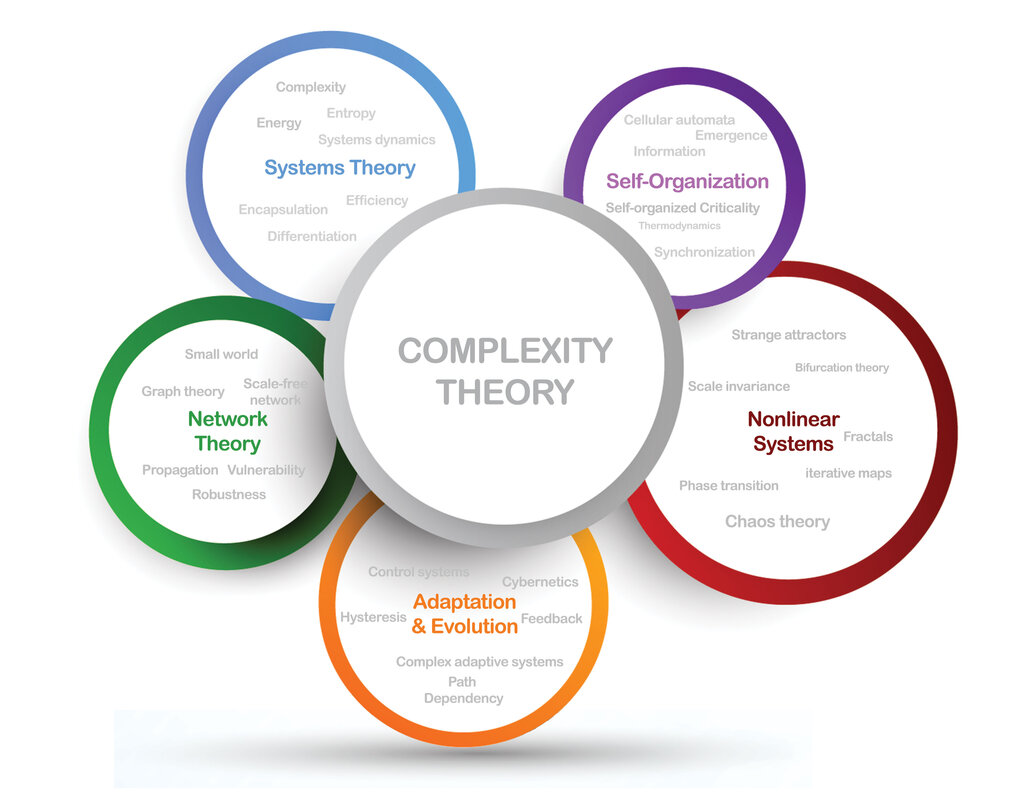
By seeing the connections, feedback loops, and emergent properties at play, we can design more effective, lasting solutions instead of just applying temporary fixes. It’s a powerful shift in perspective that allows for a deeper understanding of the world around us.
What is the primary focus of systems thinking?
A thermostat maintaining a stable room temperature by turning the heat on when it's cold and off when it's hot is a classic example of what?