Introduction to Systems Thinking
Introduction to Systems Thinking
Seeing the Whole Picture
Most of the time, we try to understand things by taking them apart. If a car breaks down, a mechanic checks the engine, the battery, and the transmission. We isolate a problem and fix it. This is a useful way to see the world, but it doesn't always tell the whole story.
Some problems are messy and tangled. Their causes and effects are not obvious. This is where systems thinking comes in. It's a way of looking at the world that focuses on connections and relationships, not just individual parts. It helps us see the forest, not just the trees.
System
noun
A set of interconnected parts that function together as a whole. A system's properties and behaviors often emerge from the interactions of its components.
A car is a system. So is an ecosystem, a company, or a human body. Systems thinking is the discipline of seeing these wholes. It grew out of fields like biology and engineering after World War II, when scientists and thinkers realized that many complex challenges couldn't be solved by looking at components in isolation.
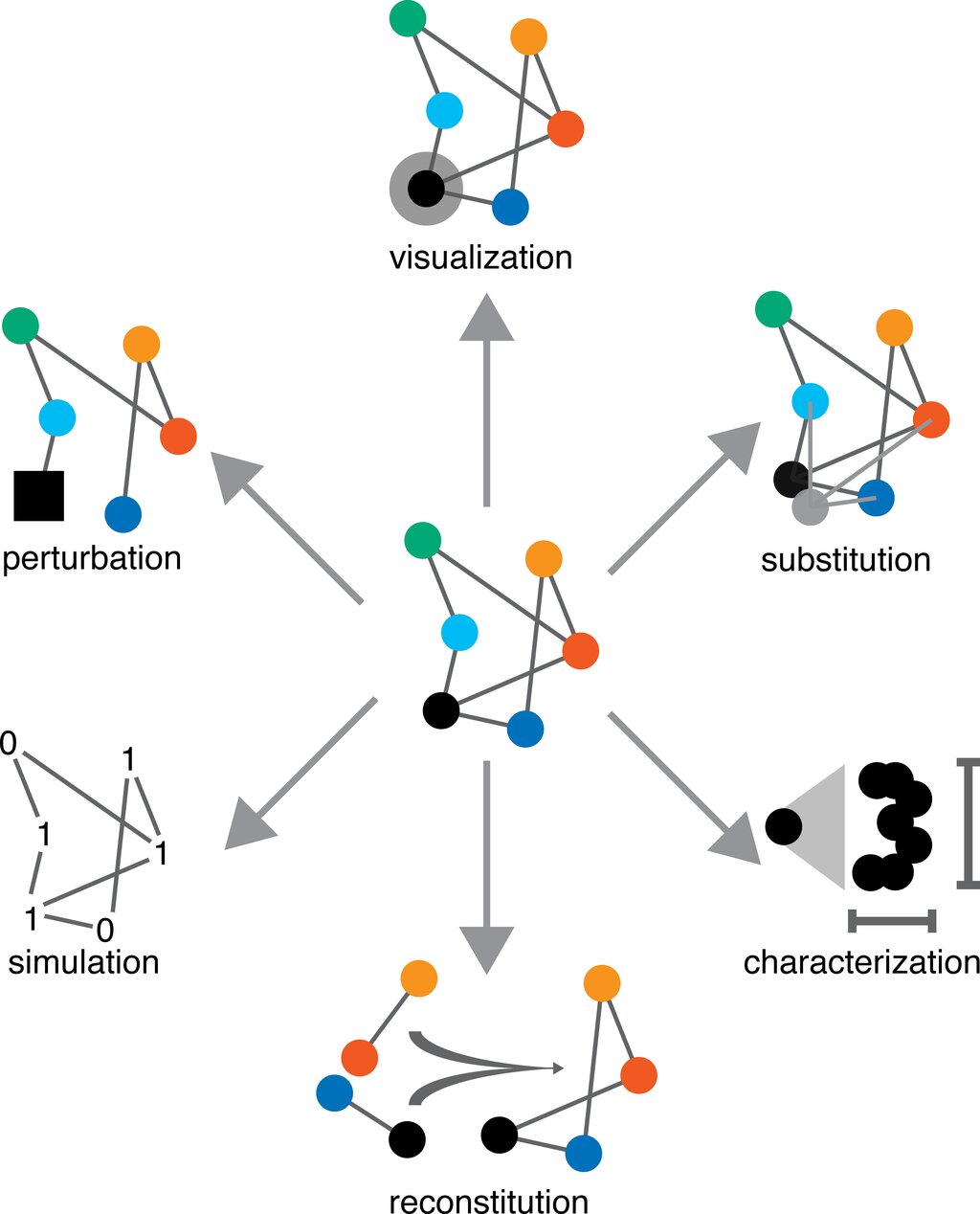
Systems thinking attends to the connections between things, events and ideas.
Core Principles
Three key principles form the foundation of systems thinking. Understanding them helps shift your perspective from simple cause-and-effect to a more dynamic view of reality.
Holism: This is the idea that the whole is greater than the sum of its parts. You can study every single component of a bicycle, but you won't understand “riding” until you see how those parts work together. The behavior of a system emerges from the interactions of its components.
Interconnectivity: In a system, everything is connected. A change in one part can ripple through the entire system, sometimes in surprising ways. Think of a web. Tugging on a single thread makes the whole structure vibrate. Systems thinking encourages us to map these connections to understand how influence flows.
Feedback Loops: Systems are not static. They respond to their own behavior through feedback loops. A feedback loop is a circular chain of cause and effect where an action's result circles back to modify the next action.
There are two main types of feedback loops:
-
Reinforcing Loops: These amplify change. They create exponential growth or decline. Think of a snowball rolling downhill, picking up more snow and getting bigger and faster. A viral video is another example; the more people share it, the more people see it, who then share it even more.
-
Balancing Loops: These stabilize a system and resist change. They work to keep things within a desired range. A thermostat is a perfect example. When a room gets too hot, the thermostat turns on the air conditioning to cool it down, bringing it back to the target temperature. Our bodies use balancing loops to regulate temperature and blood sugar.
A New Way to Solve Problems
Why does this matter? Because many of our most difficult challenges, from climate change to social inequality, are complex systems problems. Simple, linear solutions often fail or, worse, create unintended consequences. They fix one symptom while ignoring the underlying structure.
Systems thinking gives us a framework to understand this complexity. It encourages us to ask different questions: What are the patterns? How are things connected? Where do the feedback loops lie? By seeing the whole system, we can identify leverage points where a small change can lead to significant, lasting improvement.
What is the primary focus of systems thinking?
A social media post that gains more shares the more people see it is an example of what?
This approach isn't just for scientists or CEOs. It's a mental model anyone can use to better understand their work, their health, and the world around them. It's about developing the habit of seeing connections and looking for the bigger picture.