Introduction to Swedish Language
Swedish Alphabet
The Swedish Alphabet
The Swedish alphabet is your first step into the language. It looks very familiar to an English speaker, using the same Latin script. It has 29 letters in total. It’s the standard 26 letters you already know, plus three extra vowels at the end: Å, Ä, and Ö.
The Swedish alphabet consists of 29 letters, which are the same as the English alphabet with the addition of three extra letters: Å, Ä, and Ö.
Here are all 29 letters, in both uppercase and lowercase forms.
| Uppercase | Lowercase | Uppercase | Lowercase |
|---|---|---|---|
| A | a | P | p |
| B | b | Q | q |
| C | c | R | r |
| D | d | S | s |
| E | e | T | t |
| F | f | U | u |
| G | g | V | v |
| H | h | W | w |
| I | i | X | x |
| J | j | Y | y |
| K | k | Z | z |
| L | l | Å | å |
| M | m | Ä | ä |
| N | n | Ö | ö |
| O | o |
Many of these letters sound just like they do in English, which is great news. However, there are some important differences, especially with the vowels.
The Special Vowels
The three extra letters in Swedish are all vowels. They aren't just an 'A' or 'O' with a decoration, they are distinct letters with their own sounds and places in the alphabet.
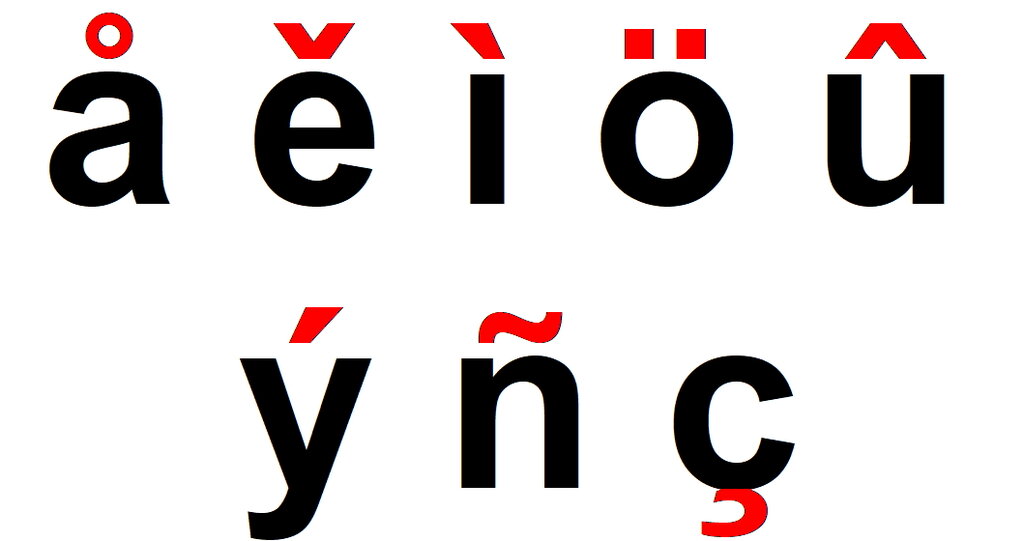
Let's break them down one by one.
å
other
Pronounced like the 'o' in the English word "for" or "more". It's a long, rounded sound.
Next up is 'Ä'.
ä
other
This letter sounds like the 'a' in the English word "cat" or "bad".
Finally, we have 'Ö'.
ö
other
This one can be tricky as there's no perfect English equivalent. It's similar to the 'i' in "bird" or the 'u' in "fur", but with more rounded lips.
Key Pronunciation Differences
Besides the three unique vowels, some standard letters change their sound depending on the vowel that follows. This is a key concept in Swedish pronunciation. Vowels are divided into two groups: hard and soft.
| Hard Vowels | Soft Vowels |
|---|---|
| A, O, U, Å | E, I, Y, Ä, Ö |
The consonants C, G, and K have a "hard" sound (like in "car," "go," "king") before hard vowels and a "soft" sound before soft vowels. The letter combination SK also changes.
Think of it this way: a soft vowel 'softens' the sound of the consonant that comes before it.
Here’s how that works in practice.
| Consonant(s) | Before a Hard Vowel (A, O, U, Å) | Before a Soft Vowel (E, I, Y, Ä, Ö) |
|---|---|---|
| C | Sounds like 'k' (e.g., café) | Sounds like 's' (e.g., cykel, bicycle) |
| G | Sounds like 'g' in "go" (e.g., gata, street) | Sounds like 'y' in "yes" (e.g., gärna, gladly) |
| K | Sounds like 'k' in "key" (e.g., karta, map) | Sounds like 'sh' in "she" (e.g., kilo) |
| SK | Sounds like 'sk' in "skate" (e.g., skola, school) | Sounds like 'sh' in "shoe" (e.g., skina, to shine) |
Don't worry about memorizing all of this at once. Familiarity comes with practice and exposure. The main goal is to be aware that these rules exist.
Now, let's test your knowledge.
How many letters are in the modern Swedish alphabet?
Which three letters are added to the standard 26-letter alphabet to form the Swedish alphabet?
Getting comfortable with the alphabet is the first big step. As you see more Swedish words, these sounds will start to feel natural.