Introduction to Structural Analysis
Statics Fundamentals
Forces Are Everywhere
Statics is the study of objects that aren't moving. It's the physics of bridges, buildings, and ladders leaning against a wall. At its heart, statics is all about forces. A force is simply a push or a pull. What makes forces tricky is that they have both a size (magnitude) and a direction. We call quantities like this vectors.
Imagine pushing a heavy box across the floor. You're applying a force. The size of your push matters, and so does the direction. Push down, and it won't go anywhere. Push sideways, and it starts to slide.
To analyze an object, engineers first draw a free-body diagram. This is a simple sketch of the object, isolated from its surroundings, with arrows representing every force acting on it. This helps us see all the pushes and pulls in one place.
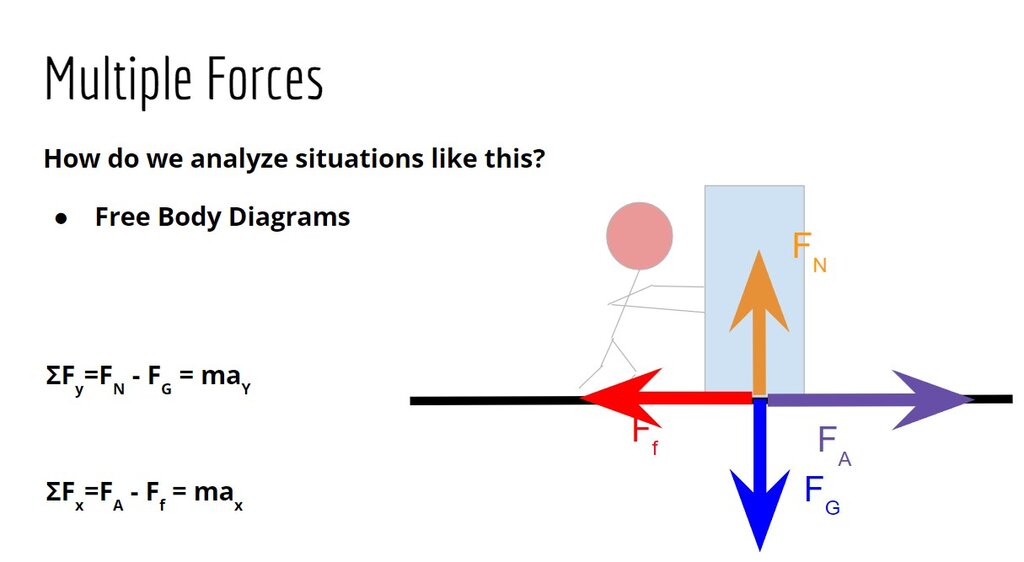
When we analyze these forces, it's often easiest to break them down into components that align with a coordinate system, usually horizontal () and vertical (). A single force pointing diagonally can be thought of as a combination of a purely horizontal push and a purely vertical push. We use basic trigonometry to find the size of these component forces.
The Art of Balance
For a bridge to stand or a bookshelf to hold its load, it must be in static equilibrium. This is a fancy way of saying it's not moving. For that to happen, all the forces acting on it must cancel out completely. Not just in one direction, but in every direction.
Think of a tug-of-war. If both teams pull with the exact same force, the rope doesn't move. They are in equilibrium. If one team pulls even slightly harder, the balance is broken.
In engineering, we express this with two simple rules. First, the sum of all horizontal forces must be zero. Second, the sum of all vertical forces must be zero. If you add up all the pushes and pulls to the left and right, they must cancel out. Same for up and down.
But there's a third rule. The object can't be rotating. This means the sum of all moments must also be zero. A moment is a twisting force, like using a wrench to turn a bolt. It depends on the force you apply and how far from the pivot point you apply it. For an object to be truly stable, all the clockwise twists must be perfectly balanced by all the counter-clockwise twists.
These three equations are the foundation of all statics. If they are all true for an object, that object is in static equilibrium and will not move.
For a stable truss the equilibrium conditions (∑Fx= 0, ∑Fy= 0, ∑M= 0) are always satisfied regardless of the position or direction of the applied loads.
Simple Structures
Let's apply these ideas to two common structures: beams and trusses.
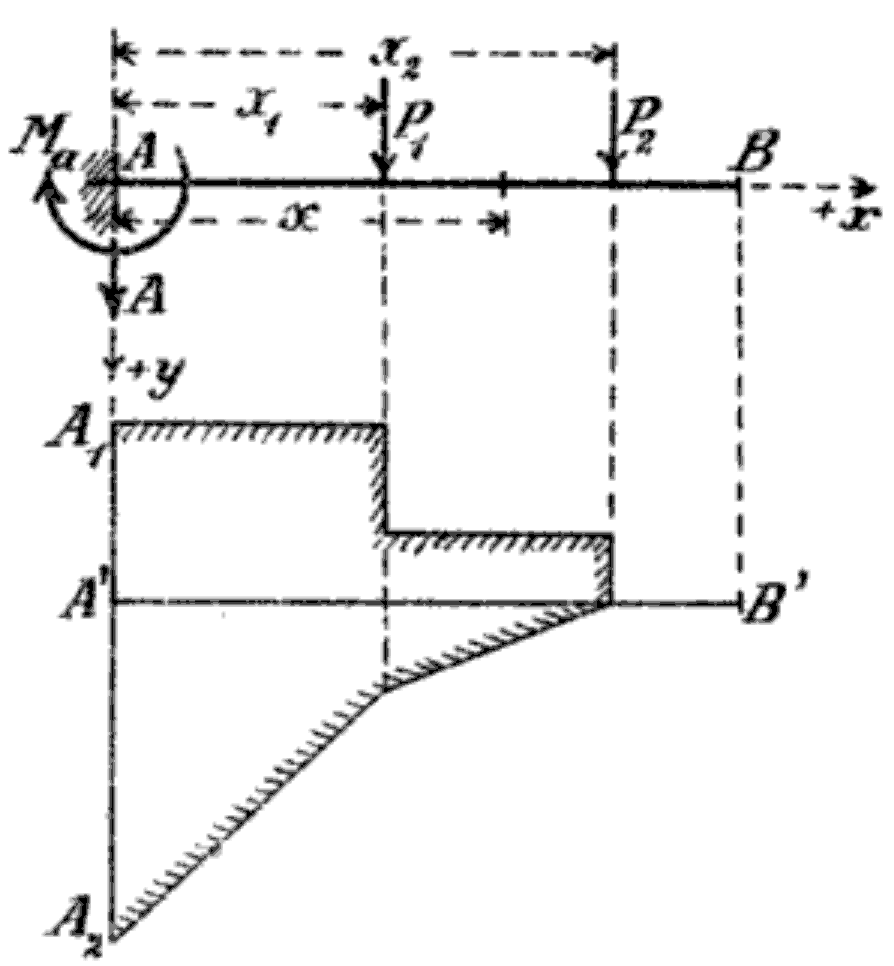
A beam is a long, straight structural element that carries loads perpendicular to its length. The classic example is a plank across a creek. The weight of a person standing on the plank is a load, and the creek banks provide upward support forces to keep the beam in equilibrium.
A truss is a structure made of many smaller members connected at their ends to form a series of triangles. You see them everywhere in bridges, roof supports, and crane arms. The triangle is a very strong and stable shape, which makes trusses incredibly efficient at carrying loads over long spans.
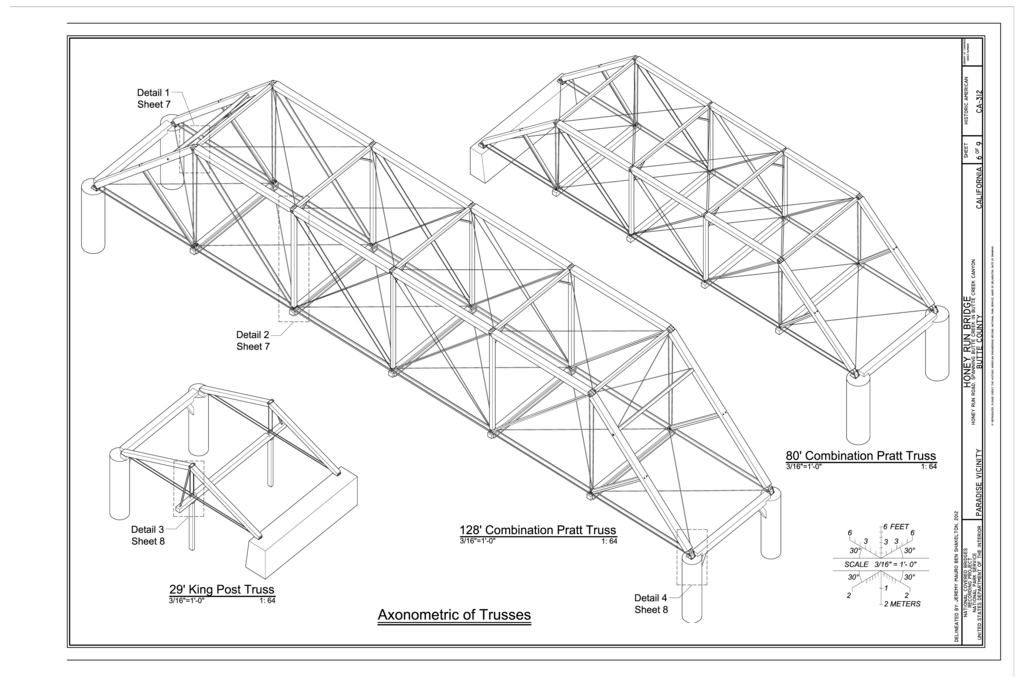
To analyze a truss, engineers often use the Method of Joints. This method treats each connection point (or joint) as a separate object in equilibrium. By drawing a free-body diagram for each joint and applying the equilibrium equations ( and ), we can solve for the unknown forces in each member of the truss. This tells us whether a member is being stretched (in tension) or squeezed (in compression).
By understanding forces and the conditions for equilibrium, engineers can analyze these simple structures to ensure they are safe and stable. These fundamental principles are the first step in designing almost every physical object in our modern world.
Ready to check your understanding? Let's try a few questions.
What is the primary condition for an object to be in static equilibrium?
Why do engineers often break down a diagonal force into horizontal (x) and vertical (y) components?
These core concepts of forces, equilibrium, and analysis of simple structures provide the essential toolkit for ensuring the stability and safety of the world we build.