Introduction to String Theory
Introduction to String Theory
The Music of the Universe
For centuries, physicists have viewed the fundamental building blocks of the universe as tiny, zero-dimensional points. Electrons, quarks, and photons were all considered point-like particles. String theory challenges this idea with a simple, yet profound, alternative: what if the most basic ingredients of reality aren't points at all, but incredibly small, one-dimensional vibrating loops of energy? In this view, everything in the universe, from the light hitting your screen to the chair you're sitting on, is made of these tiny, wiggling strings.
Its premise is simple: Everything is made of tiny strings.
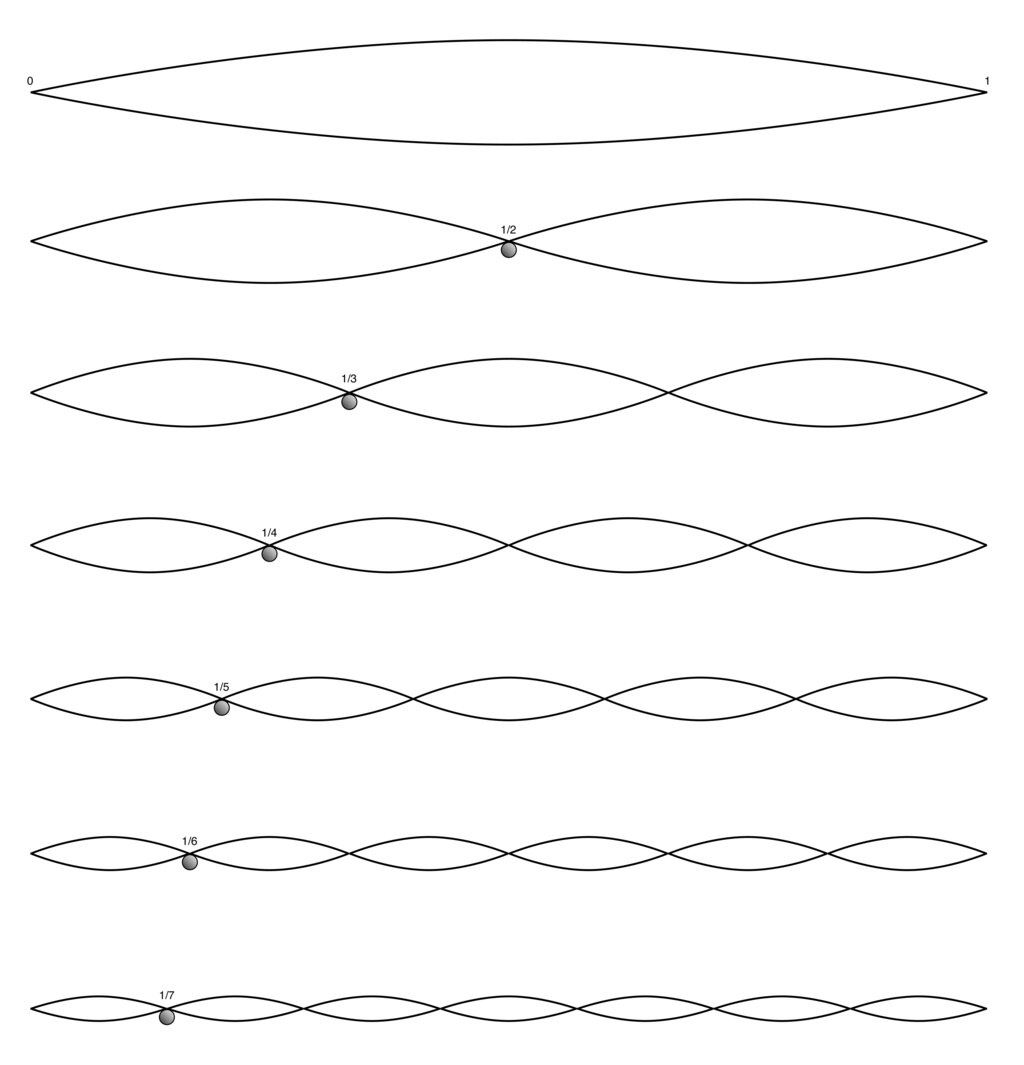
Think of a guitar string. By plucking it in different ways, you can produce a variety of musical notes. The string itself doesn't change, but its vibration does. String theory proposes that the universe works in a similar way. An electron is just a string vibrating in one pattern. A photon is the same kind of string, but vibrating in a different pattern. A quark is yet another vibrational mode. All the different particles we see are just different "notes" played on the same fundamental strings. This elegant idea suggests a deep, underlying unity to the cosmos.
An Unexpected Discovery
String theory wasn't initially designed to be a "theory of everything." It emerged in the late 1960s as a potential explanation for the strong nuclear force, the powerful interaction that binds protons and neutrons together inside atomic nuclei. The early version of the theory had some success but ultimately ran into problems and was set aside in favor of another theory called quantum chromodynamics.
But string theory had a surprise in store. Researchers noticed that among its many possible vibrations, one mode had the exact properties of the graviton. This was a hypothetical particle that physicists had long predicted would carry the force of gravity, but which didn't fit into the Standard Model of particle physics. This was a stunning revelation. For the first time, there was a theory that naturally included both quantum mechanics (the world of particles) and gravity (the world of spacetime) in a single, consistent framework.
This accidental discovery transformed string theory from a niche topic into a leading candidate for a unified theory of physics.
The Quest for Unification
Physics currently relies on two incredibly successful but separate theories. General relativity perfectly describes gravity and the large-scale structure of the universe, like stars and galaxies. The Standard Model of particle physics describes the other three fundamental forces (electromagnetism, the strong force, and the weak force) and the zoo of elementary particles.
The problem is, these two theories don't play well together. They operate in different domains and are based on conflicting principles. Trying to combine them leads to mathematical nonsense. This is a major hole in our understanding of the universe, especially when trying to describe extreme situations like the Big Bang or the inside of a black hole, where both gravity and quantum effects are important.
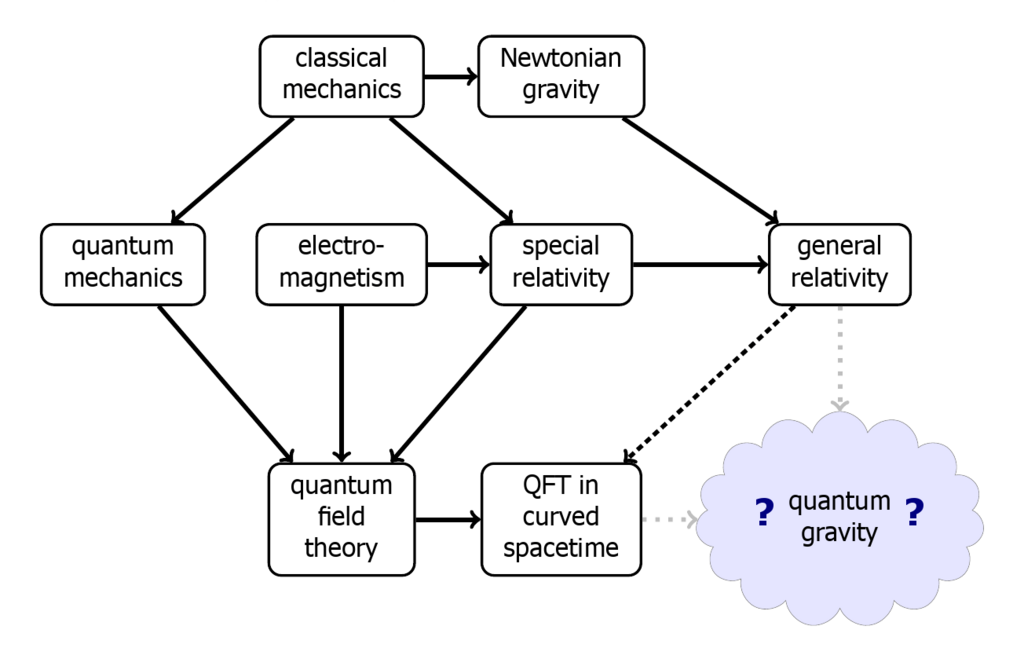
String theory offers a potential solution. By replacing point particles with strings, it smooths out the mathematical problems that arise when trying to merge gravity with quantum mechanics. In this framework, all four fundamental forces are simply different vibrations of the same underlying strings. It's an ambitious goal that aims to fulfill a long-held dream of physics: to explain all the forces and particles of nature with a single, elegant set of principles.
According to string theory, what are the fundamental building blocks of the universe?
How does string theory explain the existence of different particles, such as electrons and photons?