Introduction to Spanish Language
Spanish Alphabet
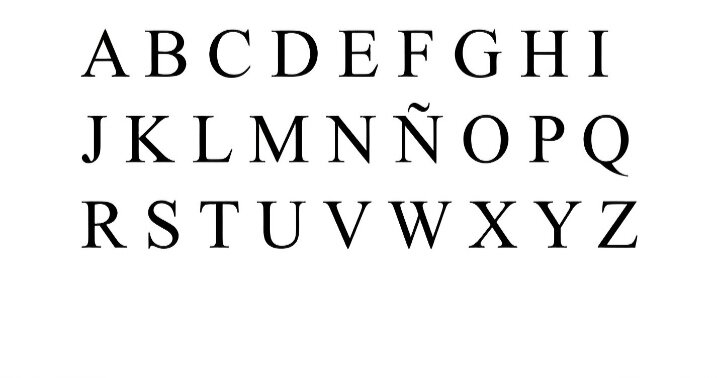
The Spanish Alphabet
Good news: the Spanish alphabet, or abecedario, is almost identical to the English one. Better news: Spanish is a phonetic language. This means that once you learn the sound for each letter, you can pronounce almost any word correctly just by reading it. There are very few surprise pronunciations, which makes learning much easier.
The Five Simple Vowels
English vowels can be tricky, with multiple sounds for each letter. In Spanish, it's simple. There are five vowels, and each one has a single, consistent sound. If you can master these five sounds, you're already well on your way to clear pronunciation.
| Vowel | Sound (like in...) | Example |
|---|---|---|
| A, a | father | casa (house) |
| E, e | bed | elefante (elephant) |
| I, i | see | silla (chair) |
| O, o | go | hola (hello) |
| U, u | flute | luna (moon) |
Practice saying them out loud: ah, eh, ee, oh, oo. Keeping them short and crisp is key.
Consonants with Character
Most Spanish consonants sound a lot like their English counterparts. However, a few have their own unique flair. Let's look at the most important ones.
The letter H is always silent. When you see hola (hello), you pronounce it 'o-la'. The h is just for show.
The letter J sounds like the English 'h'. For example, jardín (garden) is pronounced 'har-DEEN'.
Ñ, ñ
noun
A unique letter in the Spanish alphabet that makes a 'nyah' sound, similar to the 'ny' in the English word 'canyon'.
Two other letters change their sound depending on the vowel that follows them:
- C sounds like a 'k' before a, o, and u (casa, color, cuna). Before e and i, it sounds like an 's' (cero, cine).
- G sounds like the 'g' in 'go' before a, o, and u (gato, gol, gusto). Before e and i, it makes a throaty 'h' sound, similar to the Spanish J (general, gigante).
The Rolled R
The rolled 'r', known as erre, is one of the most famous sounds in Spanish. It can be a little tricky, but it's not impossible. There are actually two 'r' sounds in Spanish.
First, there's the single R. This is a light tap of the tongue against the roof of your mouth, right behind your front teeth. It sounds similar to the 'tt' in the American English pronunciation of 'butter'. You'll hear this sound when 'r' appears in the middle of a word, like in pero (but).
Then there's the strong, rolled RR. This is the sound you hear at the beginning of a word like rey (king) or when you see a double 'rr' in a word like perro (dog). To make this sound, you lightly press your tongue against the roof of your mouth and let air vibrate the tip.
A good way to practice the rolled 'rr' is to say the phrase "get it on" quickly. The spot where your tongue hits for the 't' and 'd' sounds is the right place. Now, try to hold it there and blow air.
Don't worry if you can't get it right away. It takes practice for most learners. The most important thing is that people will still understand you even if your 'r' isn't perfect.