Introduction to Spanish
Spanish Alphabet
The Spanish Alphabet
One of the best things about learning Spanish is that it's mostly phonetic. That means words are pronounced just as they’re spelled. It's a refreshing change from English, where words like “though,” “through,” and “tough” seem designed to confuse. The Spanish alphabet, or abecedario, looks very familiar, but a few key differences in pronunciation will get you sounding natural in no time.
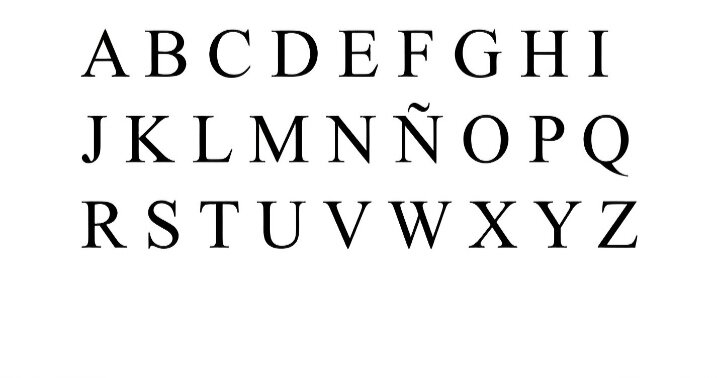
Let's start with the absolute foundation of Spanish pronunciation: the vowels.
The Five Vowels
English has over a dozen vowel sounds, but Spanish keeps it simple with just five. Each vowel has one, and only one, sound. Master these five sounds, and you've already won half the battle.
| Vowel | Sounds Like... |
|---|---|
| A, a | The 'a' in "father" |
| E, e | The 'e' in "they" |
| I, i | The 'ee' in "see" |
| O, o | The 'o' in "go" |
| U, u | The 'oo' in "moon" |
That's it. Whether at the beginning, middle, or end of a word, the sound of 'a' is always "ah," 'e' is always "eh," and so on. No surprises.
Special Letters and Sounds
While most consonants sound similar to their English counterparts, a few require special attention. These are the sounds that really distinguish a native speaker.
The letter H (hache) is always silent. Always. Think of the word hola. You don't pronounce the H. It’s simply "oh-la."
The letter J (jota) makes a throaty 'h' sound, like the 'h' in "house." Try saying jamón (ha-MOHN) or jardín (har-DEEN).
The letter G (ge) is a bit of a shapeshifter. Before an 'e' or 'i', it sounds just like the Spanish J (gente, gigante). Before 'a', 'o', 'u', or another consonant, it has a hard 'g' sound like in "go" (gato, grande).
Now for the letters you won't find in the English alphabet.
ñ
noun
A distinct letter of the Spanish alphabet, representing a sound similar to 'ny' in the English word 'canyon'.
The squiggle over the 'n' is called a tilde. It completely changes the sound of the letter. You can hear it in words like piña (PEE-nya) and mañana (ma-NYA-na).
You’ll also encounter two letter pairs that have their own sounds.
LL (elle): This combination traditionally sounds like the 'y' in "yes." So, calle (street) is pronounced "CAH-yeh" and me llamo (my name is) is "meh YAH-moh." In some regions, it has a softer 'j' or even 'sh' sound, but the 'y' sound is the most common and widely understood.
RR (erre): This is the famous rolled R. It's a trilled sound made by vibrating the tip of your tongue against the roof of your mouth. It appears in words like perro (dog) and carro (car). A single 'r' has a much softer, tapped sound, similar to the 'dd' in the word "ladder."
Don't worry if you can't roll your R's perfectly at first. It takes practice for almost everyone. The most important thing is to recognize that caro (expensive) and carro (car) are two different words, distinguished only by that R sound.
How is the Spanish letter 'J' (jota) typically pronounced?
The main difference between Spanish and English vowels is that Spanish vowels each have only one consistent sound.
That's a quick tour of the Spanish alphabet. By focusing on the five simple vowel sounds and these unique consonants, you're building a strong foundation for clear and confident pronunciation.