Introduction to Spanish
Spanish Alphabet and Pronunciation
The Spanish Alphabet
Good news: the Spanish alphabet, or abecedario, is almost identical to the English one. It has 27 letters. Most of them will look familiar, which gives you a great head start.
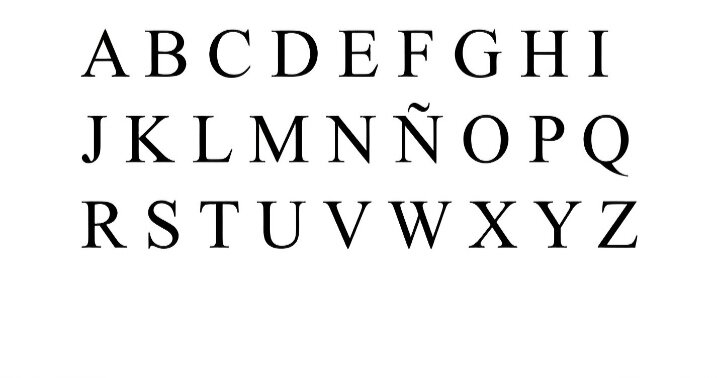
The main difference is the addition of one letter you won't find in English: the eñe (Ñ). This letter has a wavy line on top called a tilde. It represents a sound similar to the "ny" in "canyon."
year
In the past, you might have seen "CH" and "LL" listed as separate letters, but they were officially removed as distinct letters of the alphabet in 2010. They are now considered letter combinations, but their unique sounds are still important.
Vowel Sounds Are Key
Here's where Spanish gets much simpler than English. Each vowel has only one sound, and it never changes. Once you learn the five vowel sounds, you can pronounce a huge number of Spanish words correctly. They are always short, crisp, and pure.
| Vowel | Pronunciation (like the vowel in...) |
|---|---|
| A | "father" |
| E | "bet" |
| I | "machine" |
| O | "boat" |
| U | "rule" |
Let's try a few words. Say them out loud, focusing on making each vowel sound clear and consistent.
- casa (house) - The 'a' sound appears twice.
- bebe (he/she drinks) - Two identical 'e' sounds.
- vivir (to live) - Both 'i's sound the same.
Notice how there are no silent letters or tricky combinations. What you see is what you say. This is one of the best things about learning to speak Spanish.
Important Consonant Sounds
While most Spanish consonants sound like their English counterparts, a few have their own rules. Mastering these will make your pronunciation much more accurate.
The letter H is always silent. Always. When you see the word hola (hello), you pronounce it "o-la."
The letter J makes a sound like the "h" in "house." It's a breathy sound made at the back of your throat. For example, jardín (garden) is pronounced "har-DEEN."
The letter Z and the letter C (when it comes before an 'e' or 'i') both sound like the English letter "s." There's no buzzing "z" sound in most of Spain or Latin America.
- zapato (shoe) sounds like "sa-pa-to."
- cielo (sky) sounds like "see-eh-lo."
When C comes before 'a', 'o', or 'u', it has a hard "k" sound, just like in English. Think of casa (house).
The combination LL is pronounced like the "y" in "yes." So, llave (key) is pronounced "ya-vey."
Finally, the letter R. A single R between vowels is a quick tap of the tongue, similar to the "dd" sound in the American English pronunciation of "ladder." The double RR, or an R at the beginning of a word, is the famous rolled R. This sound can be tricky for English speakers and takes practice. Don't worry if you can't get it right away. Just focus on making a distinct sound from the single R.
Ready to test what you've learned? This quiz will help you check your understanding of the basic sounds of Spanish.
How many letters are in the official Spanish alphabet?
True or False: In Spanish, each vowel has only one sound that never changes.
With these rules, you have a solid foundation. The more you listen to and speak Spanish, the more natural these sounds will become.