Introduction to Spanish
Spanish Alphabet
The Spanish Alphabet
The Spanish alphabet, or abecedario, is your first step to speaking the language. It looks a lot like the English alphabet, which is great news. The even better news is that Spanish pronunciation is very consistent. Once you learn the sound a letter makes, it will almost always make that same sound. This predictability is a huge advantage for learners.
Spanish pronunciation is consistent: once you learn the sounds, you’ll understand and be understood more easily.
The official Spanish alphabet has 27 letters.
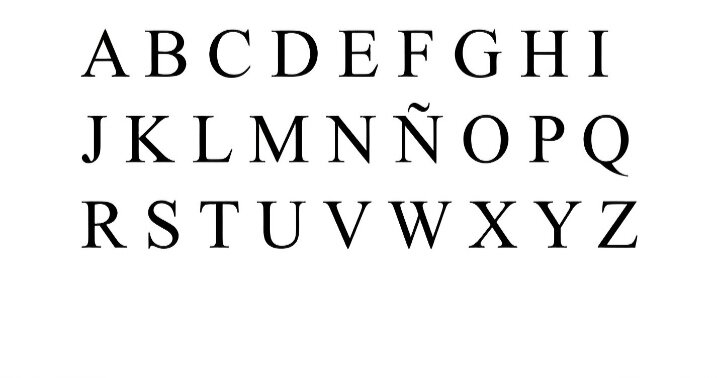
Let's look at each letter and its name in Spanish. Knowing the names is helpful, especially when you need to spell something out.
| Letter | Spanish Name | Letter | Spanish Name |
|---|---|---|---|
| A, a | a | N, n | ene |
| B, b | be | Ñ, ñ | eñe |
| C, c | ce | O, o | o |
| D, d | de | P, p | pe |
| E, e | e | Q, q | cu |
| F, f | efe | R, r | ere |
| G, g | ge | S, s | ese |
| H, h | hache | T, t | te |
| I, i | i | U, u | u |
| J, j | jota | V, v | uve |
| K, k | ka | W, w | uve doble |
| L, l | ele | X, x | equis |
| M, m | eme | Y, y | ye / i griega |
| Z, z | zeta |
The Five Vowels
Mastering the five Spanish vowels is the key to clear pronunciation. Unlike in English, where vowels have many different sounds, in Spanish, they are short, crisp, and constant. Each vowel has one sound, and it never changes.
There are no silent vowels in Spanish. If you see one, you say it.
Let's break them down:
- A sounds like the 'a' in "father."
house
- E sounds like the 'e' in "hey."
elephant
- I sounds like the 'ee' in "see."
island
- O sounds like the 'o' in "go."
bear
- U sounds like the 'oo' in "moon."
grape
Practice saying them clearly: A-E-I-O-U. Getting these right will instantly make your Spanish sound better.
Key Consonant Differences
Many Spanish consonants sound just like they do in English, but a few have their own rules. Getting to know these will prevent common pronunciation mistakes.
| Letter(s) | Sound | The Rule |
|---|---|---|
| C | 'k' or 's' | Sounds like 'k' before A, O, U (casa). Sounds like 's' before E, I (cielo). |
| G | hard 'g' or 'h' | Sounds like the 'g' in "go" before A, O, U (gato). Sounds like the English 'h' before E, I (gente). |
| H | silent | The 'h' is always silent. You just ignore it. (hola sounds like ola). |
| J | 'h' | The 'j' always sounds like a strong English 'h' sound, as in jalapeño. |
| LL | 'y' | This pair of letters sounds like the 'y' in "yes." (llave sounds like yave). |
| Q | 'k' | The 'q' is always followed by a 'u', and together they make a 'k' sound. The 'u' is silent. (queso). |
| V | 'b' | In Spanish, the 'b' and 'v' sound nearly identical. Think of a sound halfway between the English 'b' and 'v'. (vaca sounds like baca). |
| Z | 's' | The 'z' always sounds like the English 's'. (zapato). |
Special Characters
Spanish has one letter that doesn't exist in English: the ñ. This letter is a defining feature of the language.
ñ
noun
A letter in the Spanish alphabet that represents a palatal nasal sound.
The squiggly line over the 'n' is called a tilde. The sound of ñ is like the 'ny' combination in the word "canyon." It's a single, smooth sound.
tomorrow
Another important sound is the rolled 'r'. This is often the trickiest sound for English speakers to master, but it's crucial for clear pronunciation. There are two 'r' sounds in Spanish:
- The Single R (r): This is a light tap of the tongue against the roof of your mouth, right behind your top teeth. It sounds similar to the 'dd' in the word "ladder."
but
- The Double R (rr): This is the famous rolled 'r', a continuous trill made by vibrating your tongue against the roof of your mouth. You use this sound for any 'rr' and for any single 'r' that starts a word.
dog
Be careful! The difference between pero (but) and perro (dog) is just that little roll of the 'r'.
Learning to roll your 'r's takes practice. A good way to start is by repeating the word "butter" very quickly. The motion your tongue makes is very close to the single 'r' tap.
Now, let's test your knowledge of these new sounds.
How is the Spanish vowel 'E' pronounced?
How many letters are in the official Spanish alphabet?
With these foundations, you're ready to start pronouncing any Spanish word you see. Just remember the rules, and say it with confidence.