Introduction to Software Development
Introduction to Software
The Ghost in the Machine
A computer without software is just a box of metal and plastic. It has potential, but it can't do anything on its own. Software is the set of instructions, programs, and data that tells the hardware what to do and how to do it. Think of hardware as the instruments in an orchestra—the piano, violins, and drums. Software is the sheet music. Without the music, the instruments are silent. It provides the score that turns potential into performance.
Hardware is the physical part of the computer you can touch. Software is the intangible part that makes the hardware useful.
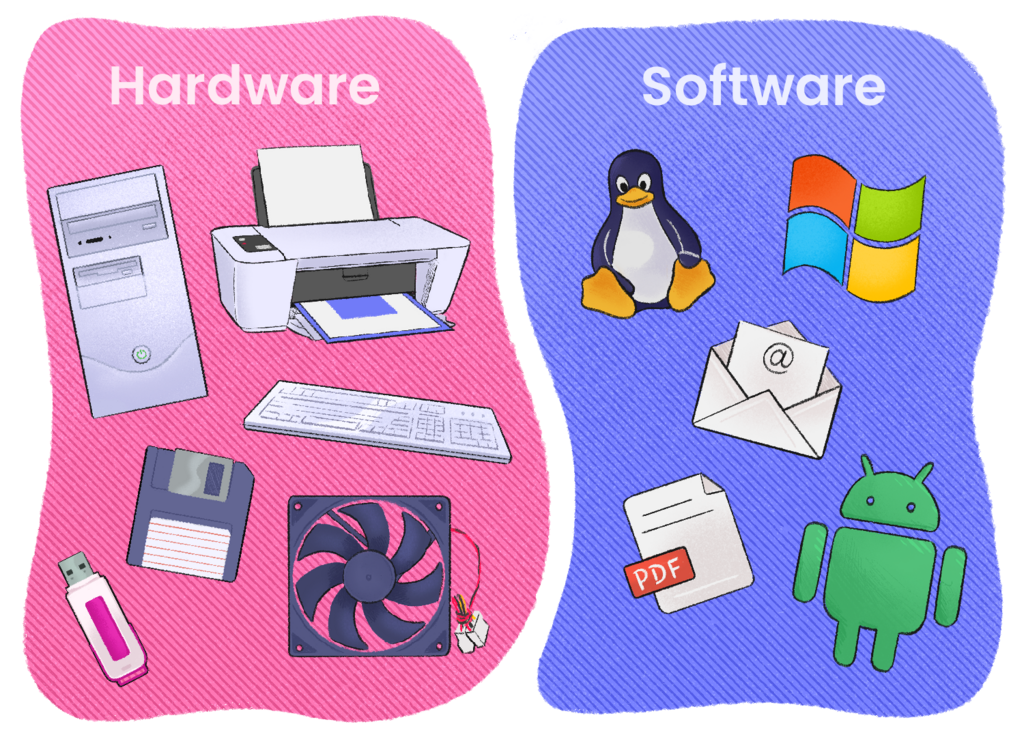
The Two Main Players
Software isn't a single entity. It's broadly divided into two main categories that work together: system software and application software.
System Software
noun
Programs that manage and control the computer's hardware, providing a platform for other software to run.
System software works in the background. You don't interact with it directly, but it’s always running, managing everything from your computer's memory to its processor. The most important piece of system software is the operating system (OS), like Windows, macOS, or Android. The OS is the computer's manager. It coordinates all the hardware components and makes sure they work together smoothly. When you save a file, the OS finds a place for it on the hard drive. When you connect to Wi-Fi, the OS manages that connection.
Application Software
noun
Programs designed for end-users to perform specific tasks.
Application software, or "apps," are the programs you use every day. They are designed to help you do something specific. Writing a report? You use a word processor. Browsing the internet? You use a web browser. Listening to music? You use a media player. These applications run on top of the operating system, which provides them with the resources they need to function.
The Unseen Connector
There's a third, less obvious category of software that acts as a bridge: middleware. It's the glue that helps different pieces of software communicate with each other. Middleware often works behind the scenes to connect system software with application software, or to connect two different applications.
Think of middleware like a translator at an international conference. You have an application that speaks one language (like a customer database) and another that speaks a different language (like a web server). Middleware sits between them, translating requests and data back and forth so they can work together seamlessly. You don't see it, but it makes modern, complex applications possible.
Now, let's test your knowledge.
Using the provided analogy, if computer hardware is like the instruments in an orchestra, what is the software?
Which of the following is an example of system software?
Understanding these different types of software helps demystify what's happening inside our devices. Each layer has a distinct job, but they all work together to turn a piece of hardware into a powerful tool.