Introduction to Soccer
Introduction to Soccer Rules
The Point of the Game
The main goal in soccer is simple: score by getting the ball into the opposing team's goal. A goal is scored when the entire ball crosses the goal line, between the goalposts and under the crossbar. The team that scores more goals by the end of the match wins.
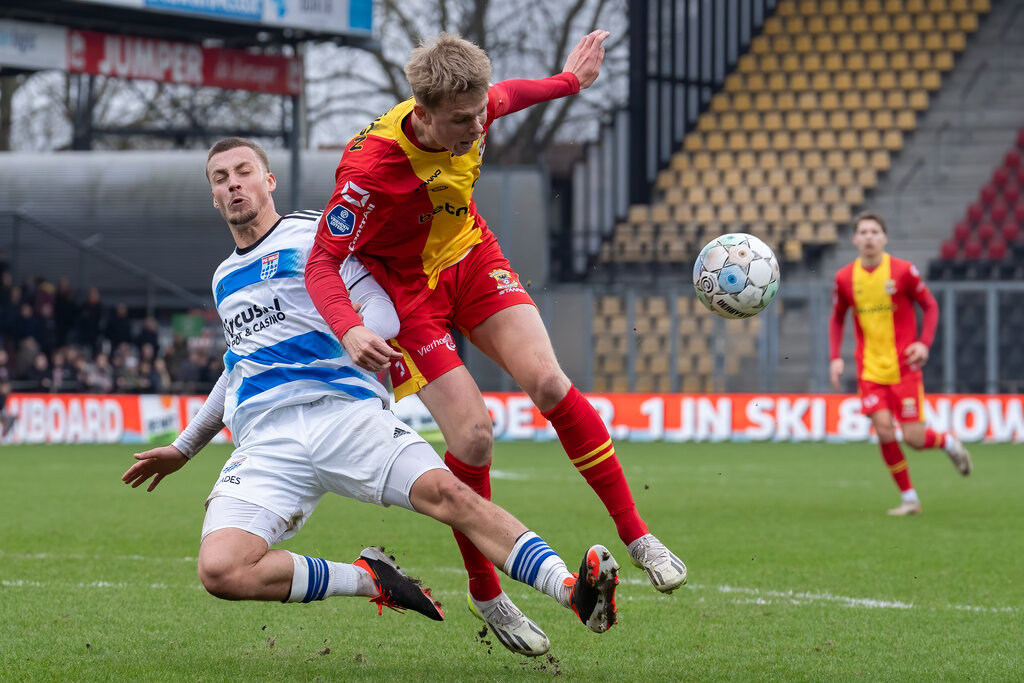
The Playing Field
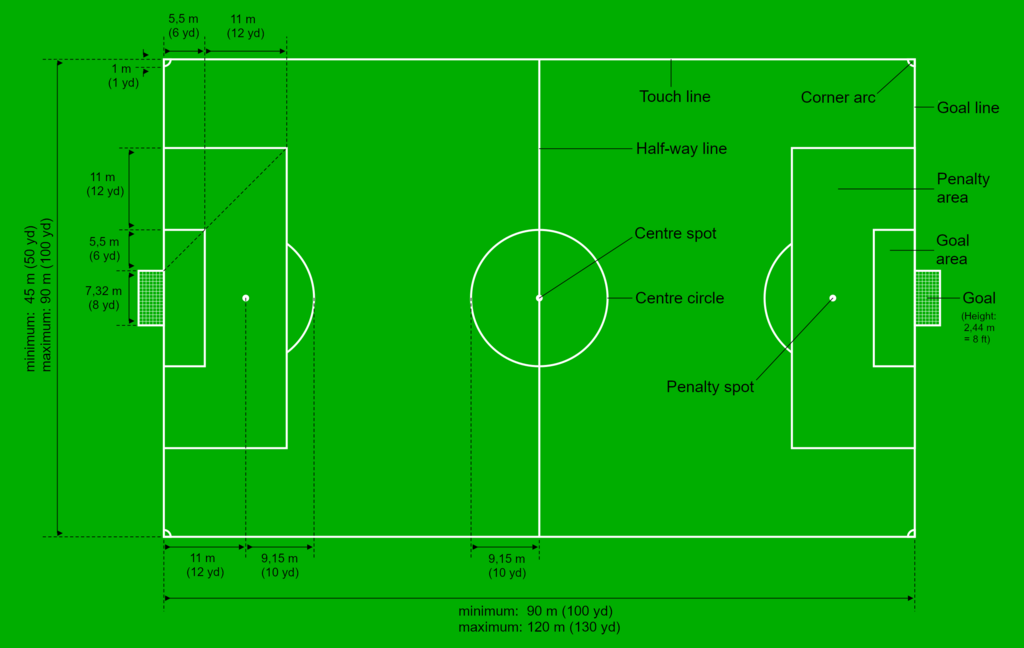
Soccer is played on a rectangular field called a pitch. While the exact dimensions can vary, it's always longer than it is wide. The field is marked with several important lines. The lines along the length are called touchlines, and the lines at each end are the goal lines.
A halfway line divides the pitch into two equal halves. In the center of this line is the center circle, where the game starts. At each end of the field is a large rectangle called the penalty area. This area is critical because fouls committed by the defending team inside their own penalty area can result in a penalty kick.
Players and Match Format
A soccer match is played between two teams. Each team can have a maximum of 11 players on the field at one time, one of whom must be the goalkeeper. The goalkeeper is the only player allowed to handle the ball with their hands, and only within their own penalty area.
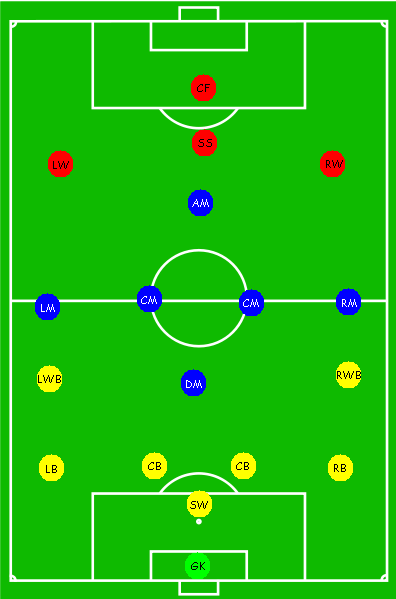
The other ten players are called outfield players and are generally categorized into three main roles: defenders, midfielders, and forwards. Defenders are primarily responsible for preventing the other team from scoring. Forwards are the main attackers, trying to score goals. Midfielders play between the defenders and forwards, linking the team's defense and attack.
A standard professional match consists of two halves of 45 minutes each. There's usually a 15-minute break between the halves, known as halftime. The clock does not stop for interruptions like injuries or substitutions. Instead, the referee adds "stoppage time" (also called injury time) at the end of each half to compensate for time lost.
The Basic Laws
To keep the game fair and safe, there are rules known as the Laws of the Game. A key part of these laws deals with fouls and misconduct.
Foul
noun
An unfair act by a player, deemed by the referee to contravene the game's laws.
When a player commits a foul, the opposing team is awarded a free kick. There are two types. A direct free kick is awarded for more serious fouls, like tripping or pushing an opponent. A goal can be scored directly from this kick. An indirect free kick is given for lesser offenses, such as obstructing an opponent. From an indirect kick, another player must touch the ball before a goal can be scored.
If a defender commits a direct free kick foul inside their own penalty area, the attacking team gets a penalty kick. This is a one-on-one shot at the goal from a marked spot, with only the goalkeeper to beat.
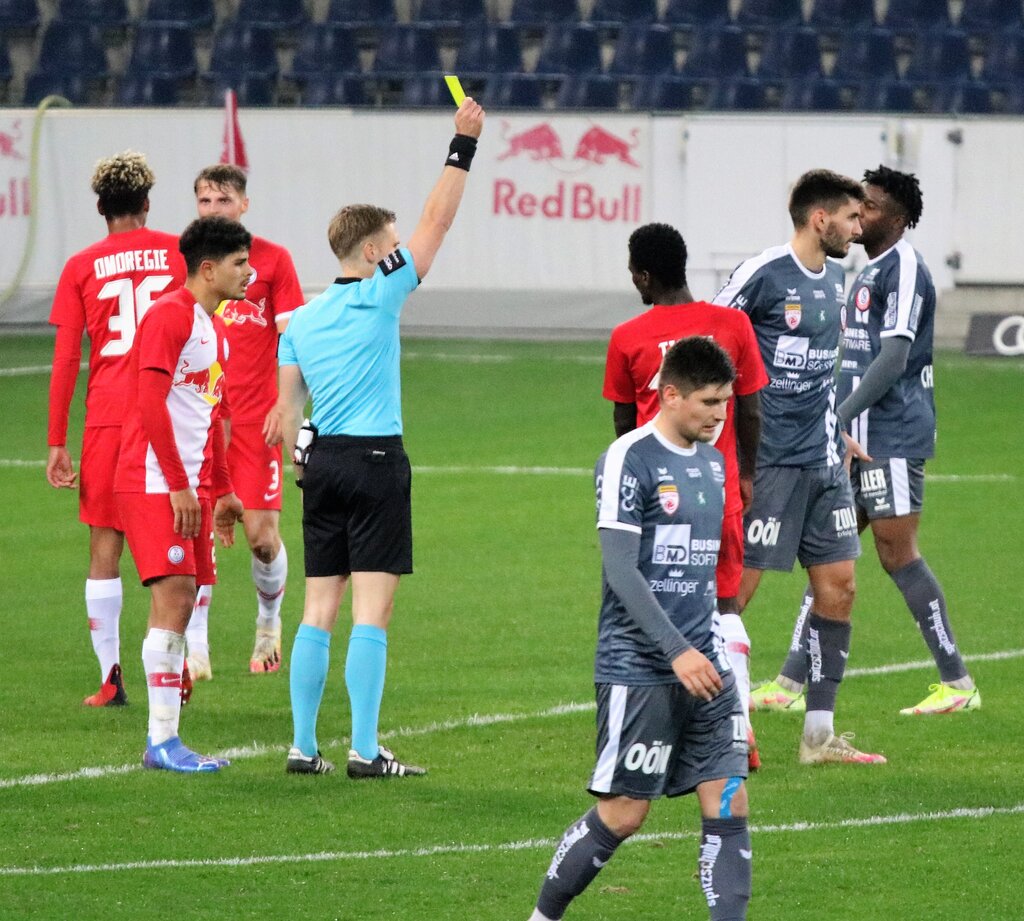
For more serious misconduct, the referee can show a player a yellow or red card. These are used to punish actions like reckless fouls, arguing with the referee, or deliberately wasting time.
| Card | Meaning |
|---|---|
| Yellow | A caution or warning. |
| Red | The player must leave the field immediately. |
Two yellow cards in the same game for one player equal a red card. Once a player is sent off with a red card, their team must continue the match with one fewer player.
Finally, one of the most misunderstood rules is the offside rule. In simple terms, a player is in an offside position if they are nearer to the opponent's goal line than both the ball and the second-to-last opponent when the ball is played to them. The key is the player's position at the exact moment the ball is passed by a teammate, not when they receive it.
You cannot be offside in your own half of the field or from a throw-in, corner kick, or goal kick. The rule is designed to prevent players from simply waiting near the opponent's goal for a long pass.
Now that you know the basics, you're ready to better understand the flow of a match.
What is the primary objective in a game of soccer?
A goalkeeper is the only player allowed to handle the ball with their hands, and they can do so anywhere on the field.