Introduction to Six Sigma
Introduction to Six Sigma
What is Six Sigma?
Six Sigma is a structured, data-driven method for improving business processes. Its main goal is to eliminate defects and reduce variability, which leads to higher quality products and services. Think of it as a systematic way to get as close to perfection as possible.
The methodology was developed by Motorola engineers in the 1980s to compete with high-quality Japanese manufacturing. The name itself comes from statistics. A "sigma" represents a standard deviation from the average. A process that achieves "six sigma" quality produces fewer than 3.4 defects for every million opportunities. That's an accuracy rate of 99.99966%.
The overarching premise of Six Sigma is that variation in a process leads to opportunities for error; opportunities for error then lead to risks for product defects.
Core Principles
Several key ideas drive the Six Sigma approach:
- Focus on the Customer: All improvements are judged by their impact on customer satisfaction and value. What does the customer need, and how can we deliver it flawlessly?
- Use Data to Make Decisions: Six Sigma replaces guesswork with facts. Data is used to identify the root cause of a problem and to verify that a solution actually works.
- Improve the Process: Instead of just fixing individual bad outcomes, the focus is on improving the entire process to prevent future defects from ever happening.
- Promote Teamwork: Problems are often complex and span multiple departments. Six Sigma encourages collaboration across the organization to find and implement the best solutions.
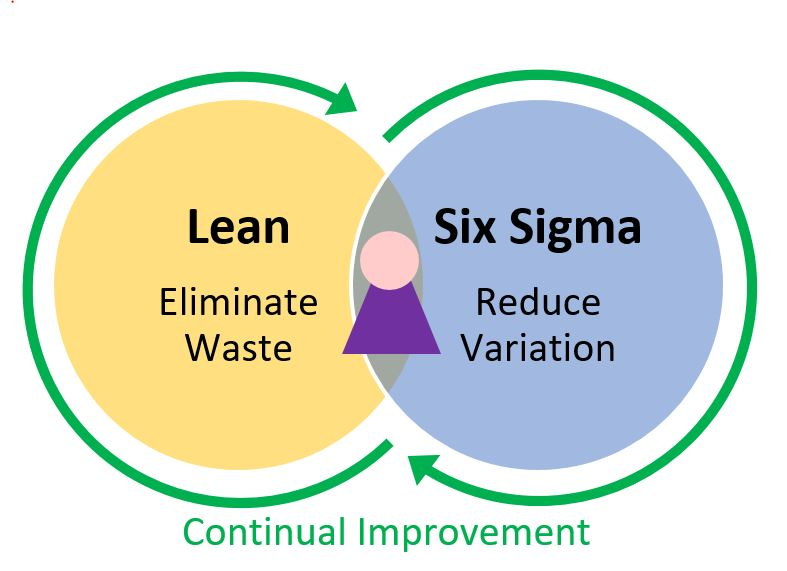
Why Variation Matters
Imagine a coffee shop that wants to serve the perfect latte every time. If the process has high variability, some drinks will be too hot, others too cold. Some will have too much foam, others not enough. Customers won't know what to expect, and many will be disappointed.
By reducing this variation, the coffee shop can ensure that nearly every latte meets its quality standard. This consistency builds trust and loyalty. In any industry, from manufacturing cars to processing insurance claims, reducing variability leads to lower costs, happier customers, and a stronger reputation.
Frameworks for Improvement
Six Sigma projects follow one of two structured roadmaps. While we won't dive into the details here, it's good to know what they are. The choice depends on whether you are improving something that already exists or creating something entirely new.
The most common methodology is DMAIC, which is used to improve existing business processes.
A different methodology, DMADV, is used when a business needs to develop a new process or product at Six Sigma quality levels.
| DMAIC (Improve Existing) | DMADV (Create New) |
|---|---|
| Define | Define |
| Measure | Measure |
| Analyze | Analyze |
| Improve | Design |
| Control | Verify |
Both frameworks provide a logical, step-by-step path for achieving process excellence.
What is the primary goal of the Six Sigma methodology?
A process operating at a 'Six Sigma' level of quality is expected to produce how many defects per million opportunities (DPMO)?
This introduction covers the basic identity and goals of Six Sigma. It is a powerful tool for any organization looking to operate more efficiently and effectively.