Introduction to Service Design
Introduction to Service Design
What Is Service Design?
Think about the last time you had a truly great experience—maybe at a coffee shop, using a mobile banking app, or even renewing your driver's license. Everything just worked. The process was smooth, the people were helpful, and you left feeling satisfied. That wasn't an accident. It was the result of service design.
Service design is the process of planning and organizing a business's resources (people, props, and processes) in order to directly improve the employee's experience, and indirectly, the customer's experience. It's the art of making a service useful, usable, efficient, and desirable.
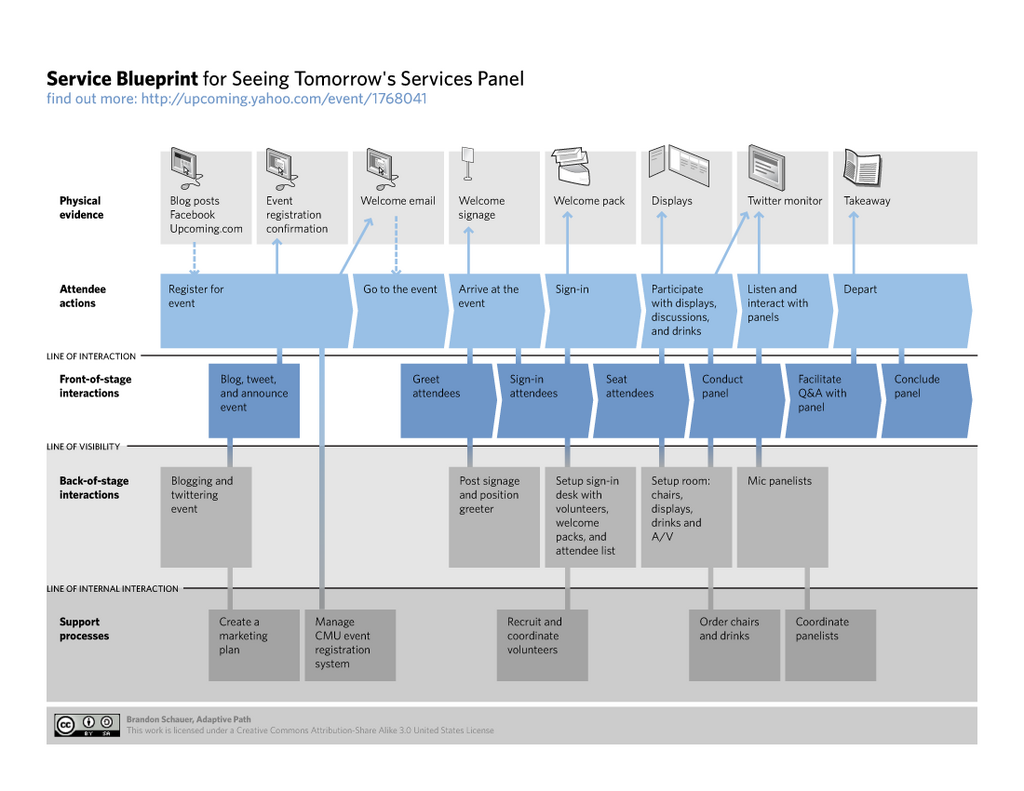
It’s not just about the final moment of interaction, like paying for your coffee. It’s about the entire journey: how you found the coffee shop, the process of ordering, the way the environment feels, and even how you dispose of your cup. Service design looks at both the customer-facing parts (what you see and interact with) and the behind-the-scenes operations that make it all possible.
A Brief History
The roots of service design go back to the 1980s, but the idea really took off as economies shifted from manufacturing products to providing services. In the past, design focused on tangible things you could hold, like a chair or a toaster. But how do you design something intangible, like a hospital stay or a phone plan?
Early pioneers realized that services needed their own design approach. They began applying principles from product design, user experience (UX), and even theater to map out service experiences. Instead of just designing a website or a physical location, they started designing the entire, integrated system of touchpoints a customer has with a company.
One of the key responsibilities of a designer during any design process is to be an advocate for the user.
Key Principles
Service design is guided by a few core principles that help ensure the final experience is coherent and valuable. While there are many variations, most revolve around these key ideas.
User-Centered: The entire process revolves around the customer. Designers strive to understand the needs, motivations, and pain points of the people using the service.
Co-Creative: All stakeholders, including customers, employees, and partners, are involved in the design process. This collaboration ensures the service works well for everyone, not just the people who use it.
Sequential: A service is a series of interactions that happen over time. Service design visualizes this journey, making sure the transitions between steps are smooth and logical.
Evident: Intangible services are made tangible through physical artifacts or evidence. This could be anything from a well-designed mobile app to clear signage in a building. These elements make the service's value visible.
Holistic: The entire environment and context of the service are considered. This includes the digital tools, physical spaces, employee interactions, and company policies that all combine to create a single, unified experience.
Think about your last visit to a hospital. Service design improves that experience by coordinating everything from the appointment booking system and the waiting room layout to the way doctors communicate with patients and the process for billing.
The impact of good service design is clear. For businesses, it leads to increased customer loyalty, greater efficiency, and a stronger brand. For customers, it means less frustration and services that simply make life easier. It's a discipline that bridges business goals with human needs, creating value for everyone involved.
Ready to check your understanding?
What is the primary goal of service design?
The service design principle of making intangible services tangible through physical artifacts (like a well-designed app or clear signage) is known as:
By focusing on the complete customer journey and the internal processes that support it, service design turns potentially frustrating interactions into seamless, positive experiences.