Introduction to Self-Defense
Situational Awareness
Staying Ahead of Trouble
Personal safety isn't about knowing how to fight. It's about knowing how to not have to fight. The foundation of this skill is situational awareness, which is simply knowing what's going on around you.
Situational awareness is the ability to identify, process, and comprehend the critical elements of information about what is happening around you.
Think about driving a car. You aren't just staring at the bumper of the car in front of you. You're aware of the cars in other lanes, the traffic lights ahead, the pedestrian waiting to cross the street. You're processing this information constantly to make safe decisions. That's situational awareness in action.
Applying this same mindset to your daily life helps you recognize and avoid dangerous situations before they escalate. It's not about being paranoid or fearful; it's about being present and engaged with your environment. It's a skill that turns you from a potential target into someone who is prepared and observant.
Becoming a Better Observer
The first step to better awareness is understanding the concept of a baseline. Every environment has a normal rhythm, a pattern of behavior that's typical for that place at that time. A library has a quiet, slow baseline. A busy subway station has a loud, fast-paced baseline.
Your job is to get a feel for this baseline and then look for things that deviate from it. Someone shouting in a library breaks the baseline. Someone standing perfectly still in the middle of a rushing subway crowd also breaks the baseline. These anomalies are what you need to pay attention to.
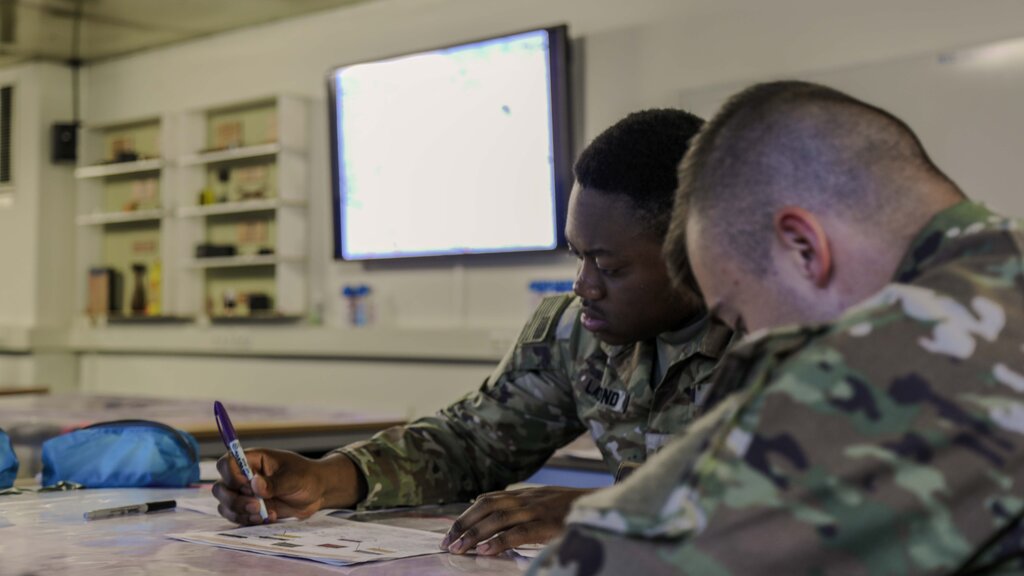
To get good at this, you have to shift from passively seeing to actively observing. It’s a simple habit. When you enter a room, take two seconds to scan it. Don't just look for your friends or an empty seat. Notice the exits. See who is near them. Make a mental note of anyone whose behavior seems out of place.
This isn't a deep investigation. It’s a quick mental snapshot. Over time, this becomes automatic. You'll process your surroundings without even thinking about it, freeing you up to relax while still staying aware.
Reading the Signs
Potential threats often give off signals before an incident occurs. These pre-incident indicators are behaviors or circumstances that should raise a red flag. Learning to spot them is crucial.
| Indicator | What It Might Mean |
|---|---|
| Target Glancing | Someone repeatedly looking at a person or place, as if sizing it up for an opportunity. |
| Inappropriate Attire | Wearing a heavy coat on a hot day could be a way to conceal weapons or stolen goods. |
| Testing Security | Someone loitering near a secure door, pulling on handles, or watching a security guard's routine. |
| Unusual Grouping | People suddenly gathering at a strategic point, like an exit, or acting in a coordinated but unnatural way. |
These aren't definitive proof of a threat, but they are deviations from the baseline that warrant your attention. If you see something that makes you uncomfortable, don't dismiss it.
Trust Your Gut
Have you ever felt that something was just... off? That's your intuition. It’s your subconscious mind picking up on tiny cues that your conscious mind hasn't processed yet. It's a powerful survival mechanism that has been honed by evolution.
When you get that feeling, listen to it. Don't try to rationalize it away or worry about being rude. If someone's presence makes you uneasy, you don't need to justify your feeling. Your intuition is giving you a warning based on subtle signals it has detected.
Trusting your instincts means giving yourself permission to act on that feeling of unease. Create distance, change your route, or leave the area entirely.
Imagine you're walking to your car in a parking garage and notice someone loitering near your vehicle. They might be waiting for someone else, but your gut screams that something is wrong. Don't ignore it. Turn around, walk back to a more populated area, and wait. It’s better to feel a little foolish for a few minutes than to ignore a warning that could have kept you safe.
The goal is to avoid the situation, not to confront it. Your safety is more important than someone else's opinion of you.
Ready to test what you've learned about staying aware?
What is the primary goal of situational awareness as described in personal safety?
In the context of situational awareness, what is a 'baseline'?
Developing situational awareness is a proactive step toward managing your personal safety. By observing your surroundings and trusting your intuition, you empower yourself to avoid danger before it even begins.