Introduction to Sailing
Boat Parts
The Body of the Boat
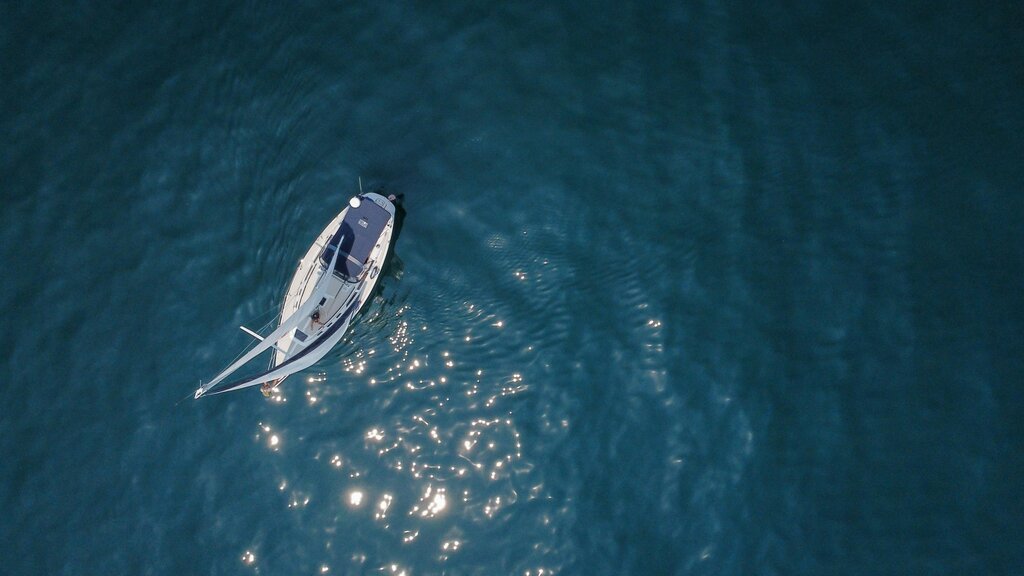
Every sailboat starts with a hull. This is the main body of the boat, the part that sits in the water. Its carefully shaped design allows it to float and cut through the water with minimal resistance. Hulls can be made from various materials, like fiberglass, wood, or aluminum, but their primary job is always the same: to provide buoyancy and a watertight shell.
On top of the hull is the deck. This is the flat surface where you and your crew will stand, sit, and manage the boat's controls. It covers the hull, keeping water out of the interior spaces, which on larger boats might include a cabin.
The Engine Room
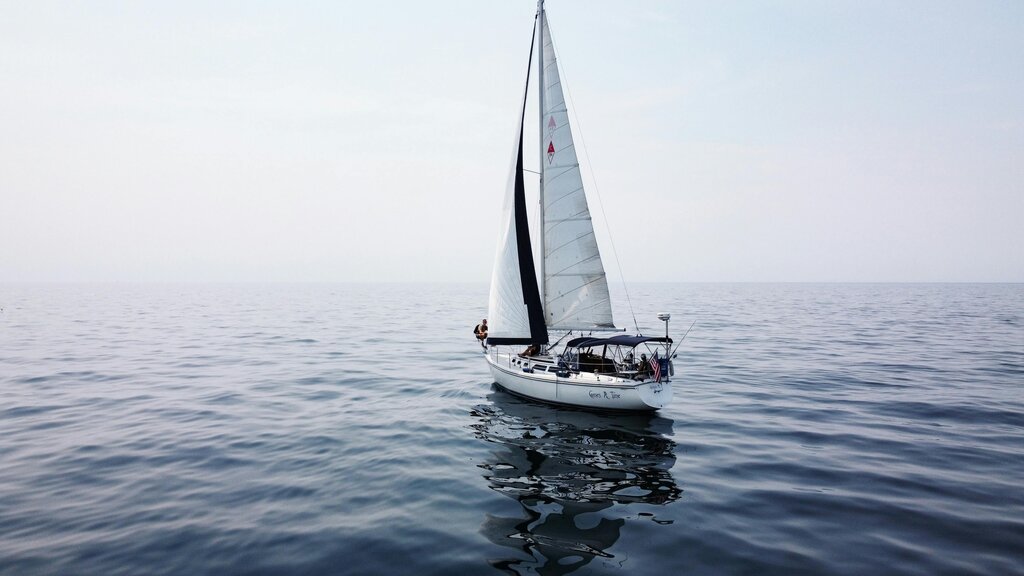
A sailboat's engine isn't a motor; it's the rigging that catches the wind. The most prominent part is the mast, the tall vertical pole that supports the sails. It's the backbone of the boat's power system.
Attached to the mast is the boom, a horizontal pole that extends from the bottom of the mast towards the back of the boat. The boom's main job is to hold the bottom edge of the mainsail, allowing you to control the sail's angle and shape to best catch the wind.
Be mindful of the boom! It can swing across the boat quickly when changing direction, so it's important to be aware of its position.
Finally, there are the sails themselves. Most small sailboats have two: the mainsail and the jib. The mainsail is the larger sail behind the mast, attached to both the mast and the boom. The jib is the smaller, triangular sail at the front of the boat, located forward of the mast. Together, they work like an airplane's wing to generate lift and propel the boat forward.
Steering and Stability
To control the boat's direction, you use the rudder. This is a flat, fin-like piece of wood or fiberglass located at the stern (the back) of the boat. It's connected to a tiller, which is a long handle, or sometimes a steering wheel. Pushing the tiller one way makes the boat turn the opposite way.
Beneath the boat, you'll find the keel. This is a heavy, fixed fin extending down from the bottom of the hull. The keel has two critical jobs. First, its weight provides stability, acting as a counterbalance to the force of the wind on the sails and preventing the boat from tipping over. Second, it prevents the boat from being pushed sideways by the wind, helping it move forward instead.
Let's review these core parts before we move on.
Ready to test your knowledge? Let's see how well you remember the function of each part.
What is the primary function of a sailboat's hull?
The heavy fin underneath the boat that provides stability and prevents sideways drift is called the keel.
Understanding these basic parts is the first step to becoming a confident sailor. Each component has a specific role, and they all work together to turn the power of the wind into a journey across the water.