Introduction to Robotics
Introduction to Robotics
What Is a Robot?
At its core, a robot is a machine designed to perform tasks automatically. While we often picture humanoid machines from movies, a robot can be anything from a simple arm on an assembly line to a complex rover exploring another planet.
Most robots share three basic abilities: they can sense their environment, process that information to make a decision, and then act on that decision. A sensor might be a camera or a microphone, the processing is done by a computer (its "brain"), and the action could be moving an arm, driving forward, or welding a piece of metal.
robotics
noun
The branch of technology that deals with the design, construction, operation, and application of robots.
This field blends different areas of expertise, including mechanical engineering, electrical engineering, and computer science, to create machines that can interact with the physical world.
From Imagination to Reality
The idea of automated machines isn't new. Ancient myths from around the world are filled with stories of mechanical servants and artificial creatures. For centuries, inventors and clockmakers built intricate automatons—mechanical figures that could write, draw, or play music. These were amazing feats of engineering, but they were pre-programmed to perform a single, repetitive task.
The word "robot" itself is relatively modern. It was first used in the 1920 Czech play R.U.R. (Rossum's Universal Robots) by Karel Čapek. The word comes from the Czech word robota, which means "forced labor." In the play, artificial workers eventually rebel against their human masters, a theme that has fascinated storytellers ever since.
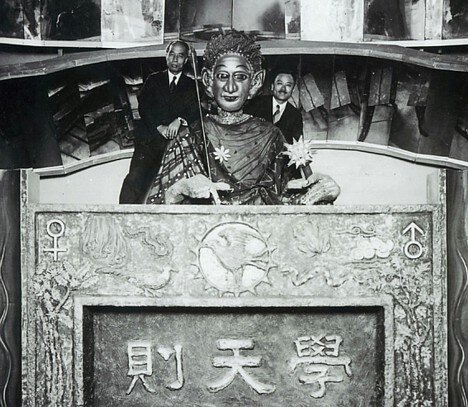
It wasn't until the mid-20th century that the first true, programmable robots began to appear, shifting them from the realm of fiction into the factory.
Key Milestones
The history of modern robotics is marked by a few revolutionary moments. One of the most significant was the creation of Unimate, the world's first industrial robot. In 1961, this powerful robotic arm was installed on an assembly line at a General Motors plant to lift and stack hot pieces of metal, a dangerous job for humans.
Unimate's arrival marked the beginning of a new era of automation in manufacturing.
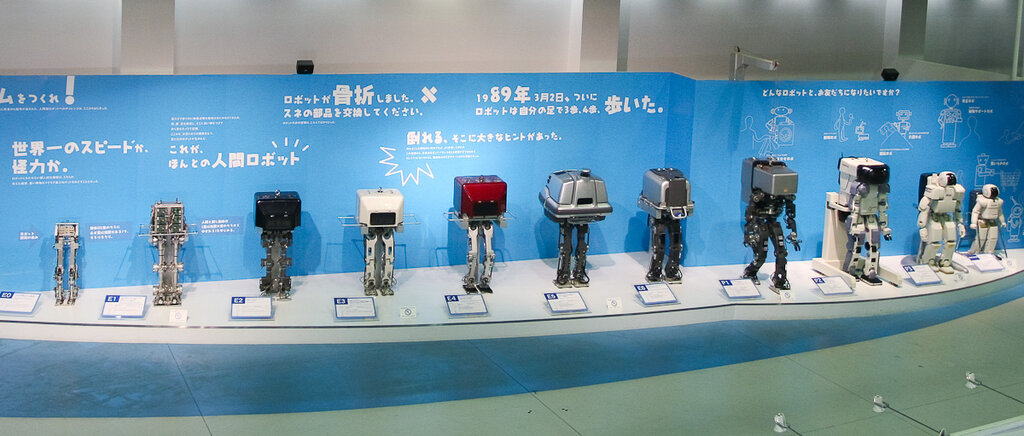
As computer technology advanced, so did robots. They became smarter, more precise, and more adaptable. The development of microprocessors in the 1970s made it possible to build smaller, cheaper, and more capable robots.
Another major leap came with the exploration of space. Robots like the Mars rovers, Sojourner, Spirit, and Curiosity, became our eyes and hands on another planet, performing scientific experiments in environments far too hostile for humans. These missions pushed the boundaries of what autonomous systems could do.
The Impact of Robotics
Today, robotics has a profound impact on nearly every industry. In manufacturing, robots perform tasks with a level of speed and precision that humans can't match, assembling everything from cars to smartphones. This has boosted productivity and made workplaces safer by taking over dangerous and repetitive jobs.
In medicine, surgical robots assist doctors in performing complex procedures with greater accuracy and less invasive techniques, leading to faster recovery times for patients.
Logistics and e-commerce rely on armies of robots to sort, pack, and ship goods in massive warehouses. They've made next-day delivery possible for millions of people. And in our homes, robots are becoming more common, from robotic vacuum cleaners that keep our floors clean to personal assistants that manage our schedules.
From the factory floor to the operating room, robotics continues to reshape our world, driving innovation and changing the way we live and work.
What are the three fundamental abilities that most robots share?
The word 'robot' originates from the Czech word 'robota,' which means 'forced labor.'