Introduction to Robotic Engineering
Introduction to Robotics
What is a Robot?
A robot is a machine designed to execute one or more tasks automatically with speed and precision. The word itself might make you think of science fiction, but robots are very real and have been for a long time. They are all around us, from the factory floor to the operating room.
At its core, a robot has three main capabilities: it can sense its environment, process that information, and then act upon it.
Think about a robotic vacuum cleaner. It uses sensors to detect walls and obstacles (sensing). Its internal computer decides where to go next (processing). Finally, its wheels and brushes move to clean the floor (acting). This sense-think-act cycle is the fundamental principle behind all robotics.
robot
noun
A machine capable of carrying out a complex series of actions automatically, especially one programmable by a computer.
A Quick Trip Through Time
The idea of automated machines isn't new. Ancient myths are filled with tales of mechanical servants and artificial beings. But modern robotics really began in the 20th century with the rise of electronics and computers.
A major breakthrough came in 1961 with the introduction of Unimate, the first industrial robot. It was a single robotic arm that worked on an assembly line at a General Motors plant, lifting and stacking hot pieces of metal. This was a dangerous job for humans, and Unimate demonstrated how robots could take over dull, dirty, or dangerous tasks.
| Year | Milestone |
|---|---|
| 1954 | George Devol patents the first programmable robot, the "Unimate." |
| 1961 | Unimate is installed on a General Motors assembly line. |
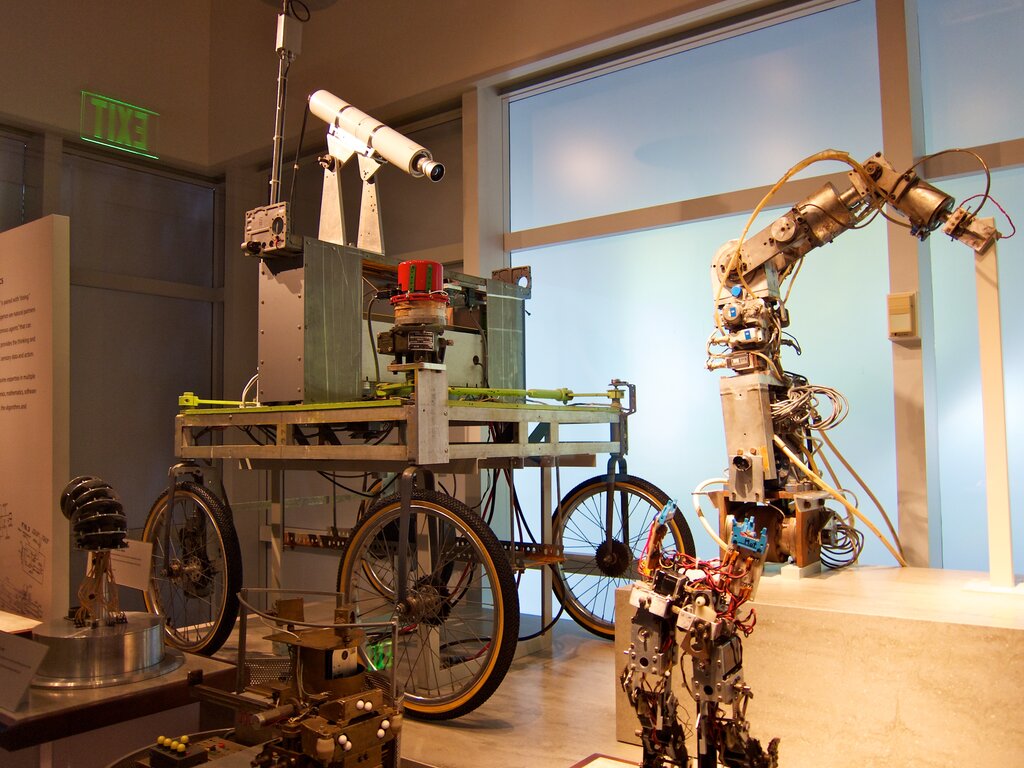
| 1969 | The Stanford Arm, an electrically powered robotic arm, is developed. |
| 1977 | The Voyager 1 and 2 probes launch, containing autonomous systems for deep space exploration. |
| 1997 | The Sojourner rover explores the surface of Mars. |
| 2000 | Honda's ASIMO robot is unveiled, capable of walking and interacting with humans. |
Since then, progress has been rapid. Robots have become smaller, smarter, and more capable, moving from simple factory arms to complex machines that can perform surgery, explore other planets, and even drive cars.
The Robot Family
Not all robots are the same. They come in many shapes and sizes, each designed for a specific purpose. We can group them into a few main categories.
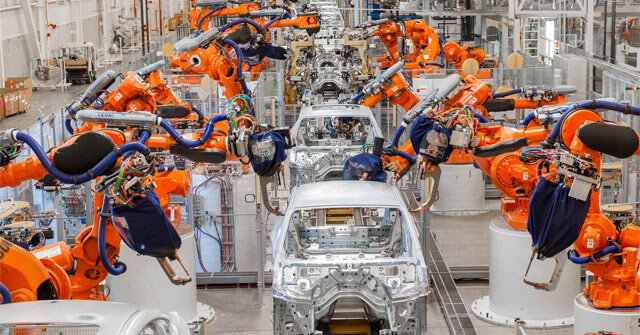
Industrial Robots are the workhorses of the modern factory. These are typically robotic arms that perform repetitive tasks like welding, painting, and assembly with incredible speed and accuracy. They are a cornerstone of modern manufacturing.
Service Robots are designed to help people. This is a broad category that includes professional service robots, like surgical assistants or delivery drones, and personal service robots, like vacuum cleaners or robotic lawnmowers.
Mobile Robots can move around their environment. This includes wheeled robots, drones that fly, and submersibles that travel underwater. Planetary rovers, for example, are a type of mobile robot.
Humanoid Robots are designed to resemble the human body. They might have a torso, head, two arms, and two legs. Building robots that can walk and interact with the world like a person is one of the biggest challenges in robotics.
Robots at Work
The applications for robots are vast and growing every day. They are transforming industries and creating new possibilities.
In healthcare, robots assist in complex surgeries, allowing for more precision and smaller incisions. They also help in physical therapy and can be used to transport supplies within hospitals.
In logistics, fleets of mobile robots manage warehouses, sorting and moving packages to fulfill orders at a pace humans couldn't match.
In exploration, robots go where humans can't. They explore the deep sea, investigate active volcanoes, and travel across the surfaces of other planets, sending back valuable data and images.
And in our daily lives, robots are becoming more common. They clean our floors, mow our lawns, and can even provide companionship for the elderly. As technology advances, robots will likely become even more integrated into our world.
As we've seen, robotics is a dynamic field with a rich history and a future full of potential. From simple automated arms to intelligent explorers, robots are already reshaping our world.
What is the fundamental three-step cycle that describes how most robots operate?
A robotic arm welding car doors on a factory assembly line is best classified as what type of robot?