Introduction to Risk Management
Introduction to Risk Management
Understanding Risk
Everything we do involves some level of uncertainty. Will a new project finish on time? Will a key supplier deliver the right parts? Will customers like our new product? This uncertainty, the potential for events to affect what we're trying to achieve, is the essence of risk.
Risk is the effect of uncertainty on objectives.
Notice that this definition isn't just about bad things happening. Uncertainty can also lead to positive outcomes, or opportunities. A project might finish ahead of schedule, or a new marketing campaign could be far more successful than expected. Risk is simply the deviation from what you expect, for better or worse.
The Art of Managing Risk
If risk is unavoidable, what can we do about it? We can manage it. Risk management is the coordinated effort to direct and control an organization's activities with regard to risk. It’s not about getting rid of risk entirely, which is often impossible. Instead, it’s about making informed decisions in the face of uncertainty.
Risk Management is the process of identifying, assessing, and prioritizing risks followed by the application of resources to minimize, monitor, and control the probability and/or impact of adverse events or to maximize the realization of opportunities.
Think of it like driving a car. You accept the risk of an accident every time you get behind the wheel. But you don’t let that stop you. You manage the risk by wearing a seatbelt, checking your mirrors, obeying speed limits, and staying alert. You're not eliminating the risk, but you're reducing its likelihood and potential impact.
The main goals of risk management are to:
- Protect value: Safeguard an organization's assets, reputation, and people.
- Improve decision-making: Provide clear information about potential challenges and opportunities.
- Achieve objectives: Increase the likelihood of reaching strategic goals and reduce the chance of failure.
Why It Matters
Without a structured approach to risk, organizations are essentially flying blind. They might overspend on protecting against minor issues while ignoring significant threats that could derail their entire operation. Effective risk management provides a framework for navigating uncertainty with confidence.
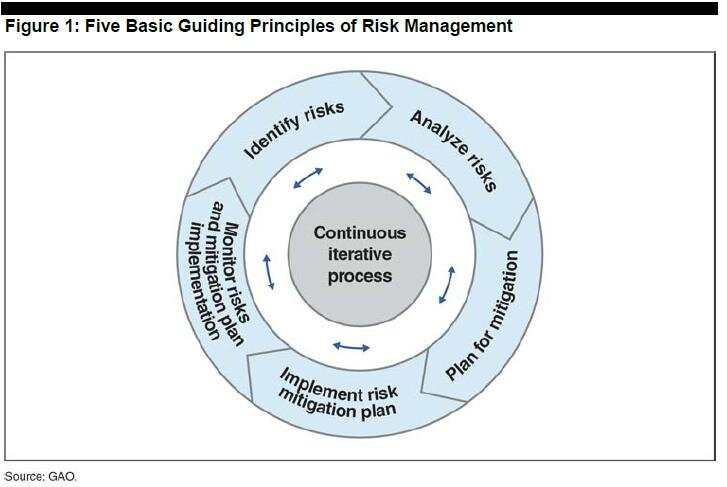
By proactively identifying what could go wrong, a company can prepare for it. By identifying what could go right, it can position itself to seize opportunities. This process leads to better stability, less waste, and a greater ability to innovate and grow.
A Common Language for Risk
To help organizations manage risk effectively, international standards have been developed. One of the most widely recognized is ISO 31000.
ISO 31000 is a set of principles and generic guidelines for risk management. It can be used by any organization regardless of its size, activity, or sector.
Think of ISO 31000 not as a rigid rulebook you must follow to get a certificate, but as expert advice. It provides a framework and a process to help embed risk management into an organization’s leadership, culture, and practices. It emphasizes that risk management should be integrated into all decision-making, from strategic planning to day-to-day operations.
The key principles of this standard stress that risk management should be:
- Integrated: A part of all organizational activities.
- Structured and comprehensive: A systematic approach leads to consistent results.
- Customized: Tailored to the organization's specific context and objectives.
- Inclusive: Involves stakeholders at all levels to ensure multiple perspectives are considered.
- Dynamic: It must be iterative and responsive to change.
Using a standard like ISO 31000 helps create a consistent approach and a common language for talking about and managing risk across a company.
Which statement best defines the concept of risk in a business context?
What is the primary goal of risk management?
Understanding these core concepts is the first step toward building a robust system for navigating the uncertainties every organization faces.