Introduction to Remote Sensing
Introduction to Remote Sensing
Seeing Without Touching
How do you learn about a place you can't visit? You look at it from a distance. That's the core idea behind remote sensing. It's the science of getting information about an object or area without being in direct physical contact with it. Think of it like taking a photo. Your camera captures light reflecting off a scene, and that photo gives you information about the scene without you having to touch anything in it.
The first remote sensors were simple cameras attached to balloons and even pigeons in the 19th century, giving us our first bird's-eye views of the world. The technology took a huge leap with the advent of airplanes and, later, satellites. Today, specialized sensors on satellites and aircraft constantly gather data about our planet's land, oceans, and atmosphere.
Remote sensing is essentially observing Earth from a distance to understand what's happening on the surface.
A Planet Under Watch
This view from above has countless practical uses. Farmers can monitor the health of their crops over vast fields, checking for areas that need more water or are suffering from disease. Scientists track deforestation in the Amazon, measure the retreat of glaciers, and monitor the size of the ozone hole. City planners use satellite images to see how cities are expanding and manage urban growth.
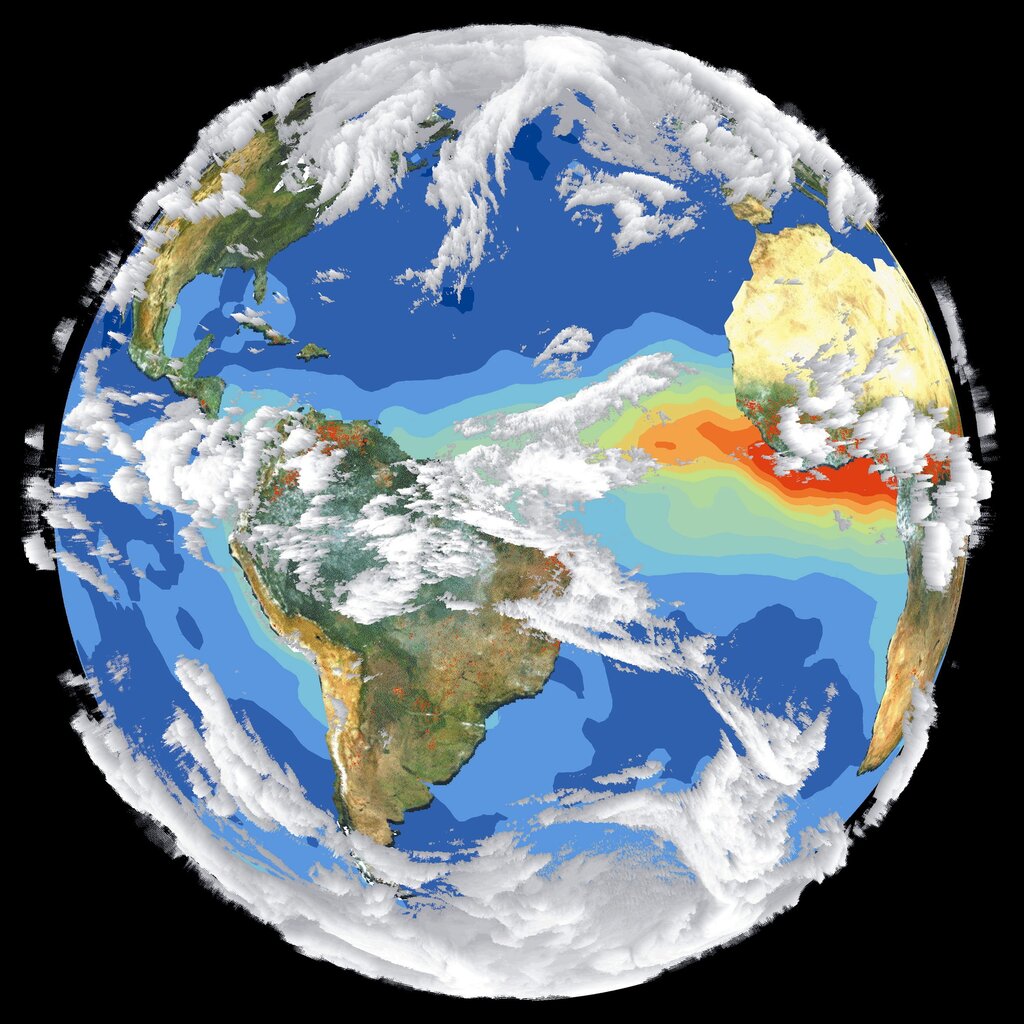
Remote sensing is also critical during emergencies. After a hurricane, earthquake, or wildfire, images from space can help responders assess the damage, identify the hardest-hit areas, and plan rescue efforts. By comparing images from before and after a disaster, they can quickly map flooded regions or chart the path of a fire.
The Invisible Rainbow
How do these sensors see so much? They detect energy from the electromagnetic spectrum. This spectrum is a vast range of radiation, from very short-wavelength gamma rays to very long-wavelength radio waves. The light our eyes can see, visible light, is just a tiny sliver of this full spectrum.
Imagine the electromagnetic spectrum as a giant piano keyboard. Our eyes can only perceive the notes in the very middle. Remote sensors, however, can detect a much wider range of these "notes," including invisible ones like infrared and ultraviolet light.
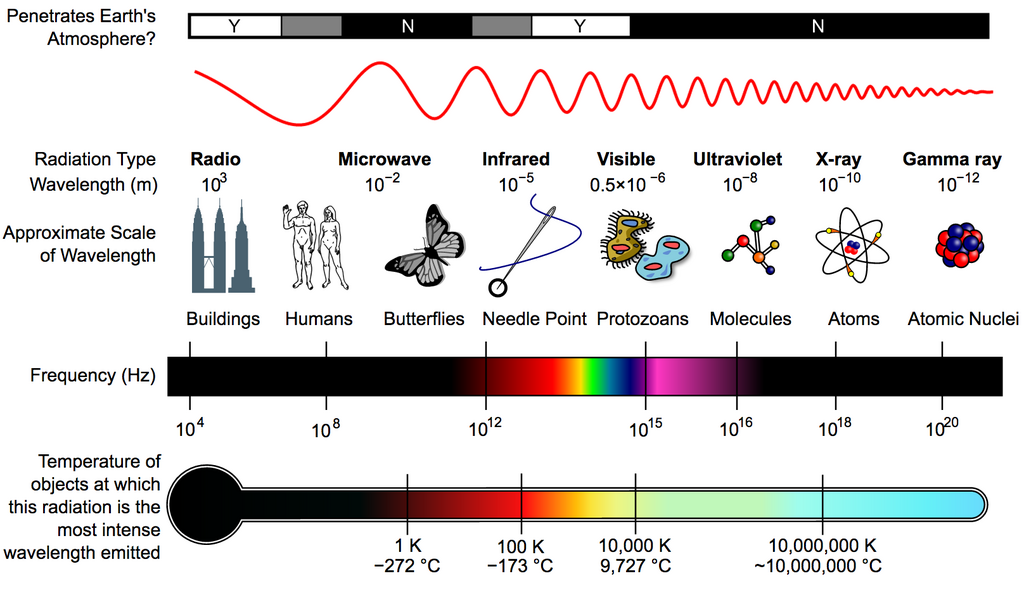
Different materials on Earth's surface reflect and absorb these different types of energy in unique ways, creating distinct signatures. For example, healthy vegetation reflects a lot of near-infrared energy, which our eyes can't see but sensors can. By detecting this invisible light, satellites can create detailed maps of plant health. Water, rock, soil, and buildings all have their own unique spectral signatures, too. By analyzing these patterns, scientists can identify features on the Earth's surface and understand what's happening there.
Now, let's test your understanding of these core concepts.
What is the core principle of remote sensing?
A farmer wants to identify which parts of a large cornfield are stressed and need more water. How could remote sensing help?
By capturing energy across this broad spectrum, remote sensing provides a powerful and unique perspective on our world.