Introduction to Regression Analysis
Introduction to Regression Analysis
Finding the Connection
How are things related in the world around us? If you study more, will your test scores go up? If a company spends more on advertising, will its sales increase? These are the kinds of questions regression analysis helps us answer.
Regression analysis is a powerful statistical tool that allows us to investigate the relationship between a dependent variable and one or more independent variables.
Think of it as a way to draw a line through a cloud of data points. It helps us model relationships, which we can then use to make predictions or understand cause-and-effect connections. For example, a real estate agent might use regression to predict a house's price based on its square footage, number of bedrooms, and location.
The Key Players
Every regression model has two types of variables. Understanding their roles is crucial.
| Variable Type | Role | Also Known As |
|---|---|---|
| Independent Variable | The factor you change or observe. | Predictor, Input, Feature |
| Dependent Variable | The outcome you measure. | Response, Output, Target |
The independent variable is what we think influences the dependent variable. In our housing example, square footage is an independent variable, and the house price is the dependent variable. We're testing the idea that the size of a house affects its price.
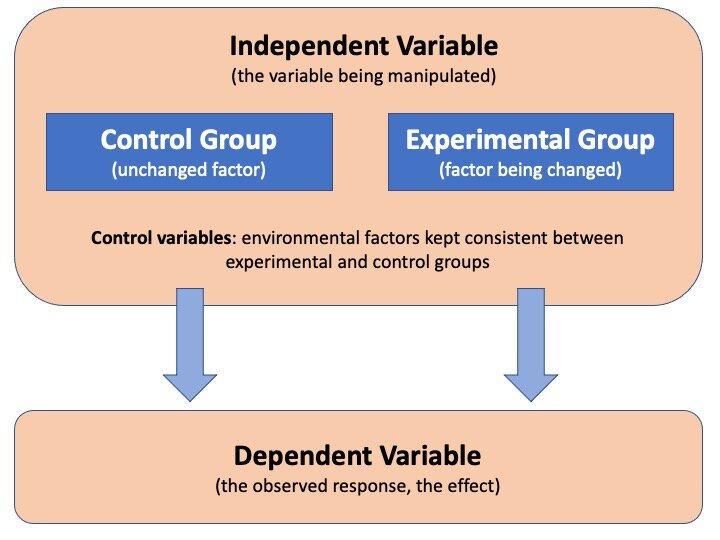
Let's take another example. If we want to see if the amount of coffee someone drinks affects their productivity, the number of cups of coffee is the independent variable. The measure of productivity, like tasks completed, is the dependent variable.
A Family of Models
Regression isn't a single tool; it's a whole toolkit. The type of model you use depends on the kind of question you're asking and the data you have.
Here are a few common types:
Simple Linear Regression: The most basic form. It models the relationship between one independent variable and one dependent variable using a straight line.
Multiple Regression: An extension of linear regression. It models the relationship between two or more independent variables and one dependent variable.
Logistic Regression: Used when the dependent variable is a category, not a number. For example, predicting whether an email is spam or not spam.
The core idea is always the same: finding a mathematical equation that best describes the relationship between your variables.
Don't worry about the math behind these for now. The key takeaway is that regression is a flexible technique for uncovering and using the patterns hidden in your data.
Time to see what you've learned.
What is the primary purpose of regression analysis?
A coffee shop owner wants to predict daily sales based on the day's temperature. In this analysis, what is the independent variable?
You now have a solid foundation in what regression analysis is and why it's a cornerstone of statistics and data science. In the next sections, we'll start building these models ourselves.