Introduction to Recreational Poker
Poker Basics
The Goal of the Game
At its heart, poker is a simple game. The main objective is to win the “pot,” which is the collection of all the bets made by players in a single hand. You can win the pot in one of two ways.
First, you can have the best five-card hand at the end of the game, called the “showdown.” Second, you can convince all the other players to give up and fold their hands, leaving you as the last one standing.
This second method is where bluffing comes in. You don't always need the best cards to win, just the nerve to make others think you do. Every decision, from betting to folding, revolves around this central goal of capturing the pot.
The Tools of the Trade
Poker is played with a standard 52-card deck. Understanding the deck is the first step to understanding the game. There are no jokers used.
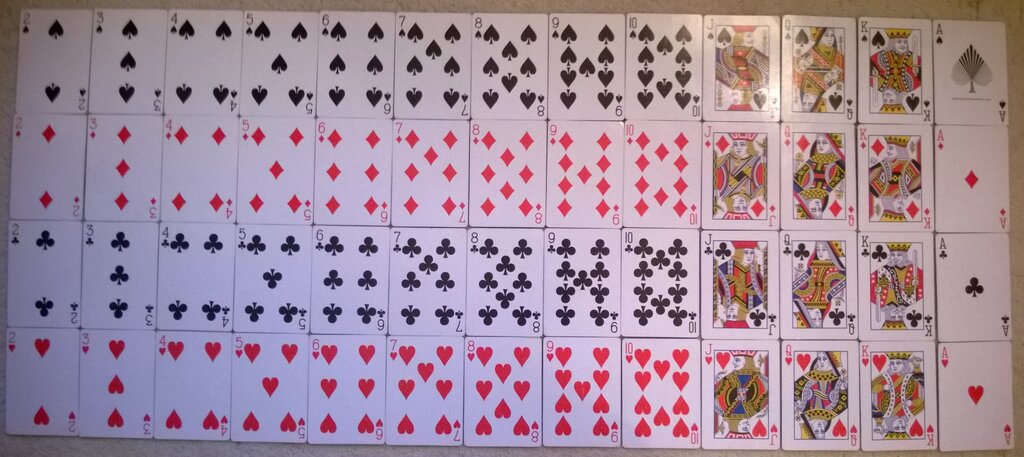
The deck is divided into four suits: spades (♠), hearts (♥), diamonds (♦), and clubs (♣). In most poker games, all suits are considered equal in value.
Each suit contains thirteen cards, or ranks. From highest to lowest, they are: Ace, King, Queen, Jack, 10, 9, 8, 7, 6, 5, 4, 3, 2. The Ace can sometimes be used as a low card (below the 2) to form certain hands, like a straight.
How a Hand Works
While rules vary between different types of poker, the basic flow of a hand is generally consistent. It’s a cycle of dealing cards and betting.
First, players are dealt their initial cards, often called “hole cards,” which are kept private. A round of betting follows. Players can choose to check (pass the action), bet (put money into the pot), call (match a bet), raise (increase a bet), or fold (give up their hand).
Depending on the game, more cards might be dealt. Some are dealt face up in the center of the table for all players to share, known as “community cards.” These are followed by more betting rounds. This continues for a set number of rounds.
If two or more players remain after the final betting round, the showdown occurs. The players reveal their hands, and the player with the best hand wins the pot. If everyone else folds before the showdown, the last remaining player wins by default.
Popular Poker Varieties
Poker isn't a single game but a family of games, each with its own unique rules. However, most variations share the same hand rankings and basic principles. Two of the most popular games you'll encounter are Texas Hold'em and Omaha.
Poker is a family of card games that includes many variations.
Texas Hold'em is by far the most famous. Each player gets two private hole cards. Five community cards are then dealt face-up in three stages: the flop (three cards), the turn (one card), and the river (one card). Players must make the best possible five-card hand using any combination of their two hole cards and the five community cards.
Omaha is similar to Texas Hold'em but with a key twist. Players are dealt four hole cards instead of two. Like Hold'em, there are five community cards. However, to make a hand, a player must use exactly two of their four hole cards and exactly three of the five community cards. This rule creates very different strategic possibilities.
These are just two examples, but they illustrate how a few small rule changes can create entirely different games. For now, understanding the basic structure and goal is all you need to get started.