Introduction to Quantum Physics
Introduction to Quantum Physics
A Crack in Classical Physics
At the end of the 19th century, physics seemed nearly complete. The laws of motion laid out by Isaac Newton could predict the path of a planet, and James Clerk Maxwell's equations beautifully described light as an electromagnetic wave. It felt like all the big questions had answers. But a few stubborn problems, like small cracks in a perfect wall, refused to go away. These problems couldn't be explained by the physics of the day, known now as classical physics.
One of the most vexing issues was something called the black-body radiation problem. A black body is a theoretical object that absorbs all radiation that hits it. When heated, it glows, emitting radiation across a spectrum of wavelengths. Classical physics predicted that as the object got hotter, it should emit an infinite amount of energy in the ultraviolet range. This was clearly wrong—and physicists wryly called it the “ultraviolet catastrophe.”
The classical model failed because it assumed that energy was emitted continuously, like water flowing from a tap.
In 1900, the German physicist Max Planck proposed a radical idea. What if energy wasn't continuous? What if, instead, it could only be emitted or absorbed in discrete packets, which he called "quanta"? It was like saying you can climb a staircase one step at a time, but you can't stand in between steps. Energy had to come in specific amounts. Each packet of energy, he proposed, was proportional to the frequency of the radiation.
Planck's idea perfectly matched the experimental data for black-body radiation and solved the ultraviolet catastrophe. He didn't know it at the time, but he had just laid the foundation for quantum mechanics.
Light as a Particle
Planck's idea was that energy was quantized, but he still thought of light itself as a wave. It was Albert Einstein who took the next bold step. In 1905, he used Planck's concept to explain another puzzle: the photoelectric effect.
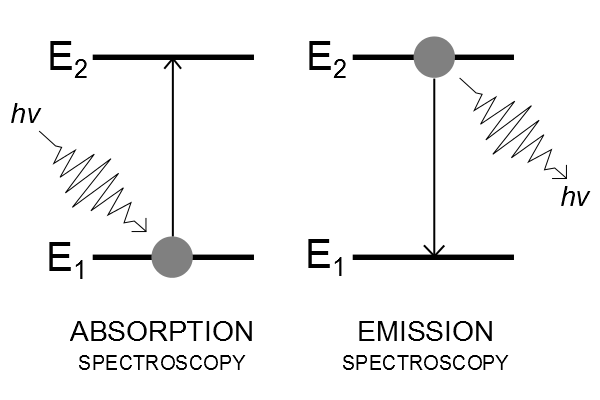
Here's the setup: when you shine light on a metal plate, it can knock electrons loose. According to classical wave theory, a brighter (more intense) light wave should carry more energy, so it should eject electrons with more kinetic energy. A dim light should take a while to build up enough energy to free an electron. But experiments showed something completely different. The energy of the ejected electrons depended only on the light's color (its frequency), not its brightness. And there was no time delay. If electrons were going to be ejected, they were ejected instantly.
Einstein proposed that light itself is not a continuous wave, but a stream of these energy packets. He called them photons. Each photon has an energy of . A brighter light just means more photons, not more energetic photons. An electron is knocked loose only if it's hit by a single photon with enough energy to do the job. This explained why frequency, not intensity, was the key factor.
Photon
noun
A discrete particle, or quantum, of electromagnetic radiation. It is the basic unit of light.
This led to a strange new picture of reality. Light, which for centuries was understood as a wave, also behaved like a particle. This is the principle of wave-particle duality, a cornerstone of quantum mechanics.
Matter as a Wave
The story gets even stranger. In 1924, a young French physicist named Louis de Broglie wondered: if waves like light can act like particles, could particles like electrons act like waves?
De Broglie proposed that all matter has a wavelength, which is inversely proportional to its momentum. The more momentum an object has, the shorter its wavelength.
For everyday objects like a baseball, the wavelength is so incredibly small that it's impossible to detect. But for a tiny particle like an electron, the wavelength is significant. This idea was so bizarre that it was met with skepticism. That is, until 1927, when physicists Clinton Davisson and Lester Germer accidentally proved it. They fired electrons at a nickel crystal and saw something amazing: the electrons diffracted, creating an interference pattern, just like waves would. De Broglie was right.
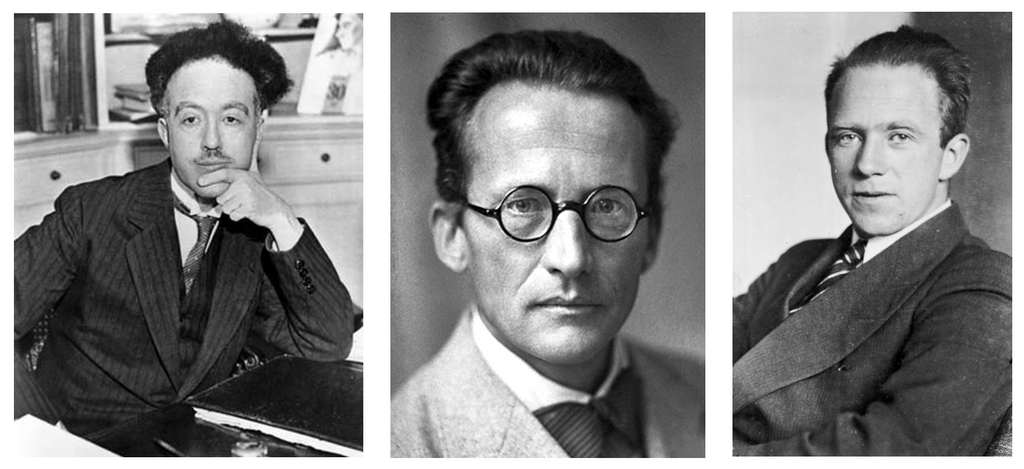
Everything—electrons, protons, atoms, even you—has a wave nature. This discovery shattered the classical distinction between particles and waves.
Probability and Observation
So if an electron is a wave, where is it? An ocean wave isn't in one specific spot; it's spread out. The same is true for an electron. Its wave, described by a mathematical function called the wave function ($ \psi $), represents a cloud of probabilities. It tells you where the electron is likely to be found, but not where it is for certain.
This is a radical departure from classical physics, which is deterministic. If you know the position and momentum of a baseball, you can predict its exact path. Quantum mechanics is probabilistic. You can only know the odds of finding an electron in a particular location.
Strangely, the act of measuring or observing the electron forces it to "choose" a position. The probability wave collapses, and the electron is found in a single, definite spot.
This central role of observation and the inherent uncertainty it implies is captured by Werner Heisenberg's Uncertainty Principle. It states that you cannot simultaneously know both the precise position and the precise momentum of a particle. The more you pin down one, the less you know about the other. This isn't a limitation of our instruments; it's a fundamental property of the universe. The quantum world is, at its heart, a world of probabilities, not certainties.
Let's test your understanding of these foundational ideas.
What was the “ultraviolet catastrophe”?
To solve the black-body radiation problem, Max Planck proposed that energy is not continuous, but is emitted or absorbed in discrete packets called ______.
These early discoveries opened the door to a new and bizarre understanding of the universe, one that continues to be explored today.