Introduction to Quantum Physics
Introduction to Classical Physics
A Predictable World
For centuries, the universe seemed like a grand, intricate clock. If you knew the positions and speeds of all its gears, you could predict its state at any moment in the future or past. This is the world of classical physics. It describes the motion of a thrown ball, the orbits of planets, and the flow of electricity through a wire. It’s the physics of our everyday, large-scale world.
Classical physics is built on the idea that the universe is deterministic. Given the starting conditions, the future is set in stone.
This framework rests on two main pillars: Newtonian mechanics, which governs motion and forces, and electromagnetism, which describes light, electricity, and magnetism. Together, they painted a remarkably complete picture of reality, one that worked so well it seemed there was little left for physicists to discover.
The Laws of Motion
Isaac Newton laid the groundwork for classical physics in the 17th century. His laws of motion provided a mathematical toolkit for understanding how objects move and interact. The most famous of these is his second law, which connects force (), mass (), and acceleration ().
This simple equation is incredibly powerful. If you know the forces acting on an object, you can calculate its acceleration. From there, you can determine its exact path, or trajectory. Think about launching a satellite. Engineers use Newton's laws to calculate the precise speed and angle needed to place it in a stable orbit around Earth.
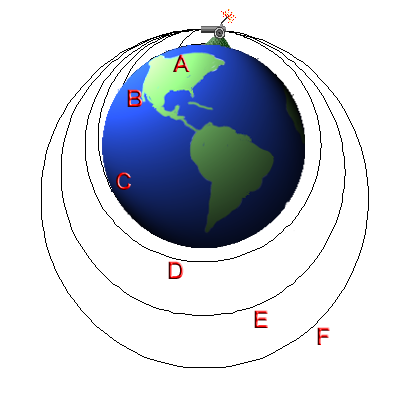
Newton also gave us the law of universal gravitation, showing that the same force that makes an apple fall from a tree also keeps the Moon in orbit around the Earth. Everything from billiard balls to galaxies follows these predictable rules. This deterministic view was a cornerstone of classical physics: know the present, and you can calculate the future.
Unifying Forces
The second pillar of classical physics is electromagnetism. In the 19th century, scientists were studying electricity and magnetism, which seemed like separate forces. But through the work of physicists like Michael Faraday and James Clerk Maxwell, a deeper connection was revealed.
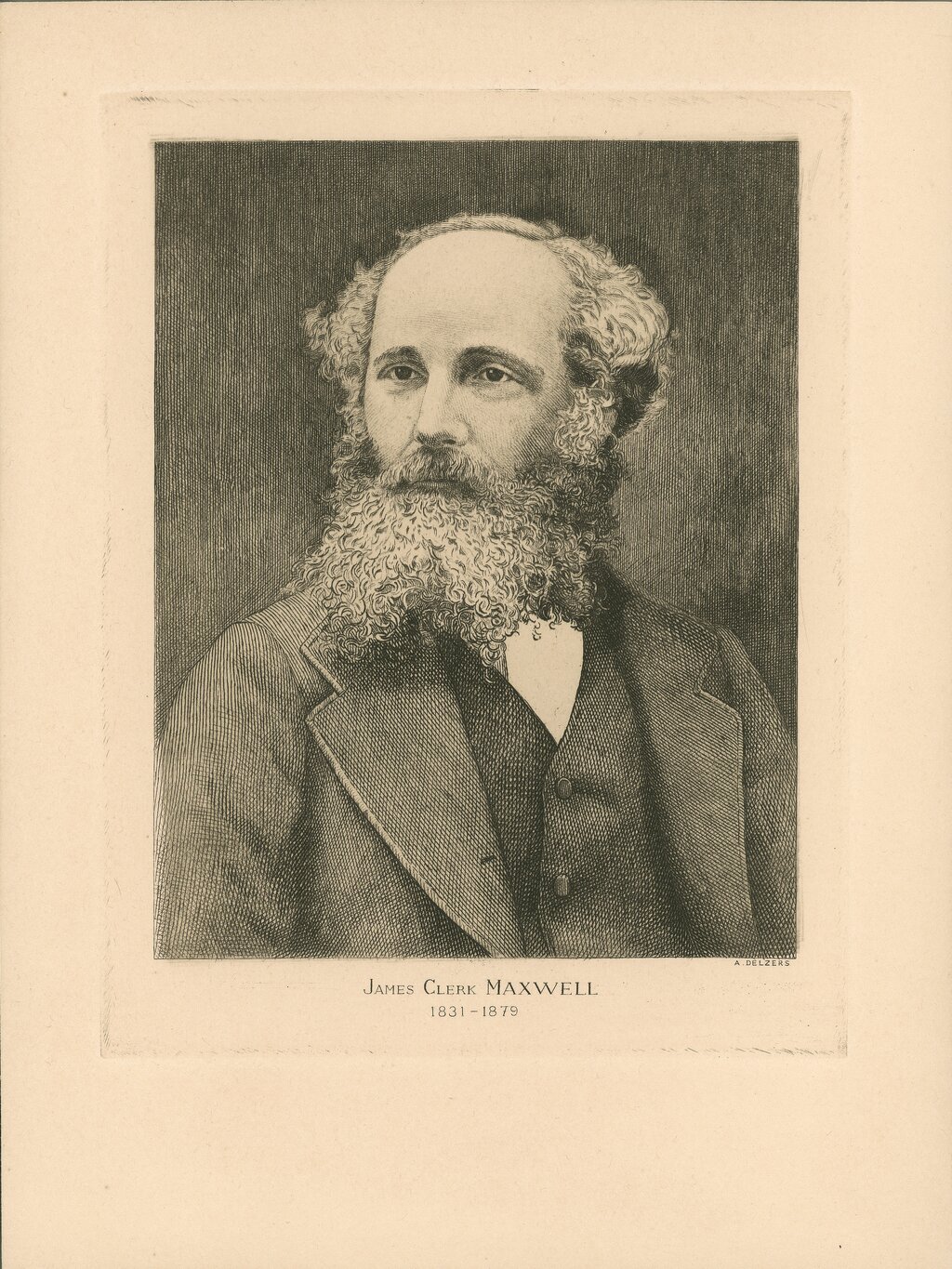
Maxwell summarized this relationship in a set of four elegant equations. These equations showed that a changing electric field creates a magnetic field, and a changing magnetic field creates an electric field. This interplay produces self-propagating waves that travel through space.
Maxwell calculated the speed of these waves and found it matched the known speed of light. He had discovered that light itself is an electromagnetic wave.
This was a monumental achievement. Maxwell's equations not only unified two forces of nature but also explained the fundamental nature of light, radio waves, and other forms of radiation. Like Newton's laws, these principles were deterministic and described a world of continuous fields and energies.
Cracks in the Foundation
By the end of the 19th century, classical physics seemed to have explained almost everything. Yet, a few nagging problems remained. When scientists tried to use classical ideas to explain certain phenomena, the predictions didn't match the experimental results. One such issue was the "ultraviolet catastrophe."
Blackbody
noun
An idealized object that absorbs all radiation that falls on it. When heated, it emits radiation across a spectrum of wavelengths.
Classical theories predicted that a heated object, known as a blackbody, should emit an infinite amount of energy at high frequencies, like ultraviolet light. This was obviously wrong—you don't get blasted with infinite energy when you turn on a stove. The math of classical physics simply broke down.
Another puzzle was the photoelectric effect, where light hitting a metal surface could knock electrons loose. Classical physics, which viewed light as a continuous wave, couldn't explain why this only happened with light above a certain frequency, regardless of its brightness. These inconsistencies suggested that for the very small and the very energetic, the familiar rules of the classical world no longer applied. A new kind of physics was needed.