Introduction to Quantum Physics
Introduction to Quantum Mechanics
A Crack in the Old Picture
For a long time, the world of physics seemed tidy. In the late 19th century, scientists felt they had a solid grip on how the universe worked. They had Newton's laws of motion, which could predict the path of a planet or a cannonball with stunning accuracy. They understood electromagnetism, thanks to Maxwell's equations, which explained light, radio waves, and magnets. This framework is now called classical physics.
Classical physics described a predictable, deterministic universe. If you knew the position and momentum of an object, you could, in principle, calculate its entire past and future. It was like a giant clockwork machine, ticking along according to a set of beautiful, unchanging rules.
Everything seemed to fit. But a few strange experimental results didn't quite line up. These weren't just small errors; they were deep contradictions that the established rules couldn't explain away.
Puzzling Observations
One of the first major problems was something called the ultraviolet catastrophe. Classical physics predicted that a perfect theoretical object called a "black body" should radiate an infinite amount of energy as the wavelength of light gets shorter. This was obviously wrong, our ovens don't sterilize us with gamma rays when they heat up. The math of classical physics led to a nonsensical answer when applied to the very small scale of light waves.
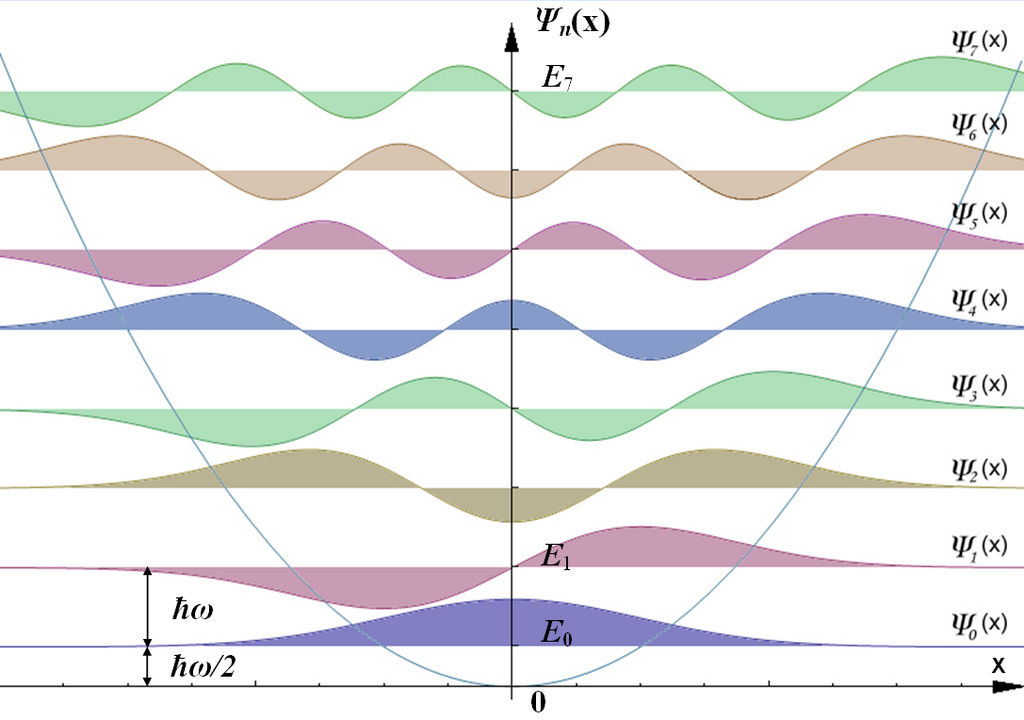
Another puzzle was the photoelectric effect. When light shines on a metal plate, it can knock electrons loose. But weirdly, the energy of the ejected electrons didn't depend on the light's brightness, only on its color (or frequency). A dim blue light could eject electrons while a very bright red light did nothing. Classical wave theory of light couldn't make sense of this at all.
These inconsistencies showed that the classical rules, so successful for large objects, broke down when dealing with atoms and light. The universe wasn't a simple clockwork machine after all. A new set of rules was needed for the microscopic world.
The Quantum Leap
In 1900, Max Planck took a bold step. To solve the black-body radiation problem, he proposed a radical idea: energy isn't continuous. He suggested that energy comes in discrete packets, which he called "quanta." It's like saying you can't have any amount of money, only multiples of a penny. Energy could only be emitted or absorbed in these tiny, specific amounts.
quantum
noun
The minimum amount of any physical entity (like energy) involved in an interaction. The plural is quanta.
This idea of quantization was revolutionary. It went against the core principles of classical physics, where things like energy were assumed to be smooth and infinitely divisible. Planck's theory perfectly matched the experimental data for black-body radiation, but it opened a door to a whole new kind of physics.
Soon after, in 1905, Albert Einstein used Planck's idea to explain the photoelectric effect. He proposed that light itself is made of these energy packets, later named photons. The energy of each photon is determined by its frequency. This explained why a dim blue light (high-frequency, high-energy photons) could knock out electrons, while a bright red light (low-frequency, low-energy photons) couldn't, no matter how many photons you sent.
These breakthroughs marked the birth of quantum mechanics. It wasn't just a small correction to the old theories; it was a fundamental shift in how we understand reality.
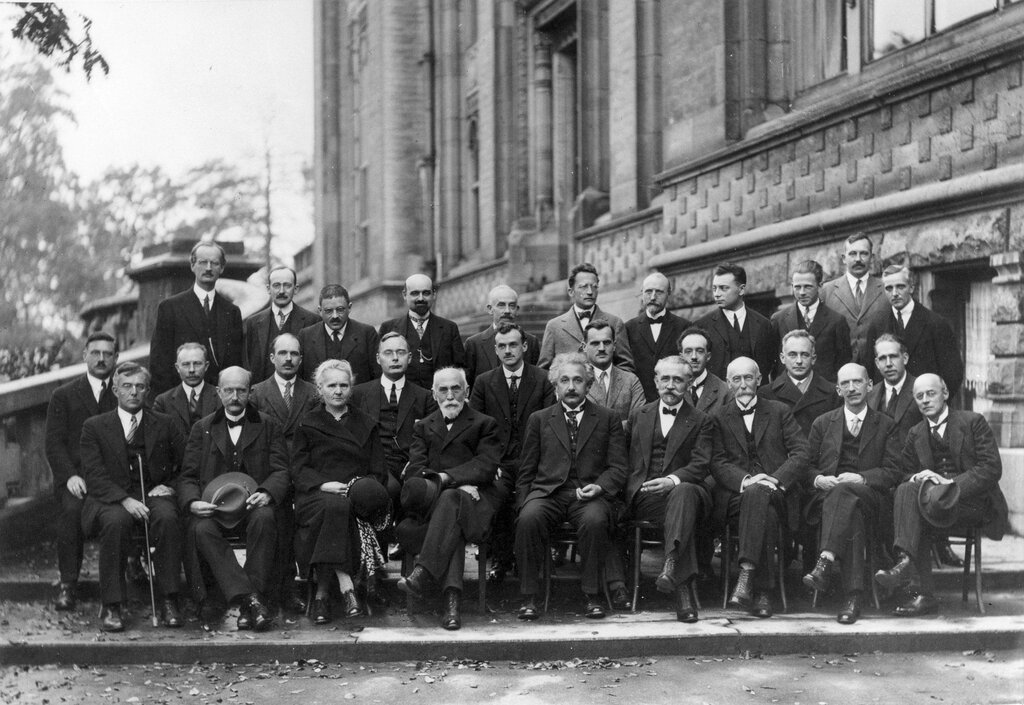
The core principle that emerged is that at the subatomic level, properties like energy are quantized. They can only take on specific, discrete values. An electron in an atom can't have just any energy level; it has to occupy one of a few specific energy "rungs" on a ladder. It can jump between these rungs, but it can never be in between them.
This equation relates the change in energy () to a constant (, Planck's constant) and the frequency () of the light emitted or absorbed. It's one of the foundational formulas of quantum mechanics, linking the particle-like concept of energy packets to the wave-like concept of frequency.
This new theory painted a strange but powerful picture of the universe. It was a world of probabilities and discrete jumps, not of smooth, predictable paths. This was just the beginning of a journey into the bizarre and fascinating rules that govern the very small.
Which statement best describes the view of the universe held by classical physics in the late 19th century?
The 'ultraviolet catastrophe' was a major problem because classical theories predicted that a heated 'black body' should: