Introduction to Quantum Physics
Introduction to Quantum Mechanics
A Crack in Classical Physics
By the end of the 19th century, physicists felt they had a nearly complete picture of the universe. Newton's laws of motion perfectly described everything from falling apples to orbiting planets. Maxwell's equations did the same for electricity, magnetism, and light. It seemed like all the major questions had been answered.
But a few stubborn problems remained. One was called the "black-body radiation" problem. A black body is a theoretical object that absorbs all radiation that hits it. When heated, it glows. Classical physics predicted that as the object got hotter, it should emit an infinite amount of energy at high frequencies, like ultraviolet light. This was obviously wrong and was nicknamed the "ultraviolet catastrophe."
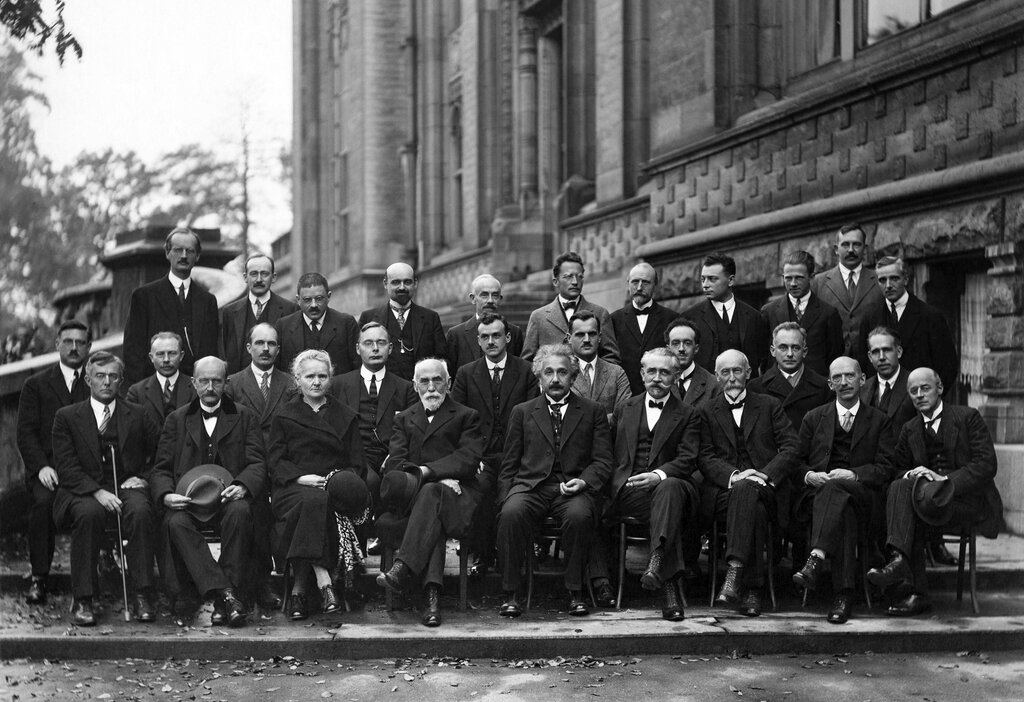
In 1900, German physicist Max Planck proposed a radical solution. He suggested that energy wasn't continuous, but came in discrete packets, which he called "quanta." It was a strange idea, like saying you can't pour water smoothly but must pour it one drop at a time. A few years later, Albert Einstein used this concept to explain another puzzle, the photoelectric effect, showing that light itself could behave like a particle.
These discoveries were the first signs that the classical world had a strange, hidden layer underneath. A new kind of physics was needed to explore it.
An Equation for the Quantum World
By the 1920s, physicists were hunting for a mathematical framework that could describe this new quantum reality. In 1926, Austrian physicist Erwin Schrödinger developed an equation that became a cornerstone of quantum mechanics.
In classical physics, Newton's second law () tells you exactly where an object will be and how it will be moving at any time. The Schrödinger equation plays a similar role for quantum particles like electrons, but with a crucial twist. It doesn't predict the exact position of a particle. Instead, it describes something called the wave function, usually represented by the Greek letter psi, .
The time-dependent Schrödinger equation. It describes how the wave function of a quantum system evolves over time.
The wave function contains all the information that can be known about a quantum system. Solving the Schrödinger equation for a particular situation gives you the wave function for that system. But what does the wave function actually tell us?
Physics Becomes a Game of Chance
This is where quantum mechanics truly departs from our everyday experience. Physicist Max Born provided the interpretation: the wave function itself doesn't have a direct physical meaning, but its square does. Specifically, the square of the wave function's magnitude, , gives the probability of finding the particle at a certain position at a certain time.
This was a revolutionary idea. Physics was no longer deterministic. You could no longer say, "The electron is right here." Instead, you could only say, "There is a 40% chance the electron is here, and a 10% chance it is over there."
The universe, at its most fundamental level, operates on probabilities, not certainties.
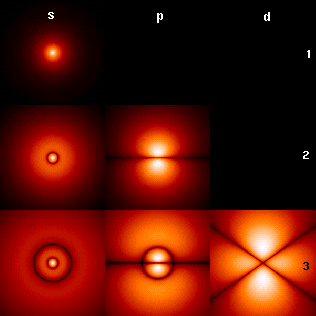
Think of it like predicting the weather. A meteorologist can't tell you exactly where a single raindrop will land. But they can show you a map with regions where rain is highly probable and others where it's unlikely. The wave function provides a similar "probability map" for a quantum particle.
This probabilistic nature isn't due to a lack of information or imprecise measurements. It's a fundamental feature of the universe. The quantum world is inherently fuzzy and uncertain. This insight, born from the Schrödinger equation and Born's interpretation, sets the stage for all the weird and wonderful phenomena of quantum mechanics.
What problem, known as the "ultraviolet catastrophe," challenged classical physics at the end of the 19th century?
What fundamental shift in thinking did Max Planck propose to solve the black-body radiation problem?