Introduction to Quantum Physics
Introduction to Quantum Mechanics
The Cracks in Classical Physics
By the late 1800s, many physicists felt their work was nearly done. The laws of motion and gravity described by Isaac Newton, combined with James Clerk Maxwell's equations for electricity and magnetism, seemed to explain almost everything in the universe. This framework, known as classical physics, worked beautifully for predicting the motion of planets and the behavior of everyday objects.
But a few strange experimental results didn't quite fit. These weren't just small errors; they were deep puzzles that classical physics couldn't solve. These anomalies, like small cracks in a dam, would eventually break everything open and lead to a completely new understanding of reality.
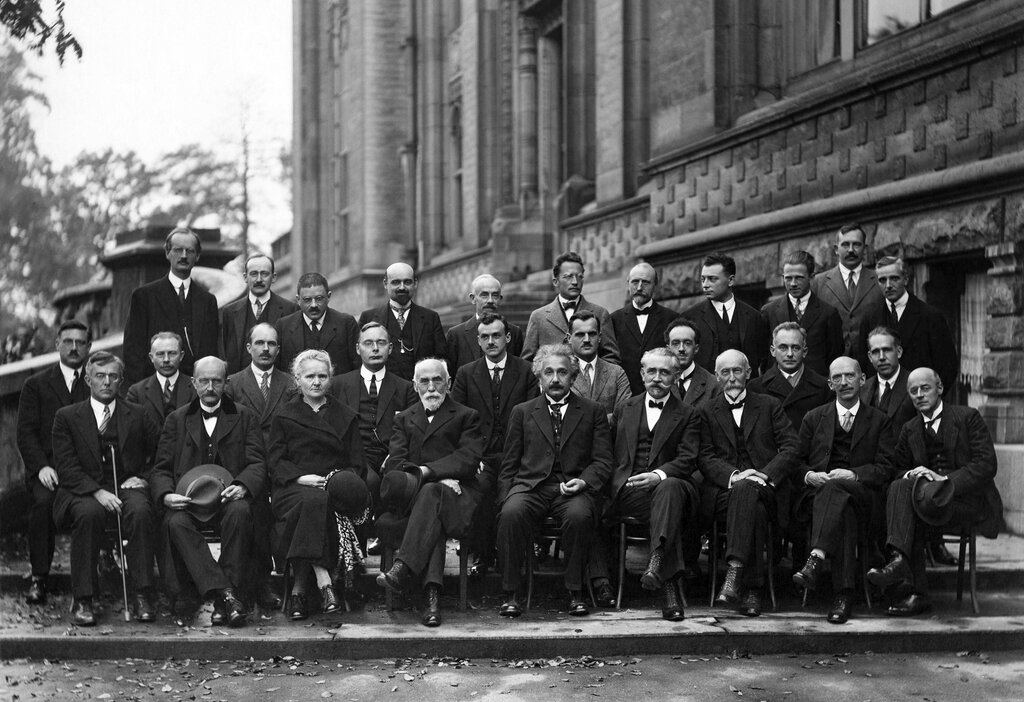
An Infinite Problem
One of the first major cracks appeared with something called blackbody radiation. A blackbody is an idealized object that absorbs all light and energy that hits it. When heated, it glows, emitting radiation across the entire electromagnetic spectrum. Think of a blacksmith's forge, where a piece of metal glows red, then orange, then white-hot as its temperature increases.
Scientists measured the spectrum of light emitted by these objects. Classical physics tried to explain the results, but its predictions were bizarre. The equations suggested that as the wavelength of the emitted light got shorter, its intensity should increase without limit. This meant a hot object should release an infinite amount of energy in the ultraviolet range and beyond. This absurd prediction was nicknamed the "ultraviolet catastrophe."
In 1900, the physicist Max Planck found a solution. He made a daring assumption: what if energy wasn't a continuous flow, but was instead emitted and absorbed in tiny, discrete packets? He called these packets "quanta."
quantum
noun
The minimum amount of any physical entity, like energy or matter, involved in an interaction.
According to Planck, the energy of a single quantum was directly proportional to the frequency of the radiation. His simple formula was:
Here, is the energy of the quantum, is its frequency, and is a tiny new fundamental constant of nature, now known as Planck's constant. By quantizing energy, Planck's formula perfectly matched the experimental data and avoided the ultraviolet catastrophe. It was a stunning success, but at the time, even Planck wasn't sure what it truly meant. It seemed like just a mathematical trick.
Light as a Bullet
The next puzzle was the photoelectric effect. Scientists observed that when light, especially ultraviolet light, shines on a piece of metal, it can knock electrons loose. According to the classical wave theory of light, a brighter light carries more energy, so it should eject electrons with more kinetic energy. But that’s not what happened.
Experiments showed that a brighter light knocked out more electrons, but the maximum energy of each electron stayed the same. And strangely, for any given metal, there was a specific cutoff frequency; light below that frequency wouldn't eject any electrons, no matter how bright it was.
In 1905, Albert Einstein took Planck's idea a step further. He proposed that light itself isn't a continuous wave but a stream of these energy packets, later named photons. Each photon acts like a tiny particle or bullet.
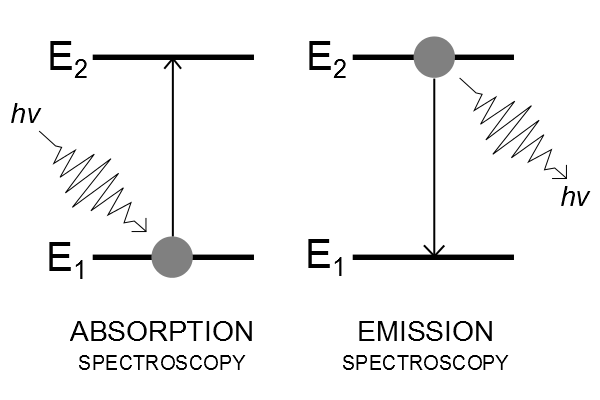
This particle model of light explained the photoelectric effect perfectly. A brighter light means more photons, so more electrons get knocked out. But the energy of each ejected electron depends on the energy of a single photon that hits it, which is determined by the light's frequency (). If the frequency is too low, no single photon has enough energy to free an electron. It was a radical idea: light, which for centuries had been understood as a wave, was behaving like a particle.
Matter as a Wave
The story took another bizarre turn in 1924. If a wave like light could act like a particle, could a particle like an electron act like a wave? A young physicist named Louis de Broglie proposed just that. He suggested that all matter, not just light, has a wave-like nature.
This idea seemed absurd at first. We don't see baseballs or people behaving like waves. De Broglie's equation showed why: the wavelength of an object is inversely proportional to its momentum. For large objects, this wavelength is so incredibly small that it's impossible to detect. But for a tiny particle like an electron, the wavelength is significant enough to be measured.
In the equation, is the de Broglie wavelength, is the particle's momentum, and is Planck's constant. Just a few years later, experiments confirmed de Broglie's hypothesis. Beams of electrons, when fired at a crystal, diffracted and created interference patterns, just like waves of light do. The evidence was undeniable: particles could behave like waves.
This is wave-particle duality: the central mystery of quantum mechanics. Everything in the universe, from light to electrons to you, has properties of both waves and particles. How it behaves depends on how you measure it.
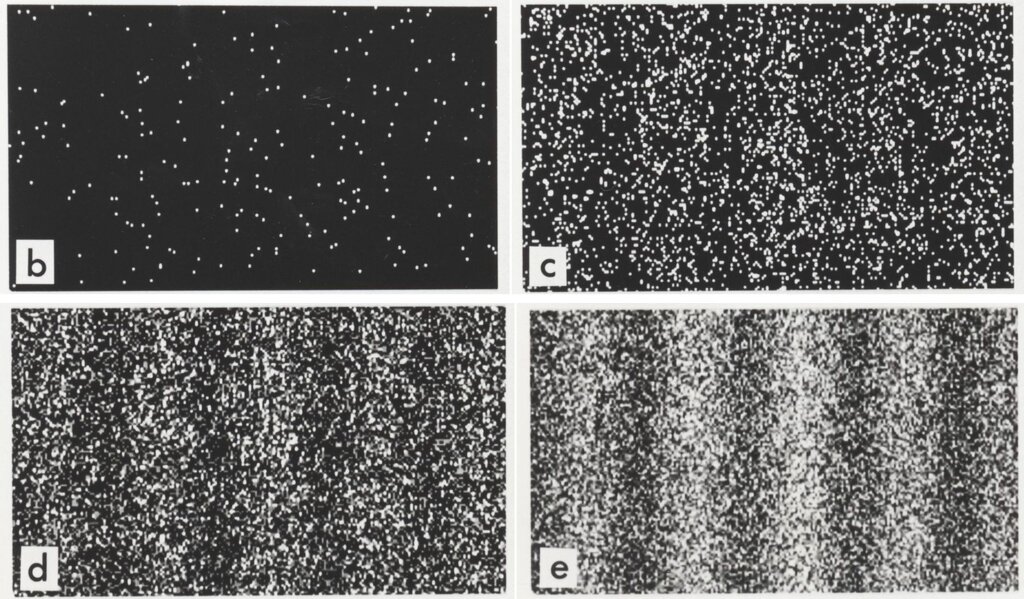
These discoveries—quantized energy, photons, and matter waves—shattered the foundations of classical physics. They revealed a strange, probabilistic world at the subatomic level that operated by a completely new set of rules. This new physics became known as quantum mechanics.
Let's test your understanding of these foundational ideas.
The "ultraviolet catastrophe" was a major problem in late 19th-century physics because it was a discrepancy between:
According to Albert Einstein's explanation of the photoelectric effect, increasing the brightness of the light shining on a metal will:
The classical picture of a clockwork universe was gone, replaced by a fuzzy, uncertain, and far more interesting reality.