Introduction to Quantum Physics
Historical Background
Cracks in Classical Physics
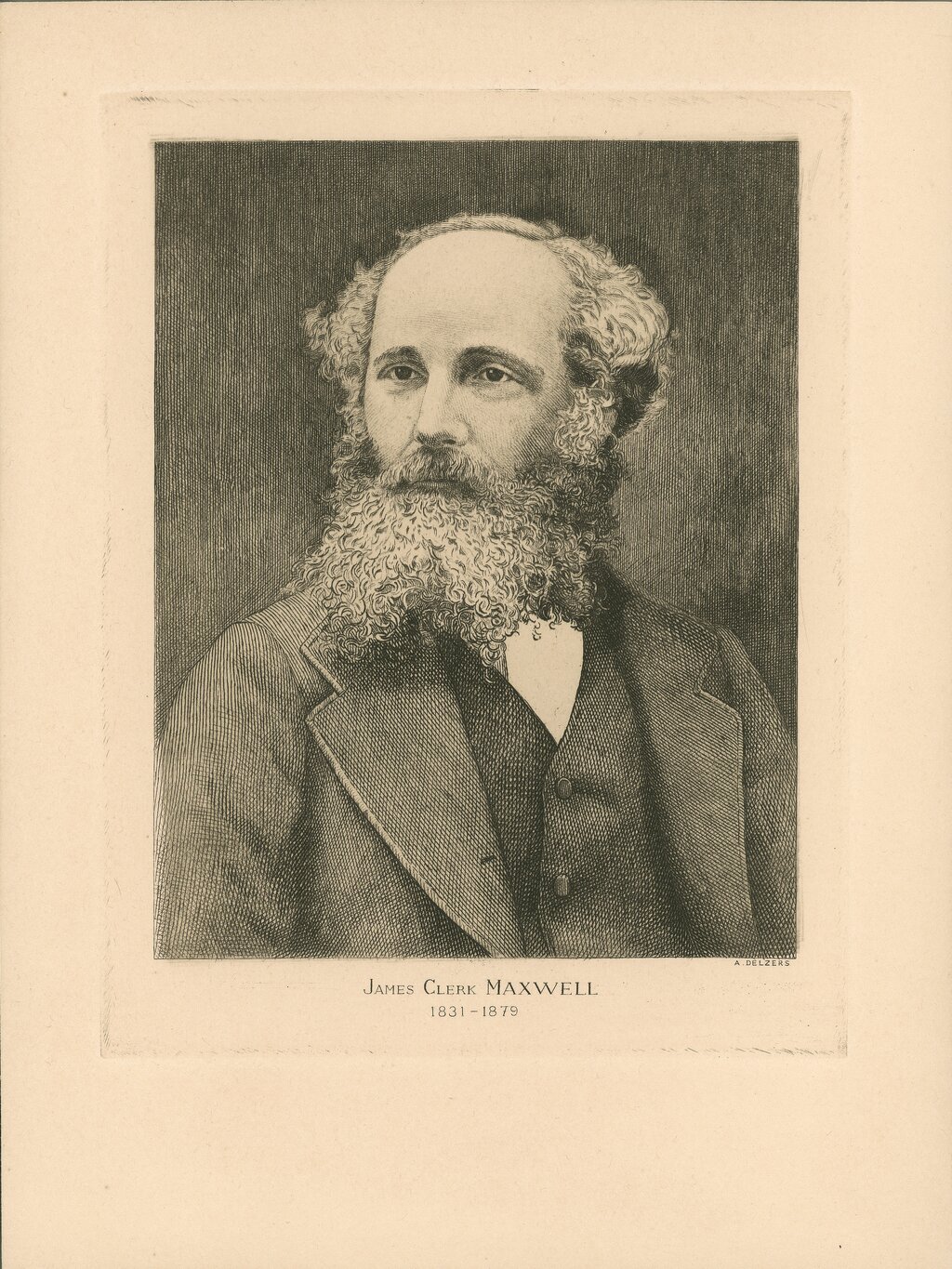
By the late 1800s, many physicists felt their work was nearly done. The laws of motion and gravity laid out by Isaac Newton, combined with James Clerk Maxwell's theories of electricity and magnetism, seemed to explain just about everything in the universe. This framework, now called classical physics, worked beautifully for describing the motion of planets and the behavior of light waves.
But a few strange experimental results didn't quite fit. These weren't minor issues; they were deep contradictions that classical physics couldn't resolve. These puzzles would eventually lead to a complete revolution in our understanding of reality.
One of the first major cracks appeared with a problem called black-body radiation. A "black body" is an idealized object that absorbs all radiation that hits it. When heated, it glows, emitting radiation across the entire electromagnetic spectrum. Think of a hot poker glowing red, then white-hot as it gets hotter.
Classical physics tried to predict the spectrum of light a black body should emit. The prediction failed spectacularly. It suggested that the object should release an infinite amount of energy at high frequencies, like ultraviolet light. This was nicknamed the "ultraviolet catastrophe" because it was so obviously wrong. If it were true, every hot object would instantly radiate away all its energy in a blinding flash of ultraviolet light.
In 1900, the German physicist Max Planck found a solution. He proposed a radical idea: what if energy could only be emitted or absorbed in discrete little packets? He called these packets "quanta." Instead of energy flowing in a smooth, continuous stream, it came in tiny, indivisible chunks. The size of an energy chunk, he said, was proportional to the frequency of the radiation.
Planck's formula perfectly matched the experimental data for black-body radiation. It avoided the ultraviolet catastrophe because at high frequencies, the energy cost of emitting even one quantum was too high. The idea of quantized energy was the first step into the quantum world.
Light as a Particle
Planck's idea was that energy was quantized during emission and absorption, but most people still thought light itself traveled through space as a continuous wave. Another puzzle, the photoelectric effect, would challenge that.
Scientists observed that when light, especially ultraviolet light, shines on a metal surface, it can knock electrons loose. According to classical wave theory, a brighter (more intense) light wave carries more energy, so it should eject electrons with more kinetic energy. But this isn't what happened.
Experiments showed that the energy of the ejected electrons depended only on the light's frequency (its color), not its brightness. Brighter light just knocked off more electrons, but the energy of each one was the same.
In 1905, a young Albert Einstein took Planck's idea a step further. What if light itself wasn't a wave, but a stream of these energy packets? He proposed that light is made of particles, which we now call photons. Each photon carries a fixed amount of energy determined by its frequency ().
This explained the photoelectric effect perfectly. A single photon collides with a single electron. To knock the electron loose, the photon needs a minimum amount of energy (and therefore a minimum frequency). If the photon's frequency is too low, nothing happens, no matter how bright the light is. If the frequency is high enough, the electron is ejected. Any extra energy from the photon becomes the electron's kinetic energy. Brighter light simply means more photons are hitting the metal per second, releasing more electrons.
Further evidence came in 1923 from Arthur Compton. He found that when X-rays (very high-frequency photons) scattered off electrons, their frequency changed in a way that perfectly matched a simple collision between two particles. This Compton effect was another nail in the coffin for the classical wave theory of light.
Light, it seemed, had a dual nature. Sometimes it behaved like a wave, and other times it behaved like a stream of particles.
A New Model for the Atom
Around the same time, physicists were struggling to understand the structure of the atom. The popular model imagined electrons orbiting a central nucleus, like tiny planets orbiting a sun. But classical physics predicted that these orbiting electrons should constantly radiate energy, spiral inward, and crash into the nucleus in a fraction of a second. This meant all atoms should be unstable, which they clearly are not.
Another puzzle was that atoms only emit and absorb light at very specific frequencies, creating a unique "barcode" of spectral lines for each element. The planetary model had no explanation for this.
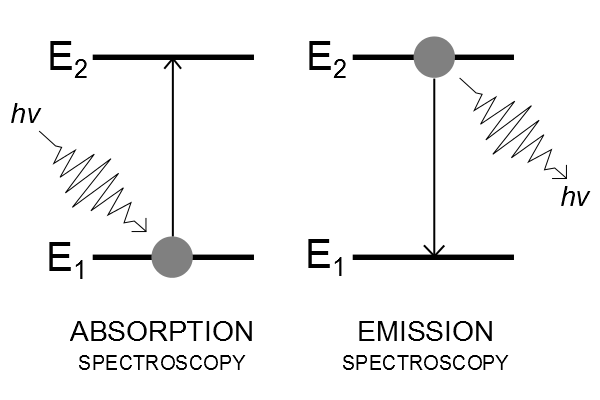
In 1913, Niels Bohr proposed a new model of the atom that incorporated Planck's quantum ideas. He suggested that electrons could only exist in specific, fixed orbits, or energy levels. They could not exist in the spaces in between.
An electron could jump from a higher energy orbit to a lower one by emitting a photon with an energy exactly equal to the energy difference between the two orbits. It could also absorb a photon of the right energy to jump to a higher orbit. This explained why atoms have discrete spectral lines. Each line corresponds to a specific jump between allowed energy levels.
Bohr's model was a strange mix of classical and quantum ideas, and it only worked well for the hydrogen atom. But it was a crucial step, showing that quantization wasn't just about light, but was a fundamental feature of matter itself.
By the 1920s, the evidence was overwhelming. The rules of classical physics broke down at the atomic scale. A new, more fundamental theory was needed to explain a world built on quanta, probability, and wave-particle duality. The stage was set for the full development of quantum mechanics.
How well do you remember the key historical steps that led to quantum theory? Test your knowledge.
In the late 19th century, what was the general feeling among many physicists regarding the state of their field?
The "ultraviolet catastrophe" was a major failure of classical physics. What did it incorrectly predict?
These early discoveries revealed a bizarre new reality at the smallest scales, forcing scientists to abandon centuries of classical intuition and develop a new language to describe the universe.