Introduction to Quantum Physics
Introduction to Quantum Mechanics
The Limits of the Old Rules
For a long time, the world of physics seemed tidy and complete. Isaac Newton’s laws of motion, formulated in the 17th century, could predict the path of a planet or the arc of a cannonball with stunning precision. A couple of centuries later, James Clerk Maxwell’s equations did the same for light, electricity, and magnetism. This framework, now called classical physics, described a universe that ran like a predictable, intricate clock. If you knew the starting position and momentum of every piece, you could, in theory, calculate its entire future.
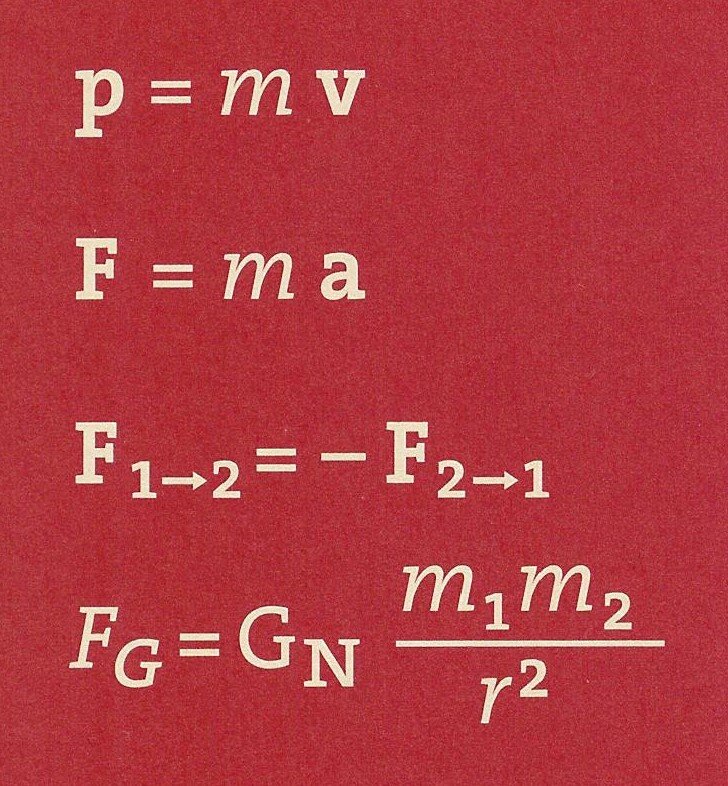
This worldview was incredibly successful. It powered the industrial revolution and gave us a deep understanding of the macroscopic world, the world we can see and touch. Scientists at the end of the 19th century were so confident that some believed all the fundamental laws of nature had been discovered. The only work left was to refine the measurements.
Puzzles from the Smallest Scales
But a few nagging problems refused to go away. These weren't just small errors in measurement; they were deep contradictions that classical physics couldn't explain. One of the most famous was the “ultraviolet catastrophe.”
When objects are heated, they glow, emitting light across a spectrum of colors. Classical physics predicted that a perfect radiator, called a “black body,” should emit an infinite amount of energy as the light’s wavelength gets shorter into the ultraviolet range. This was obviously wrong. Hot objects don't vaporize themselves with infinite energy.
Another puzzle was the photoelectric effect. When light shines on a metal surface, it can knock electrons loose. But classical theory, which treated light as a continuous wave, couldn't explain why this only happened with light above a certain frequency, regardless of how bright the light was. A faint blue light could eject electrons, while a very bright red light did nothing.
A New Physics Emerges
The solution to these problems required a radical new way of thinking. In 1900, the physicist Max Planck tackled the black-body problem. He proposed that energy wasn't continuous, like a ramp, but was emitted and absorbed in discrete packets, or chunks. He called these packets “quanta.” By assuming energy came in these tiny, indivisible units, his calculations perfectly matched the experimental data. The ultraviolet catastrophe vanished.
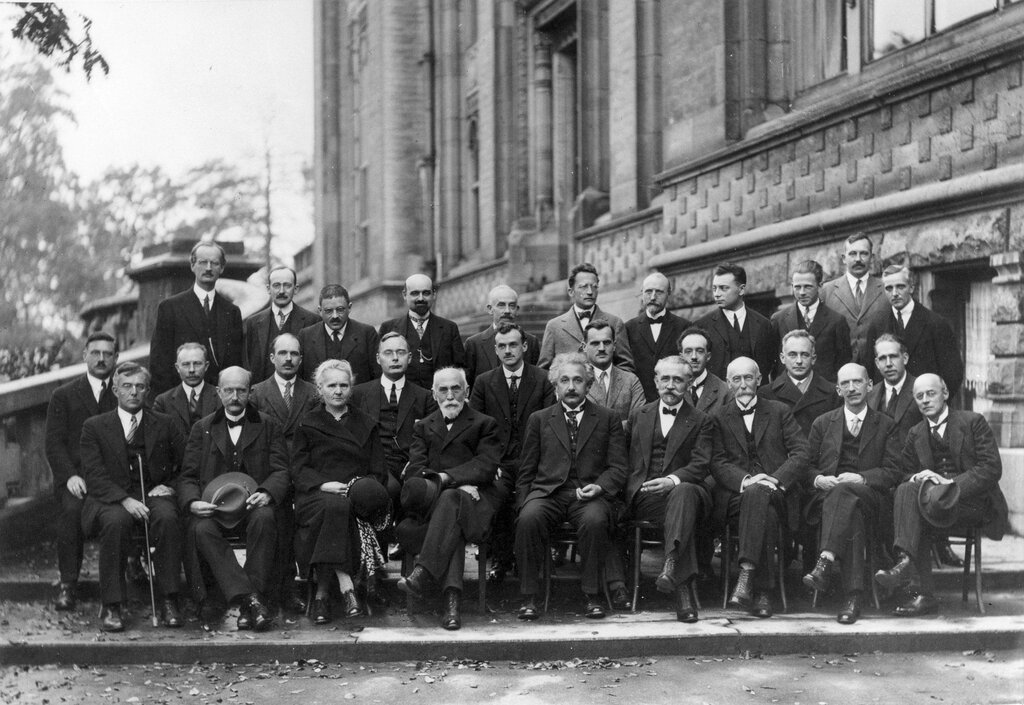
Planck's idea was revolutionary, but it was initially seen as more of a mathematical trick than a physical reality. That changed in 1905 when Albert Einstein applied the same concept to the photoelectric effect. He suggested that light itself is made of these energy packets, later named photons. A photon’s energy depends on its frequency, explaining why high-frequency blue light could knock an electron free while low-frequency red light could not, no matter how many photons hit the surface.
These discoveries marked the birth of quantum theory. It revealed that at the atomic and subatomic level, the universe operates by a different set of rules. The smooth, predictable world of classical physics gave way to a strange new reality of discrete packets and probabilities. This wasn't just a refinement of the old physics; it was a fundamental shift in our understanding of how everything works.
What was the dominant view of the universe according to classical physics before the 20th century?
The "ultraviolet catastrophe" was a major problem for classical physics. It was a failure to explain: