Introduction to Quantum Physics
Introduction to Quantum Mechanics
A Different Kind of Physics
At the end of the 19th century, physics seemed mostly figured out. Isaac Newton's laws of motion and James Clerk Maxwell's theory of electromagnetism could explain just about everything, from falling apples to the behavior of light. This framework, now called classical physics, worked beautifully for the large-scale world we experience every day.
But a few strange experimental results just wouldn't fit. When scientists studied the light emitted by hot objects, for instance, their predictions went haywire. Classical theories predicted that these objects should emit an infinite amount of energy at ultraviolet wavelengths, an outcome so absurd it was nicknamed the "ultraviolet catastrophe." Something was clearly wrong.
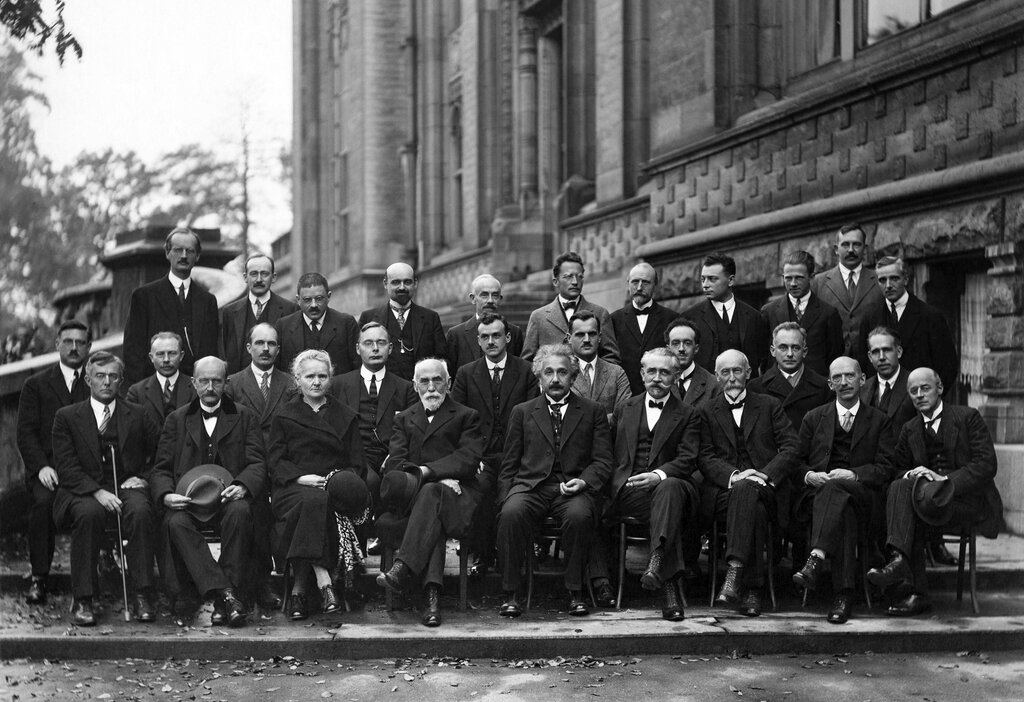
The first crack in the classical worldview came from a German physicist named Max Planck. In 1900, while trying to solve the ultraviolet catastrophe problem, he made a radical suggestion. What if energy wasn't continuous, like a smooth ramp, but instead came in discrete little packets? He called these packets "quanta."
Planck proposed that the energy of a light wave was proportional to its frequency, and could only be emitted or absorbed in multiples of a fundamental unit.
Here, is energy, (the Greek letter nu) is the frequency of the light, and is a new fundamental constant of nature, now known as Planck's constant. This idea of quantized energy was revolutionary. It suggested that at the smallest scales, the world operates by a different set of rules.
quantum
noun
The minimum amount of any physical entity, like energy or matter, involved in an interaction.
Light as Particles
Planck's idea was so strange that even he wasn't sure what to make of it. But five years later, a young Albert Einstein took it seriously. He used the concept of quanta to explain another puzzling phenomenon: the photoelectric effect.
Scientists had observed that when light shines on a metal surface, it can knock electrons loose. But classical wave theory couldn't explain why this only happened with light of a certain frequency, regardless of its brightness. A dim blue light could eject electrons, while a bright red light did nothing.
Einstein proposed that light itself is made of these energy packets, later called photons. Each photon carries an energy of . An electron can only be ejected if it's hit by a single photon with enough energy to break it free. The energy depends on frequency, not brightness. This explained the experimental results perfectly and showed that Planck's quantum idea had real physical meaning.
The Quantum Rules
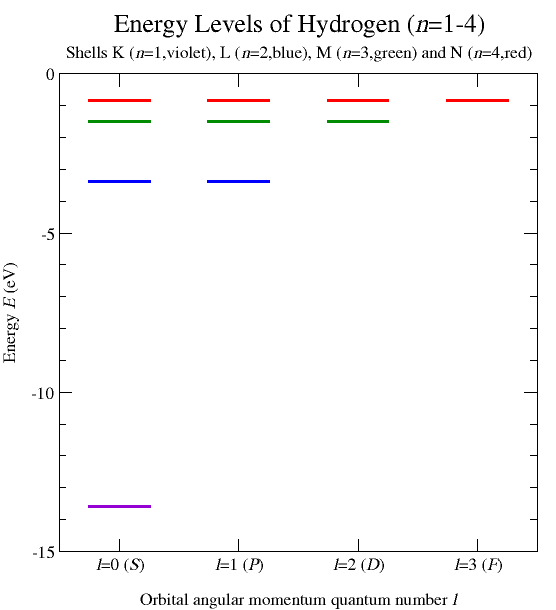
These early discoveries opened the floodgates. Physicists like Niels Bohr applied quantum theory to the structure of the atom, proposing that electrons could only exist in specific, quantized energy levels, like planets in fixed orbits. This new physics, quantum mechanics, was built on principles that were fundamentally different from the classical world.
The core differences between classical and quantum mechanics are startling. Classical physics is deterministic; if you know the position and momentum of a baseball, you can predict its exact path. Quantum mechanics is probabilistic. You can't know a particle's exact properties beforehand, only the probability of finding it in a certain state after you measure it.
At its heart, quantum mechanics says that reality is a game of chance, not a predictable machine.
This leads to other key distinctions. In the classical world, things like energy and speed are continuous. A car can go 60 mph, 60.1 mph, or 60.001 mph. In the quantum world, many properties are quantized, or discrete. An electron in an atom can't have just any energy; it has to occupy one of the specific energy levels, with nothing in between.
| Feature | Classical Physics | Quantum Mechanics |
|---|---|---|
| Scale | Macroscopic objects | Atoms and subatomic particles |
| Nature | Deterministic (predictable) | Probabilistic (based on chance) |
| Energy | Continuous | Quantized (in discrete packets) |
| Measurement | Observer is passive | Act of measuring affects the system |
Finally, the very act of observation is different. In classical physics, you can measure a baseball's speed without changing it. But in the quantum realm, observing a particle fundamentally alters its state. You can't just be a passive bystander. The observer is part of the experiment.
Ready to check your understanding?
What was the "ultraviolet catastrophe"?
Who first proposed that energy might be quantized, meaning it comes in discrete packets?
These foundational ideas challenged centuries of scientific thought and paved the way for a new understanding of the universe. They are the first steps into the strange and fascinating world of the quantum.