Introduction to Quantum Physics
Introduction to Quantum Mechanics
A Crack in the Old Foundation
For a long time, the world of physics seemed tidy. Using the laws laid down by Isaac Newton, we could predict the path of a planet or the arc of a cannonball. This framework, now called classical physics, worked beautifully for the large-scale world we see and interact with every day. It was deterministic: if you knew the starting conditions of a system, you could calculate its future exactly.
But as scientists started probing the very small, strange problems emerged. When they studied the light given off by hot objects, for instance, the classical theories gave absurd answers, predicting that a simple glowing ember should emit an infinite amount of energy. This was famously called the “ultraviolet catastrophe.” Clearly, the old rules were breaking down.
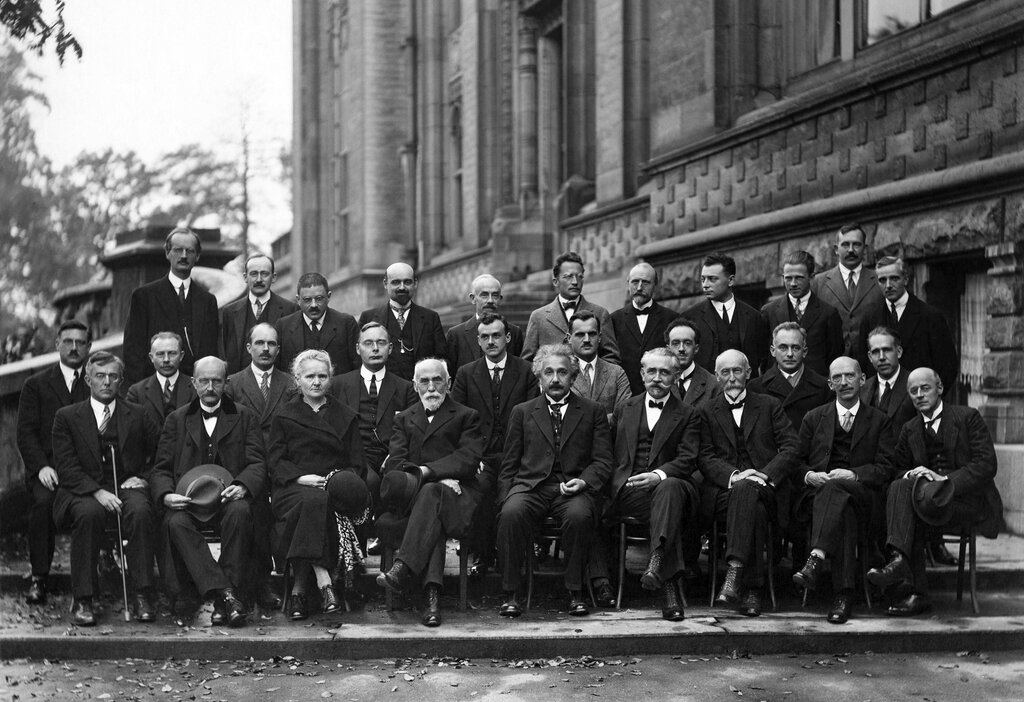
The solution required a radical new idea, one that would completely reshape our understanding of reality. It marked the beginning of quantum mechanics.
Energy in Packets
The first major breakthrough came from Max Planck in 1900. To solve the black-body radiation problem, he proposed something that sounded strange even to him: energy isn't continuous. It comes in discrete, countable packets called “quanta.”
quantum
noun
The minimum amount of any physical entity (physical property) involved in an interaction.
Imagine a ramp versus a staircase. In classical physics, you can have any amount of energy, like being able to stop anywhere on the ramp. In quantum mechanics, energy is like a staircase. You can be on the first step, or the second, or the third, but you can never be on step 1.5. Energy is quantized.
This idea explained why an electron orbiting an atom can only exist in specific energy levels. It can't just spiral inward, losing energy smoothly. It has to jump from one energy level to another, absorbing or emitting a specific quantum of energy (a photon) to do so. This single idea resolved many of the paradoxes that had stumped physicists.
Both and Neither
The quantum world gets even stranger. One of its core principles is superposition. This means a quantum system, like an electron, can exist in a combination of multiple states at the same time.
Think of a spinning coin. Before it lands, is it heads or tails? In a way, it's a blend of both possibilities. Superposition is the quantum version of this, but far more profound.
For instance, an electron has a property called spin, which can be measured as either “up” or “down.” Before we measure it, the electron isn't one or the other; it's in a superposition of both spin-up and spin-down. It's only when we perform a measurement that the system “chooses” one state.
This isn't just a lack of knowledge on our part. The particle genuinely does not have a definite state until it is measured. This leads to the final, and perhaps most unsettling, aspect of basic quantum theory: probability.
The Game of Cosmic Dice
Classical physics gives definite answers. Quantum mechanics gives probabilities. It can't tell you where an electron is, but it can tell you where it is likely to be.
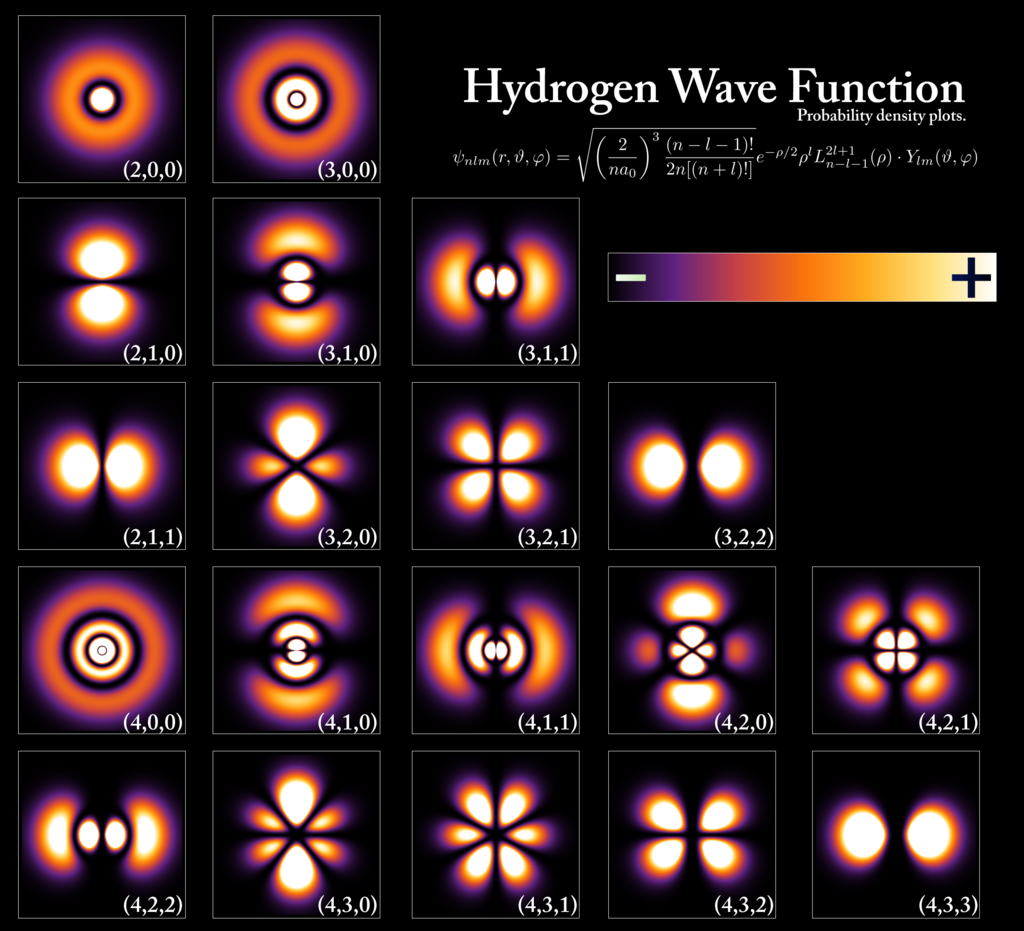
This probability is described by a mathematical object called the wave function, often represented by the Greek letter psi, . The wave function contains all the information about a quantum system. To find the probability of locating the particle at a certain point, you take the square of the magnitude of the wave function at that point.
This means that randomness is baked into the fabric of the universe at its most fundamental level. Before a measurement is made, the outcome is not determined. There’s a 30% chance the electron’s spin is up, a 70% chance it’s down, and we can't know the result until we look. This probabilistic nature is a stark departure from the clockwork universe of Newton. As Albert Einstein famously objected, "God does not play dice."
But decades of experiments have confirmed that, at the quantum level, the universe does indeed seem to rely on chance.
These concepts—quantization, superposition, and probability—form the bedrock of quantum mechanics. They challenge our everyday intuition but are essential for describing the world of atoms and particles.
The "ultraviolet catastrophe" was a problem in classical physics related to which phenomenon?
Which analogy best describes the concept of energy quantization in quantum mechanics?