Introduction to Quantum Mechanics
Introduction to Quantum Mechanics
When the Old Rules Break
For centuries, the world seemed to make perfect sense. Classical physics, built on the work of giants like Isaac Newton and James Clerk Maxwell, gave us a clear, predictable picture of the universe. It described everything from a falling apple to the orbit of Mars with stunning accuracy. These laws were deterministic: if you knew the starting conditions of a system, you could predict its future with certainty.
But as the 19th century turned into the 20th, scientists began exploring the world of the very small—the realm of atoms and the particles within them. And there, the old rules started to break down. Two major puzzles emerged that classical physics simply couldn't solve.
First was the problem of black-body radiation. Classical theories predicted that a perfect absorber and emitter of radiation (a “black body”) should release an infinite amount of energy at short wavelengths. This was clearly wrong and became known as the “ultraviolet catastrophe.”
Second was the photoelectric effect. When light shines on a piece of metal, it can knock electrons loose. But the way this happened was strange. Classical wave theory suggested that brighter light should eject electrons with more energy, but experiments showed that only the light's frequency (its color) mattered. Below a certain frequency, no electrons were ejected at all, no matter how bright the light was.
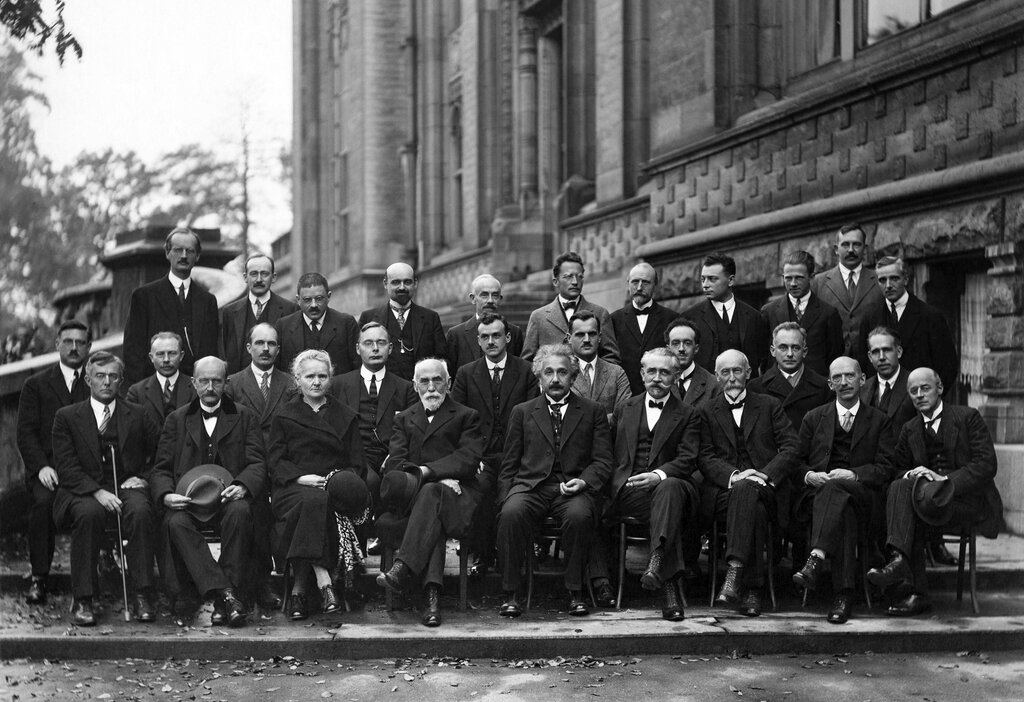
The first crack in the old worldview came in 1900. To solve the black-body problem, physicist Max Planck proposed a radical idea. He suggested that energy wasn't a continuous flow, but was emitted and absorbed in discrete packets, which he called “quanta.” A few years later, Albert Einstein applied this idea to the photoelectric effect, proposing that light itself is made of these energy packets, later named photons. These were the first steps into a strange new world.
The Quantum Revolution
Quantum mechanics isn't just a small correction to classical physics; it's a completely new operating system for the universe at the atomic and subatomic levels. It's built on a few core principles that are fundamentally different from our everyday experience.
quantum
noun
The minimum amount of any physical entity (physical property) involved in an interaction. The plural is "quanta."
The most important of these new ideas is quantization. In the classical world, things are continuous. A car can have any speed. You can walk up a ramp to any height. In the quantum world, certain properties are restricted to specific, discrete values. It's less like a ramp and more like a staircase. An electron in an atom can't have just any energy; it can only occupy specific energy levels, and it jumps between them instantly without ever existing in between.
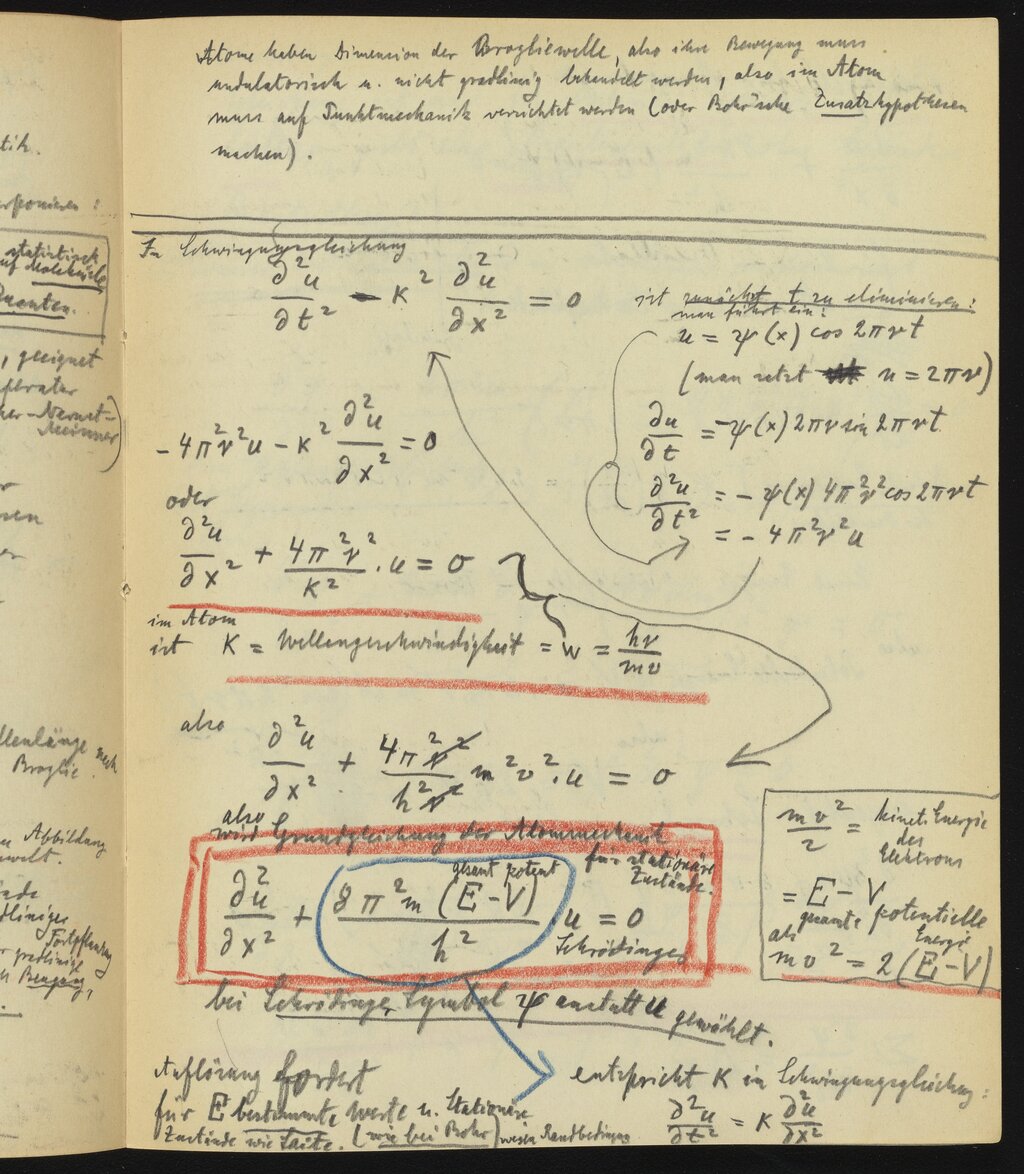
Another core idea is probability. Classical mechanics is deterministic. Quantum mechanics is probabilistic. At its heart is the Heisenberg Uncertainty Principle, which states that there's a fundamental limit to how precisely we can know certain pairs of properties, like a particle's position and its momentum, at the same time. The more precisely you know one, the less precisely you know the other. We can no longer say, "This electron is right here, moving at this exact speed." Instead, we describe its state with a wave function, which tells us the probability of finding it in a certain place or with a certain momentum.
Two Different Worlds
The differences between the classical and quantum views of the world are stark. It's a shift from a clockwork universe to one based on probability and discrete jumps.
| Feature | Classical Mechanics | Quantum Mechanics |
|---|---|---|
| Scale | Macroscopic (planets, baseballs) | Microscopic (atoms, electrons) |
| Determinism | Fully deterministic | Probabilistic |
| Energy | Continuous (any value is possible) | Quantized (only discrete values) |
| Measurement | Observer doesn't affect the system | The act of measuring affects the system |
So why don't we notice these strange quantum effects in our daily lives? Because for large objects, the quantized steps are so incredibly tiny that they blur together, creating the smooth, continuous world we perceive. Classical physics is an excellent approximation of quantum mechanics for the macroscopic world. But at the fundamental level, the universe runs on quantum rules.
Ready to check your understanding of these foundational ideas?
What was a key phenomenon that classical physics could not explain, leading to the development of quantum mechanics?
According to Max Planck's foundational idea, energy is not continuous but is instead emitted and absorbed in discrete packets called ____.
This new way of thinking paved the way for understanding the building blocks of matter and energy, leading to technologies from lasers to computers. The journey into the quantum realm had begun.