Introduction to Quantum Field Dynamics
Classical Field Theory
The Idea of a Field
Imagine you want to describe the temperature in a room. You could assign a number, a temperature value, to every single point in that room. What you've just created is a field. A field is simply a quantity that has a value everywhere in a region of space and time. A weather map showing temperatures across a country is a perfect visualization of a temperature field. Since temperature is just a single number at each point, it's called a scalar field.
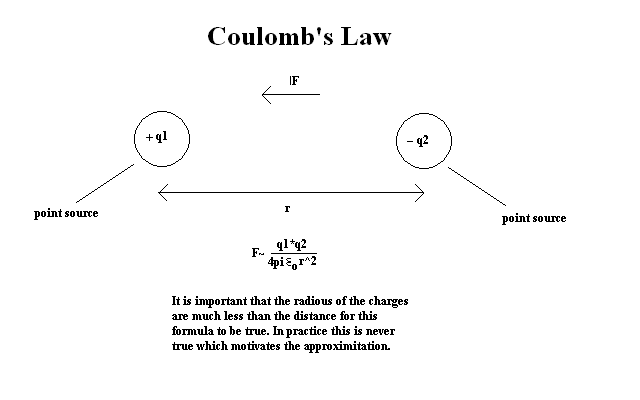
Now think about the wind. At every point, the wind has both a speed and a direction. To describe it, you'd need to assign a vector to each point in space. This is a vector field. Physics is full of important fields. The gravitational field, for instance, tells you the direction and strength of the gravitational force on a mass at any point. The electric field does the same for an electric charge.
Mathematically, we can represent a field as a function of spacetime coordinates. For a simple scalar field, we write it as , or more compactly as , where represents the four coordinates of spacetime (three space, one time).
Describing Field Dynamics
Fields aren't static; they ripple, wave, and interact. How do we describe this motion? We use a powerful idea from classical mechanics called the Principle of Least Action. The principle states that a physical system will always follow a path that minimizes (or more accurately, extremizes) a quantity called the action. It's as if nature is fundamentally efficient, always seeking the most economical path.
For a single particle, the action, , is found by integrating a function called the Lagrangian, , over time. The Lagrangian is typically the kinetic energy minus the potential energy (). For fields, we extend this idea. Instead of a Lagrangian, we use a Lagrangian density, written as . It describes the energy densities of the field at a single point in spacetime. The total Lagrangian is then the integral of this density over all of space:
Here, is the field itself, and represents its derivatives in space and time (its rate of change). The total action is found by integrating the Lagrangian density over both space and time.
This action contains all the information about the field's dynamics. By demanding that the action be minimized, we can derive the equations of motion for the field.
The Equations of Motion
The mathematical tool for minimizing the action is the Euler-Lagrange equation. For a field , this equation takes a form that connects the Lagrangian density to the field's behavior.
This might look intimidating, but its meaning is straightforward. It's a differential equation that dictates how the field must change at every point in space and time to keep the action at an extreme value. Solving this equation gives us the field's evolution. Every fundamental classical field theory, from electromagnetism to general relativity, can be described by a specific Lagrangian density and its corresponding Euler-Lagrange equation.
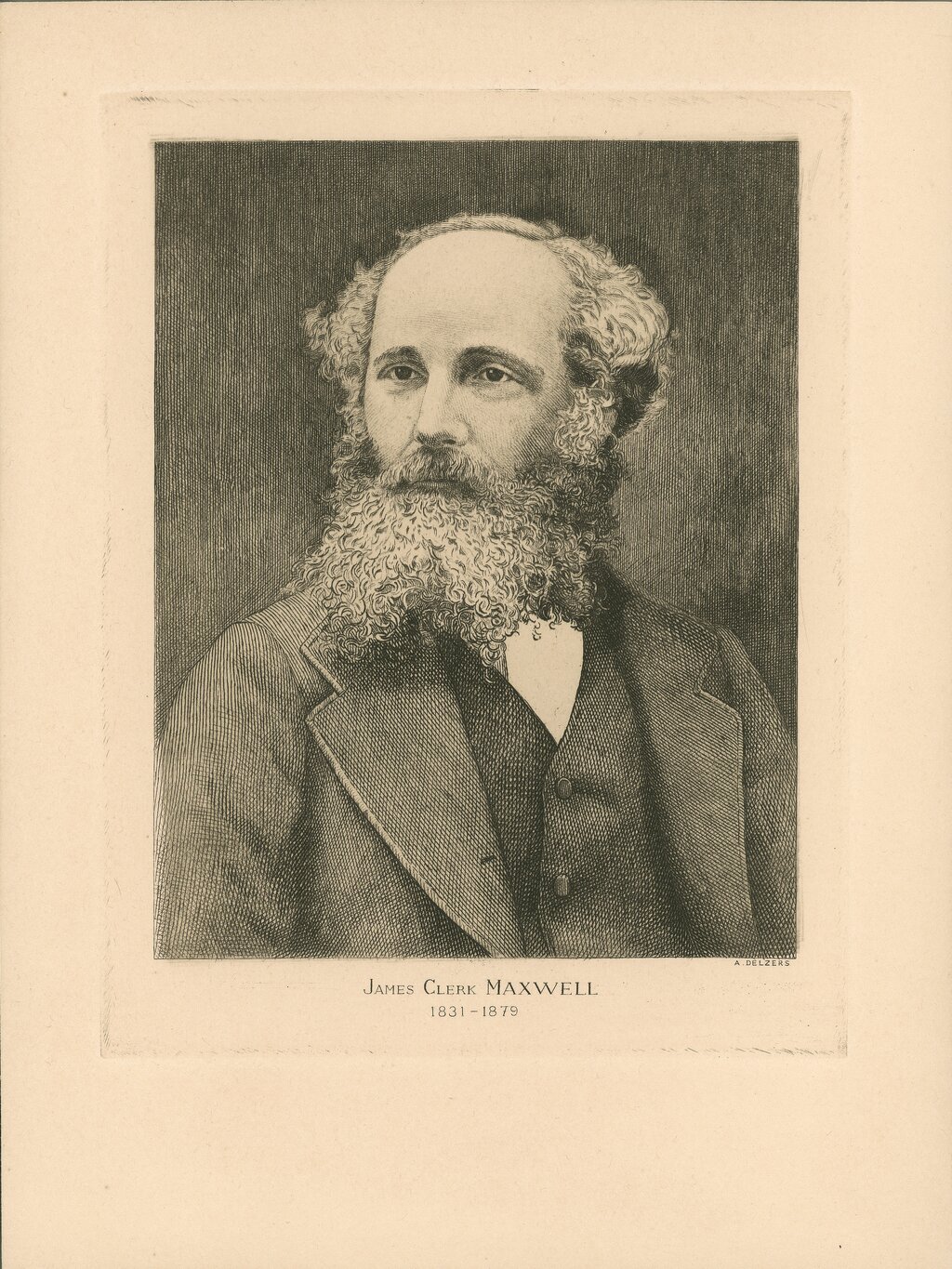
For example, James Clerk Maxwell's famous equations for electricity and magnetism can be derived from a single, elegant Lagrangian density. This unification was a monumental achievement in physics.
Symmetry and Conservation
One of the most profound ideas in physics is the connection between symmetry and conservation laws, formalized in Noether's theorem. A symmetry is a transformation that leaves the system's physics unchanged. For example, the laws of physics are the same today as they were yesterday; this is a symmetry in time translation. The laws are also the same in New York as they are in London; this is a symmetry in space translation.
Noether's theorem states that for every continuous symmetry of the Lagrangian density, there is a corresponding conserved quantity. A conserved quantity is something that remains constant throughout the entire evolution of the system.
| Symmetry | Conserved Quantity |
|---|---|
| Time Translation | Energy |
| Space Translation | Momentum |
| Rotational Invariance | Angular Momentum |
| Phase Invariance | Electric Charge |
This theorem is a cornerstone of theoretical physics. It doesn't just apply to particles; it's essential in field theory. It tells us that if the Lagrangian density describing a field has a certain symmetry, then the field must obey a corresponding conservation law. These conservation laws aren't just mathematical curiosities; they are fundamental rules that govern the universe.
Which of the following best defines a "field" in the context of physics?
A meteorologist creates a map that displays the wind, showing both its speed and direction at many different locations. What kind of field is this map visualizing?
Classical field theory provides a powerful framework for describing the fundamental forces of nature. It's the language we use to talk about gravity and electromagnetism, and it sets the stage for the more complex world of quantum fields.