Introduction to Quantum Computing
Introduction to Quantum Computing
From Bits to Qubits
Classical computers, from your phone to the most powerful supercomputers, process information using bits. A bit is the smallest unit of data and has a simple, definite state: it's either a 0 or a 1. Think of it like a light switch. It can be on or off, but never both at the same time. All the amazing things classical computers do boil down to manipulating billions of these tiny switches.
Quantum computers operate on a different principle. They use qubits, or quantum bits. While a bit is a simple switch, a qubit is more like a dimmer switch that can be at any point between fully on and fully off, and even in a combination of both states simultaneously.
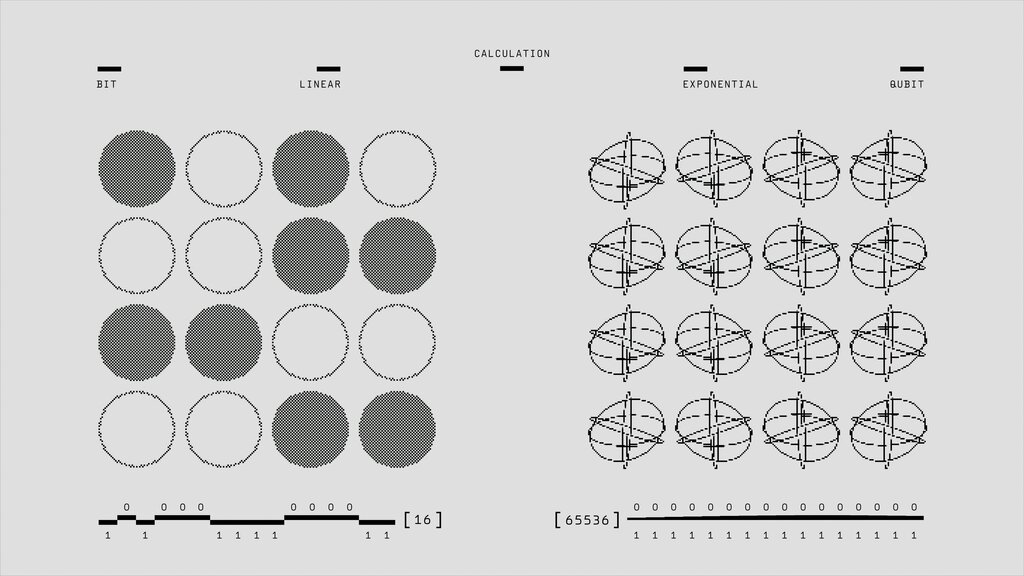
This ability to exist in multiple states at once is what gives quantum computers their power. Instead of processing information one piece at a time, they can explore many possibilities simultaneously. A qubit isn't just a more complicated bit; it's a fundamentally new way to hold and process information.
The Power of Superposition
So how can a qubit be both 0 and 1 at the same time? This is thanks to a principle called superposition. Imagine a spinning coin. While it's spinning, it's not heads and it's not tails—it's in a state that has the potential to be either. Only when you stop the coin and look at it does it land on a definite side.
A qubit in superposition is like that spinning coin. It exists in a combination of the 0 and 1 states until you measure it. The moment you measure it, its superposition collapses, and it settles into a definite state of either 0 or 1, just like a classical bit.
Mathematically, we can describe a qubit's state as a combination, or superposition, of its two basic states, called (pronounced "ket zero") and ("ket one"). The state of a qubit, , can be written as:
Here, and are numbers called probability amplitudes. When we measure the qubit, the probability of it collapsing to is , and the probability of it collapsing to is . These probabilities must add up to 1.
Entanglement's Spooky Connection
Superposition is strange, but entanglement is even stranger. Entanglement is a special connection that can link two or more qubits. When qubits are entangled, their fates are intertwined, no matter how far apart they are.
If you have two entangled qubits, they form a single quantum system. Let's say they are entangled in such a way that if one is measured as 0, the other must be 1, and vice versa. If you measure the first qubit and find it's a 0, you instantly know the state of the second qubit is 1, even if it's across the galaxy. Albert Einstein famously called this phenomenon "spooky action at a distance."
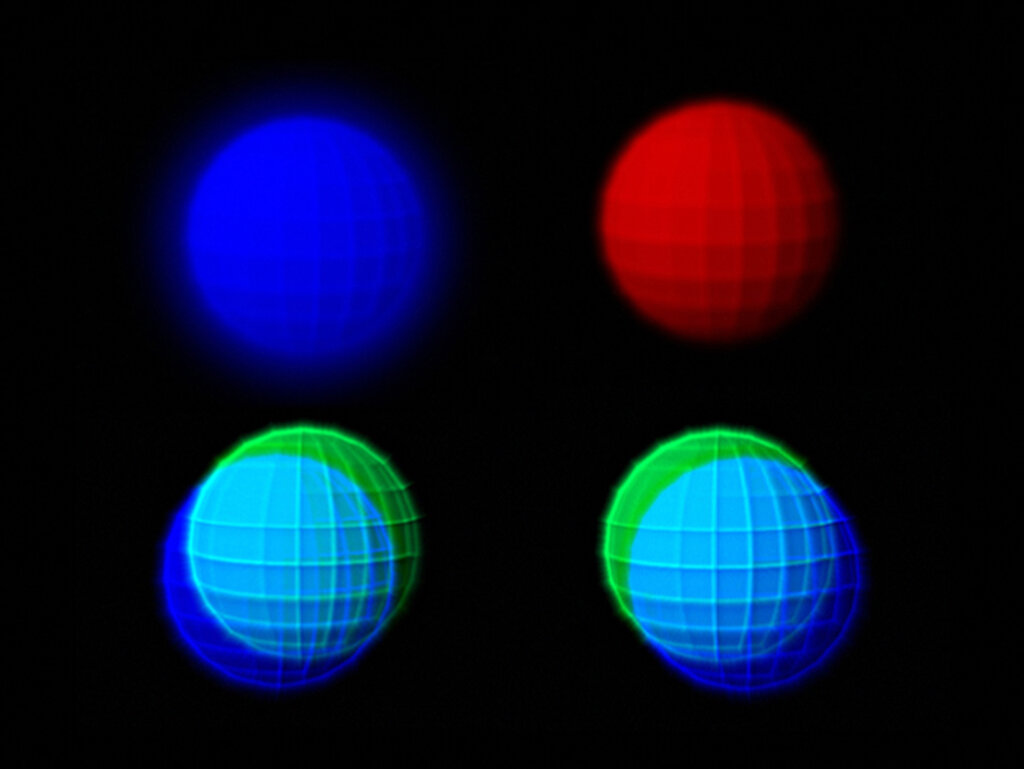
This doesn't mean information is traveling faster than light. Instead, it reveals a deep, non-local connection that is a core feature of quantum mechanics. Entanglement is a crucial resource in quantum computing, allowing for powerful algorithms and secure communication methods that are impossible with classical computers.
Another fundamental principle of quantum computing is entanglement, a phenomenon where two or more qubits become interconnected in such a way that the state of one qubit directly affects the state of another, regardless of the distance between them.
Building with Quantum Circuits
Just as classical computers use circuits with logic gates (like AND, OR, and NOT) to manipulate bits, quantum computers use quantum circuits with quantum gates to manipulate qubits.
A quantum circuit is a model for quantum computation. It shows the flow of qubits through a sequence of quantum gates. Each horizontal line in a circuit diagram represents a single qubit. The boxes on the lines represent the quantum gates that are applied to them. The computation proceeds from left to right.
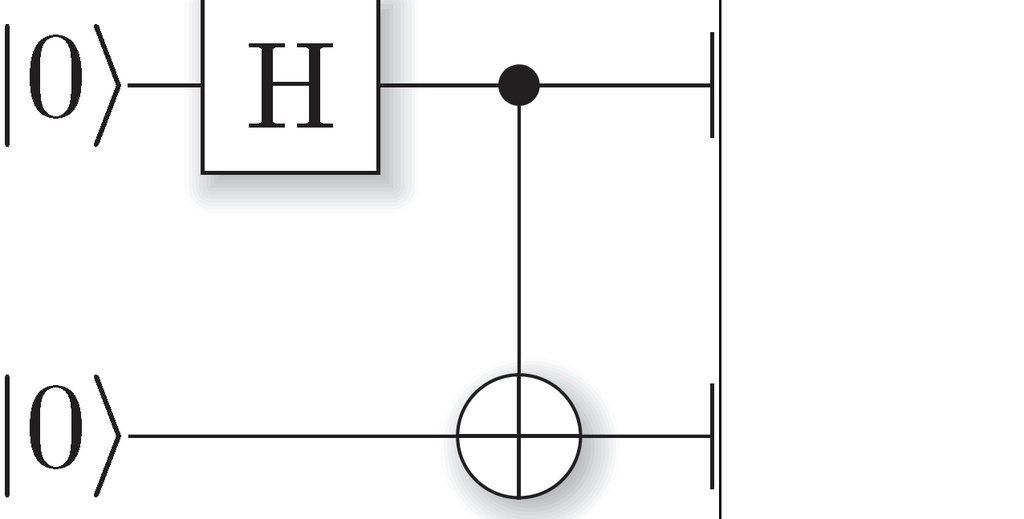
Some gates, like the Hadamard gate (H), put a qubit into a superposition. Others, like the Controlled-NOT (CNOT) gate, operate on two qubits and are used to create entanglement. By combining these and other gates in a specific sequence, a quantum computer can perform complex calculations.
At the end of the circuit, the qubits are measured. This collapses their superposition and provides the classical 0s and 1s that form the result of the computation.
Ready to test your knowledge on these foundational concepts?
What is the fundamental difference between a classical bit and a quantum bit (qubit)?
The state of a qubit, |ψ⟩, is described by the equation . If you measure this qubit, what does represent?