Introduction to Quantum Computing
Introduction to Quantum Computing
Beyond Bits and Bytes
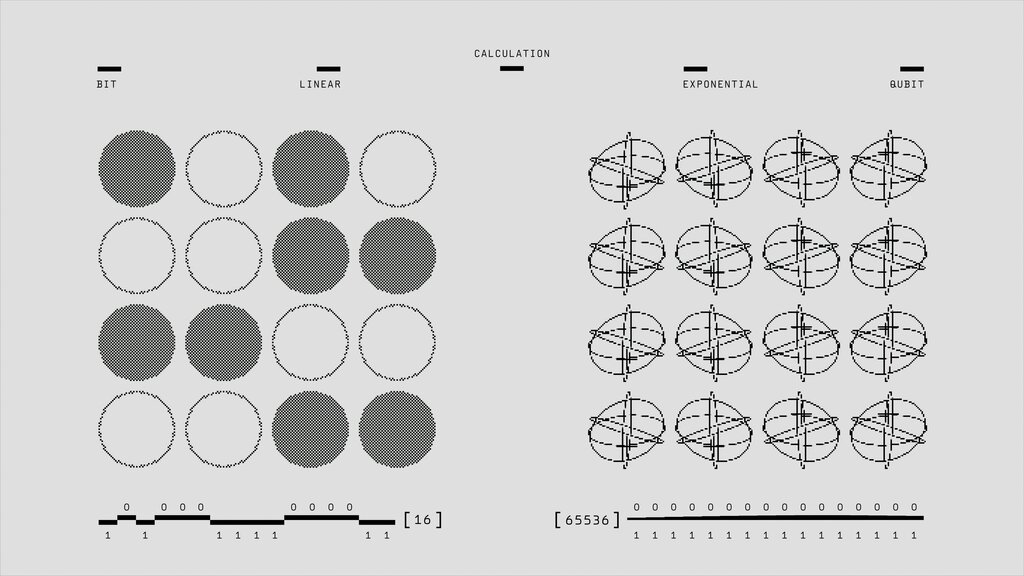
For decades, computers have operated on a simple, reliable principle. Information is stored and processed as bits, which are like tiny light switches. A bit can be either on (represented by a 1) or off (represented by a 0). Every photo you take, every message you send, is ultimately a vast collection of these ones and zeros. This binary system is the foundation of classical computing, and it has taken us from room-sized calculators to the smartphones in our pockets.
Quantum computing, however, operates in a completely different world. It doesn't just improve on classical computers; it rethinks computation from the ground up, using the strange and counterintuitive rules of quantum mechanics. Instead of bits, quantum computers use something far more powerful.
Meet the Qubit
The fundamental unit of a quantum computer is the quantum bit, or qubit. Like a classical bit, a qubit can be a 0 or a 1. But it can also be in a combination of both states at the same time. This is where the real power of quantum computing begins.
qubit
noun
The basic unit of quantum information. A qubit is a two-state quantum-mechanical system that can exist in a superposition of both states.
Physically, a qubit isn't a tiny switch. It can be an electron with its spin, a photon with its polarization, or a tiny superconducting circuit. Scientists use these quantum systems because they can naturally exist in multiple states at once.
Two concepts in quantum physics that are the building blocks of quantum computing are superposition and entanglement.
The Principles
Two key principles of quantum mechanics give qubits their power: superposition and entanglement.
Superposition: Imagine spinning a coin. While it's in the air, it’s neither heads nor tails—it's in a combination of both possibilities. Only when it lands and you measure it does it settle into one definite state. A qubit is like that spinning coin. It exists in a superposition of 0 and 1 until it's measured. This ability to explore many possibilities at once is what allows quantum computers to tackle problems that would overwhelm a classical computer.
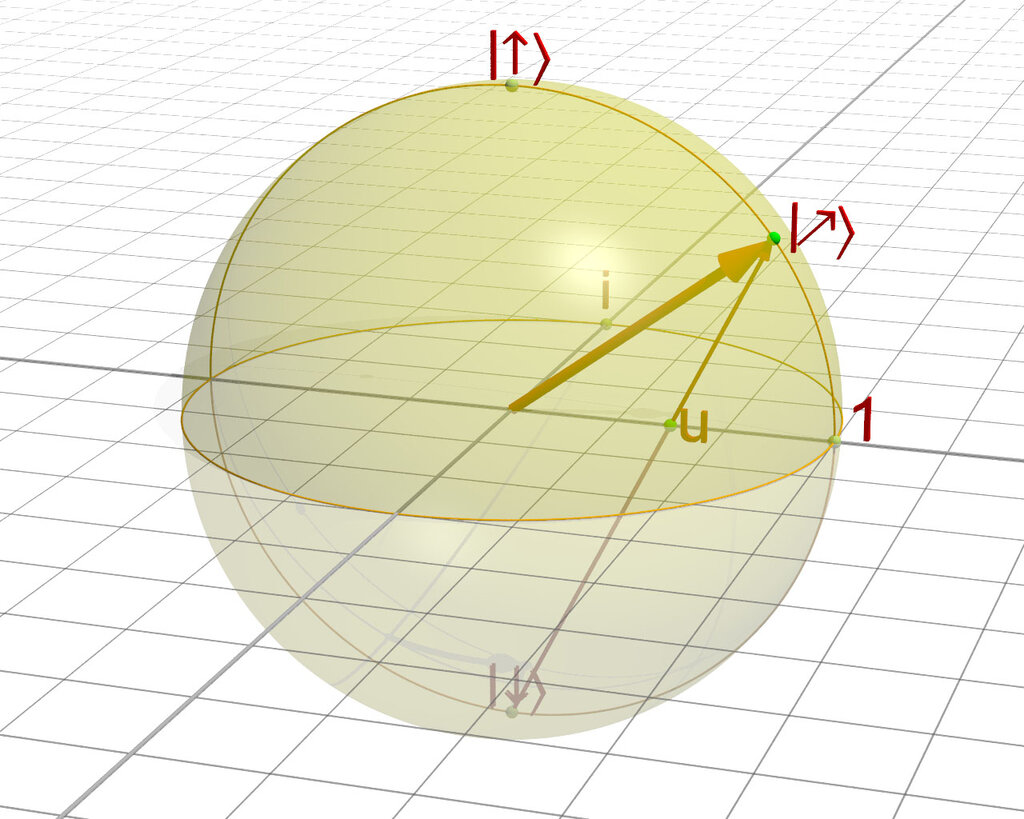
Superposition lets a single qubit hold more information than a classical bit. If you have two qubits, they can represent four states (00, 01, 10, and 11) simultaneously. With three qubits, it's eight states. The number of states grows exponentially, which is the source of a quantum computer's potential.
Entanglement: This is what Einstein famously called “spooky action at a distance.” When two or more qubits become entangled, their fates are linked. No matter how far apart they are, the state of one qubit is instantly correlated with the state of the other. If you measure one and find it's a 0, you instantly know the other is a 1 (or vice versa, depending on how they were entangled). This deep connection allows for powerful information processing and communication that has no classical equivalent.
This property creates a complex web of relationships between qubits, allowing them to work together in ways that are impossible for independent classical bits. Entanglement and superposition work together to create the computational power that makes quantum computing so promising.
Let's check your understanding of these foundational ideas.
What is the fundamental unit of information in a quantum computer?
The principle that allows a qubit to be in a combination of both 0 and 1 states simultaneously is called:
These concepts are the building blocks for everything that follows in the quantum world. They represent a fundamental shift from the deterministic world of classical bits to the probabilistic and interconnected realm of qubits.