Introduction to Quantum Computing
Introduction to Quantum Computing
Beyond Bits and Bytes
Classical computers, from your smartphone to the most powerful supercomputers, think in a very straightforward way. Everything is broken down into bits, which are tiny switches that can be either on or off, represented as a 1 or a 0. This binary system is the foundation of all digital information.
Quantum computers operate on a completely different set of principles, borrowed from the strange world of quantum mechanics. Instead of bits, they use quantum bits, or qubits. This single change unlocks a fundamentally new way to process information.
| Feature | Classical Computing | Quantum Computing |
|---|---|---|
| Basic Unit | Bit | Qubit |
| Possible Values | 0 or 1 | 0, 1, or a mix of both |
| Governing Physics | Classical Physics | Quantum Mechanics |
The power of a quantum computer doesn't come from being a faster classical computer. It comes from approaching problems in a way that classical computers are fundamentally incapable of.
The Quantum Bit
A qubit is the basic unit of quantum information. Like a classical bit, it can be a 0 or a 1. But thanks to a principle called superposition, it can also be in a combination of both states at the same time.
qubit
noun
The basic unit of quantum information. A quantum bit can represent a 0, a 1, or a superposition of both states simultaneously.
Think of it like a spinning coin. While it's in the air, it's not definitively heads or tails—it's a blend of both possibilities. Only when it lands and you measure it does it settle into a single, definite state. A qubit is like that spinning coin. While it's in superposition, it holds the potential for being both 0 and 1.
Mathematically, we represent the state of a qubit, written as (pronounced "ket psi"), as a combination of the basis states and .
Here, and are complex numbers called probability amplitudes. When we measure the qubit, the probability of it collapsing to is , and the probability of it collapsing to is . Because these are the only two outcomes, the probabilities must add up to 1.
This ability to exist in multiple states at once is what allows quantum computers to explore a vast number of possibilities simultaneously, giving them a massive advantage for certain types of problems.
Spooky Action
If superposition is strange, entanglement is even stranger. Entanglement is a special connection that can exist between two or more qubits. When qubits are entangled, their fates are linked, no matter how far apart they are.
Imagine you have two coins that are magically linked. You give one to a friend who travels to the other side of the world. The instant you flip your coin and it lands on heads, you know with absolute certainty that your friend's coin, wherever it is, has just landed on tails. This is the essence of entanglement.
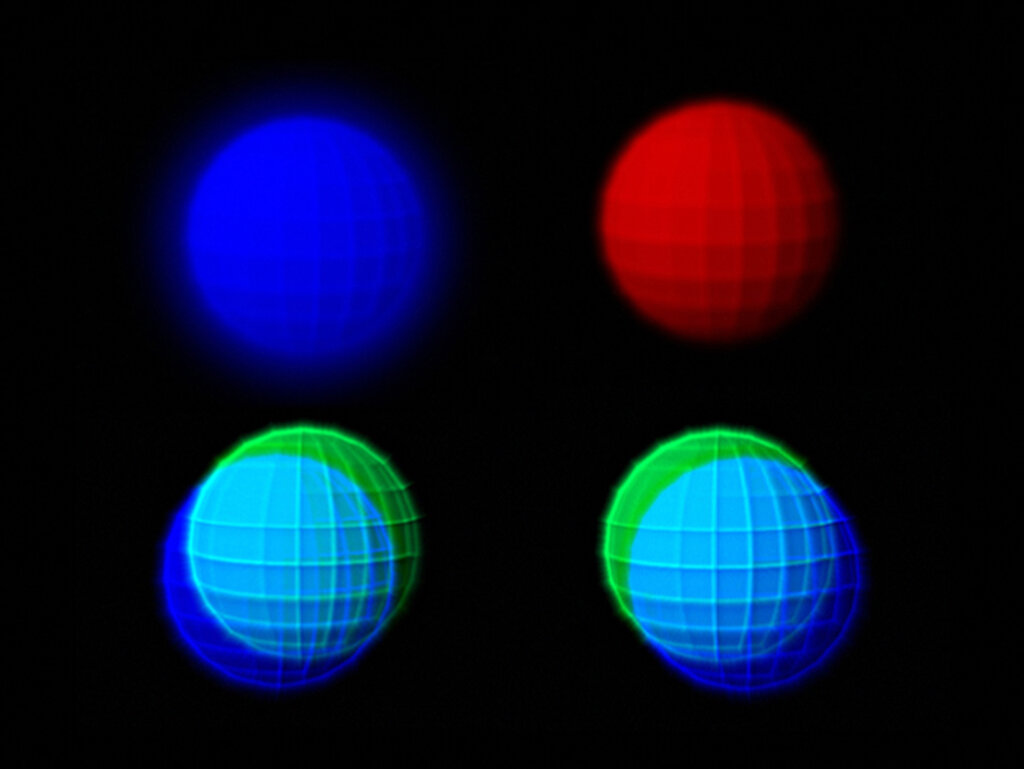
If you measure the state of one entangled qubit, you instantly know the state of the other. It was this property that Albert Einstein famously called "spooky action at a distance." This interconnectedness doesn't allow for faster-than-light communication, but it is a crucial resource for quantum algorithms and quantum communication.
The state of one entangled particle cannot be described independently of the state of the other.
A common example of a two-qubit entangled state is a Bell state. In this state, the two qubits will always have the same measurement outcome, either both 0 or both 1, with equal probability. But before measurement, neither qubit has a definite value.
Superposition and entanglement are the two core principles that give quantum computing its power. By harnessing them, scientists hope to solve problems in medicine, materials science, and artificial intelligence that are far beyond the reach of today's most powerful supercomputers.
Let's check your understanding of these foundational ideas.
What is the fundamental difference between a classical bit and a quantum bit (qubit)?
The principle of superposition is best described as a qubit's ability to:
These concepts form the building blocks for everything that follows in the world of quantum computing. Understanding them is the first step toward understanding the future of computation.