Introduction to Quantum Computing
Introduction to Quantum Computing
Beyond Bits and Bytes
Classical computers, from your smartphone to the most powerful supercomputers, are built on a simple foundation: bits. A bit is a tiny switch that can be in one of two states, either a 0 or a 1. All the amazing things classical computers do boil down to manipulating billions of these switches very, very quickly.
Quantum computing operates on a completely different set of rules, borrowed from the strange world of quantum mechanics. Instead of bits, it uses quantum bits, or qubits. This shift opens up a fundamentally new way to process information.
qubit
noun
The basic unit of quantum information. It is the quantum analogue of the classical binary bit.
Unlike a classical bit, which must be either a 0 or a 1, a qubit can be a 0, a 1, or both at the same time. This mind-bending property is called superposition.
Think of a classical bit as a coin lying flat on a table. It's either heads (0) or tails (1). A qubit is like a spinning coin. While it's spinning, it's not definitively heads or tails—it's in a combination of both states. Only when you stop it (or 'measure' it, in quantum terms) does it fall into one definite state, heads or tails.
The Power of Superposition
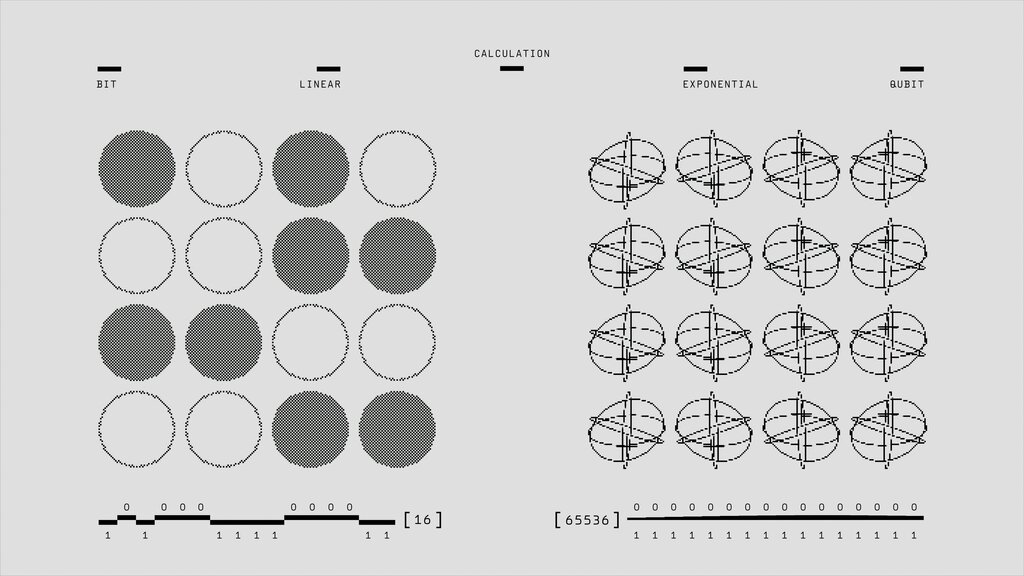
This ability to exist in multiple states at once is what gives quantum computers their power. While a classical computer with 8 bits can only represent one of 256 possible values at any given moment, a quantum computer with 8 qubits can represent all 256 values simultaneously.
This doesn't mean a quantum computer is just 256 times faster. As you add more qubits, the number of states it can represent grows exponentially. With 300 qubits, a quantum computer could represent more states than there are atoms in the known universe. This allows them to explore a vast number of possibilities at once, making them exceptionally good at solving certain types of complex problems that are impossible for even the most powerful classical supercomputers.
Spooky Connections
The other key principle of quantum computing is entanglement. This is a special connection that can exist between two or more qubits. When qubits are entangled, their fates are linked, no matter how far apart they are.
Imagine you have two 'entangled' gloves, one for the left hand and one for the right. You put them in separate boxes and mail one to the other side of the world. Without opening your box, you don't know which glove you have. But the moment you open it and see a left-handed glove, you instantly know the other box contains a right-handed glove.
Entanglement works similarly. If you measure one entangled qubit and find its state is 0, you instantly know the state of its entangled partner is 1 (or whatever its correlated state is). Albert Einstein famously called this phenomenon "spooky action at a distance."
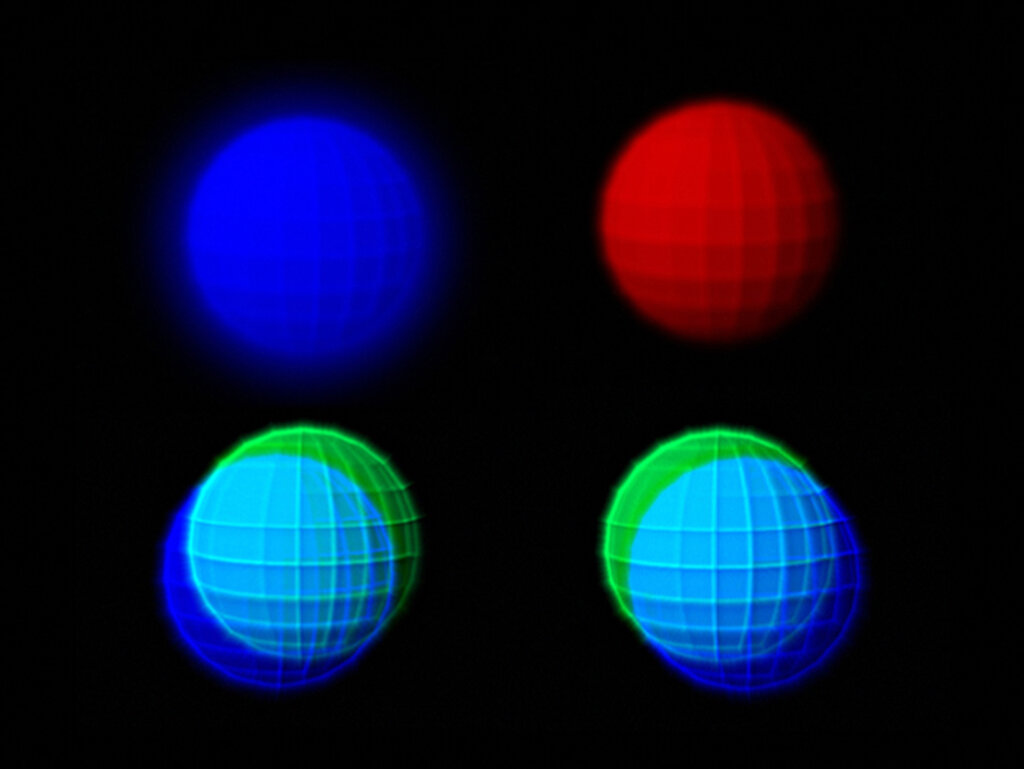
This powerful link between qubits is a crucial resource in quantum computing. It allows for the creation of complex quantum states and is essential for many quantum algorithms, enabling intricate computations that would be otherwise impossible. These two principles, superposition and entanglement, are the foundation upon which the entire field of quantum computing is built.