Introduction to Quantum Computing
Introduction to Quantum Computing
Beyond Bits and Bytes
Classical computers, from your smartphone to the most powerful supercomputers, work with bits. A bit is a simple switch, either on or off, represented by a 1 or a 0. All the amazing things classical computers do boil down to manipulating billions of these tiny switches. It's a reliable, powerful system that has changed the world.
Quantum computing operates on a completely different set of rules, borrowed from the strange world of quantum mechanics. Instead of bits, it uses quantum bits, or qubits. This isn't just a new name for the same thing; it's a fundamental leap in how information can be stored and processed.
Quantum bits, or qubits, have unique and powerful properties that allow a group of them to do much more than an equivalent number of conventional bits.
A qubit isn't just a 0 or a 1. It can be a 0, a 1, or both at the same time. This mind-bending property is called superposition.
qubit
noun
The basic unit of quantum information. Unlike a classical bit, a qubit can represent a 0, a 1, or any quantum superposition of these two states.
Superposition in Action
Imagine a spinning coin. While it's in the air, it's not heads and it's not tails. It's in a state that contains the possibility of both outcomes. Only when it lands, or when we measure it, does it settle into a definite state of heads or tails. A qubit in superposition is like that spinning coin.
Mathematically, we can describe the state of a qubit, written as (pronounced "ket psi"), as a combination of its two basic states, and .
Here, and are numbers that represent the probability of the qubit being a 0 or a 1 when measured. The key is that until you measure it, the qubit is in both states at once. This ability to hold multiple values simultaneously is where the power of quantum computing begins. A computer with just a few qubits can explore a vast number of possibilities at the same time.
Entanglement
The next quantum concept is even stranger. It's called entanglement. Imagine you have two of those spinning coins, but they are magically linked. The moment one lands on heads, you instantly know the other one must be tails, no matter how far apart they are.
Entanglement is a deep, spooky connection between two or more qubits. The state of one entangled qubit is instantly correlated with the state of the other(s). If you measure one qubit and find it's a 0, you immediately know its entangled partner is a 1. This happens even if they're on opposite sides of the universe. Albert Einstein famously called this "spooky action at a distance."
This interconnectedness allows quantum computers to perform complex calculations and create powerful correlations that are impossible in the classical world. It's a critical resource that enables many quantum algorithms.
Quantum Gates
So we have these qubits in states of superposition and entanglement. How do we compute with them? In a classical computer, logic gates like AND, OR, and NOT manipulate bits. Quantum computers have their own version: quantum gates.
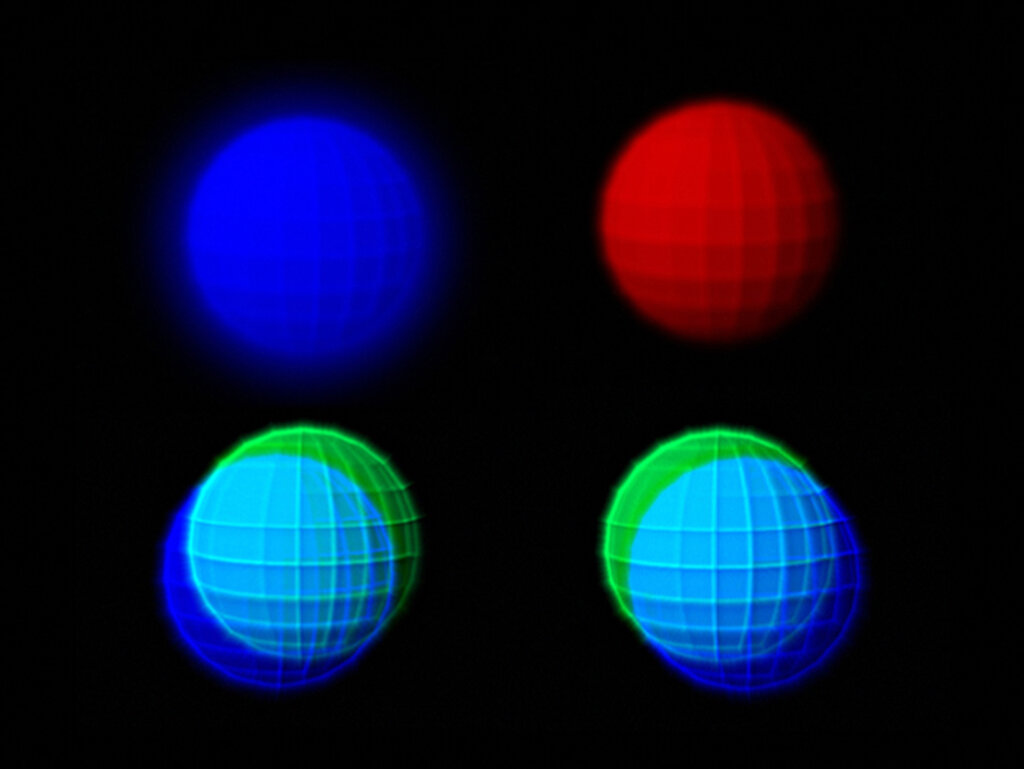
Quantum gates are operations that manipulate the state of qubits. They can rotate a qubit's state on the Bloch sphere, put a qubit into superposition, or entangle two qubits together. For example, a Hadamard gate is a common gate used to put a qubit into an equal superposition of and . A CNOT (Controlled-NOT) gate acts on two qubits, flipping the second qubit only if the first one is . This is a key way to create entanglement.
By stringing together sequences of these gates, we create a quantum algorithm. The algorithm carefully manipulates the probabilities of the qubits. The goal is to make the probability of measuring the correct answer very high, while the probabilities of incorrect answers cancel each other out.
This ability to work in a massive computational space of possibilities at once is what gives quantum computing its edge. For certain problems, like factoring large numbers or simulating complex molecules, a quantum computer could find a solution exponentially faster than the best classical computer we can imagine.
The power isn't just about speed; it's about solving problems that are currently unsolvable.
Now, let's review the core concepts we've covered.
Ready to test your knowledge?
What is the fundamental unit of information in a quantum computer called?
The principle that allows a qubit to be a 0, a 1, or both at the same time is known as:
This is just the beginning. Building and controlling qubits is an immense scientific and engineering challenge, but the potential is extraordinary. You now have the foundational ideas needed to explore this exciting field further.