Introduction to Quantum Computing
Introduction to Quantum Computing
Beyond Bits and Bytes
For centuries, we've built computers on a simple idea: information can be broken down into bits, tiny switches that are either on or off. A 1 or a 0. This binary system has powered everything from calculators to the phone in your pocket. It's logical, reliable, and incredibly powerful.
But some problems are just too big for classical computers. Simulating complex molecules for drug discovery or breaking modern encryption codes would take a classical computer longer than the age of the universe. To tackle these challenges, we need a new kind of computing—one that plays by a different set of rules. This is where quantum computing comes in. It doesn't just improve on classical computing; it rethinks it from the ground up, using the strange and wonderful principles of quantum mechanics.
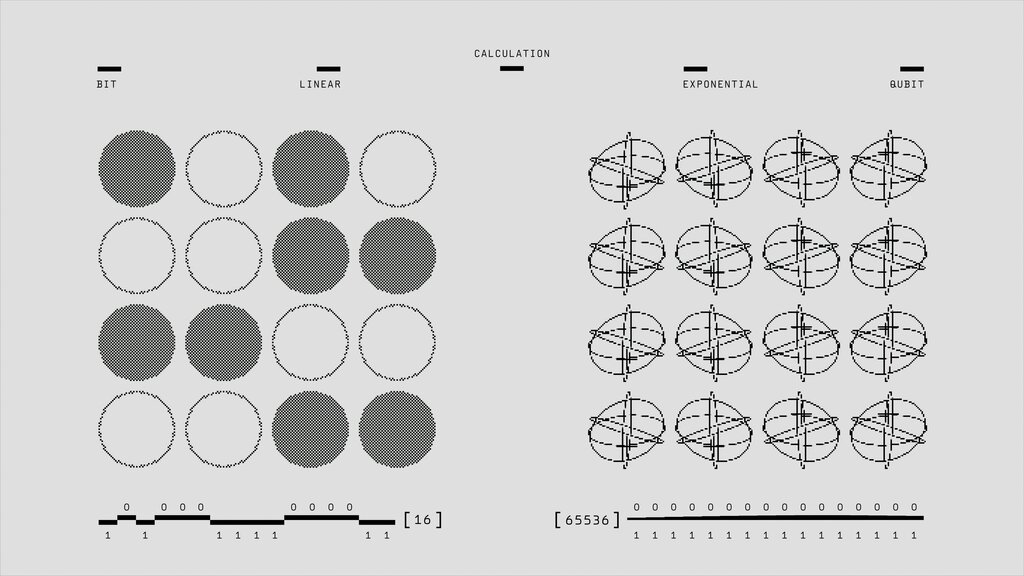
Instead of bits, quantum computers use something far more flexible.
The Quantum Bit, or Qubit
The fundamental unit of quantum information is the quantum bit, or qubit. Like a classical bit, a qubit can be a 0 or a 1. But it can also be something else entirely: a combination of both 0 and 1 at the same time. This mind-bending property is called superposition.
qubit
noun
The basic unit of quantum information. A qubit is a two-state quantum-mechanical system.
Think of a spinning coin. While it's in the air, it’s not definitively heads or tails—it's a blur of both possibilities. Only when it lands (when we measure it) does it settle into one state. A qubit in superposition is like that spinning coin. It exists in a combination of states, holding the probabilities of being a 0 and a 1.
This single property dramatically expands the amount of information a computer can handle. Where two classical bits can store one of four possible combinations (00, 01, 10, or 11), two qubits can store all four combinations at once. This power grows exponentially. With just 300 qubits, you could represent more states than there are atoms in the observable universe.
Superposition allows a qubit to be in a combination of both 0 and 1 states simultaneously, unlocking massive parallel processing capabilities.
A Spooky Connection
The other core principle of quantum computing is entanglement. It's a phenomenon Albert Einstein famously called "spooky action at a distance." When two or more qubits become entangled, their fates are linked, no matter how far apart they are.
Imagine you have a pair of gloves, and you put each one into a separate, identical box. You mail one box to a friend on the other side of the world. Before either of you opens your box, you don't know which glove is which. But the moment your friend opens their box and finds a left-handed glove, you instantly know, without looking, that you have the right-handed one.
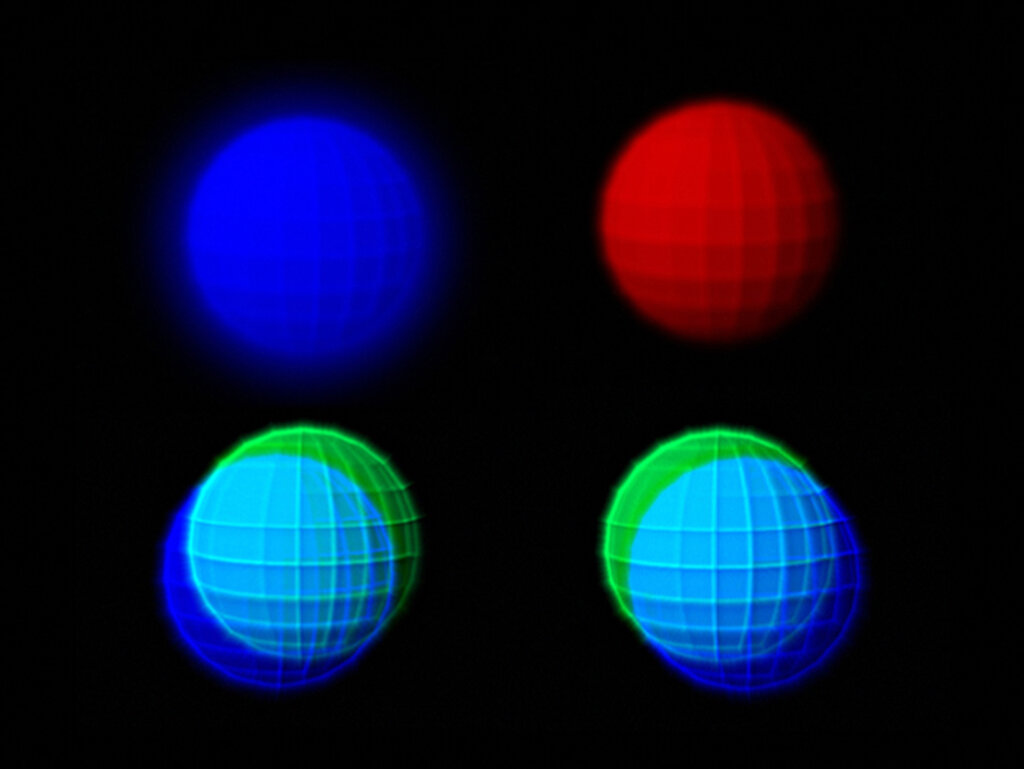
Entangled qubits behave in a similar way. If you measure the state of one entangled qubit and find it to be a 0, you'll know instantly that its partner is a 1, and vice versa. This connection is built into the fabric of their existence.
This doesn't allow for faster-than-light communication, but it creates a powerful correlation between qubits. This interconnectedness is a key resource that quantum algorithms use to solve complex problems in a way that classical computers simply can't.
Entanglement links the states of two or more qubits, creating a single quantum system where the measurement of one qubit instantly affects the others.
Superposition and entanglement are not just theoretical curiosities. They are the twin pillars that give quantum computing its incredible potential, promising to reshape fields from medicine to materials science.
Time to check your understanding of these foundational ideas.