Introduction to Quantum Computing
Introduction to Quantum Computing
A New Kind of Computer
Quantum computers aren't just super-fast versions of the laptops and phones we use every day. They're a completely different kind of machine, built on the strange and wonderful rules of quantum mechanics. While a classical computer uses bits—ones and zeros—to process information, a quantum computer uses something far more flexible.
Meet the Qubit
The basic unit of information in a quantum computer is the qubit. Unlike a classical bit, which must be either a 0 or a 1, a qubit can exist in a combination of both states at the same time. This mind-bending property is called superposition.
Think of a spinning coin. While it's in the air, it's neither heads nor tails—it's a blend of both possibilities. Only when it lands (or is measured) does it settle into a definite state. A qubit is like that spinning coin.
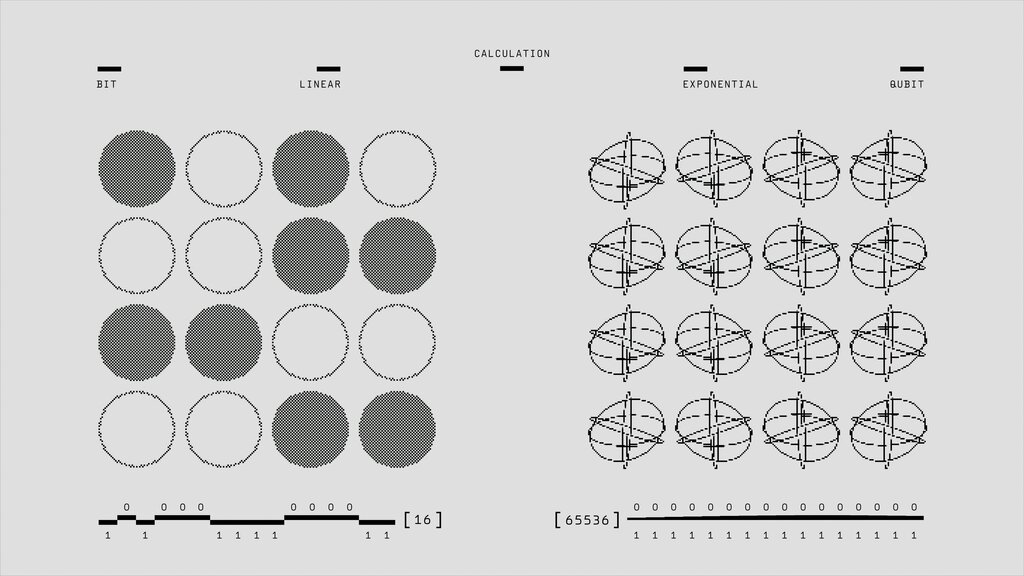
This ability to exist in multiple states at once is what gives quantum computers their power. With just a handful of qubits, you can explore a huge number of potential outcomes simultaneously. But superposition is only half of the story.
Spooky Connections
Another key principle is entanglement. This is a special connection that can exist between two or more qubits. When qubits are entangled, their fates are linked, no matter how far apart they are. If you measure the state of one qubit, you instantly know the state of its entangled partner.
Imagine you have a pair of gloves, and you put each one in a separate box without looking. You mail one box to a friend on the other side of the world. The moment you open your box and see a left-handed glove, you know instantly that your friend has the right-handed one. Entangled qubits behave in a similarly connected way.
Two concepts in quantum physics that are the building blocks of quantum computing are superposition and entanglement.
Quantum Gates
So how do we control these qubits? We use quantum gates. These are the quantum equivalent of the logic gates (like AND, OR, and NOT) in a classical computer. Quantum gates are operations that manipulate the state of one or more qubits. They can put qubits into superposition, entangle them, or change their state in precise ways to perform a calculation.
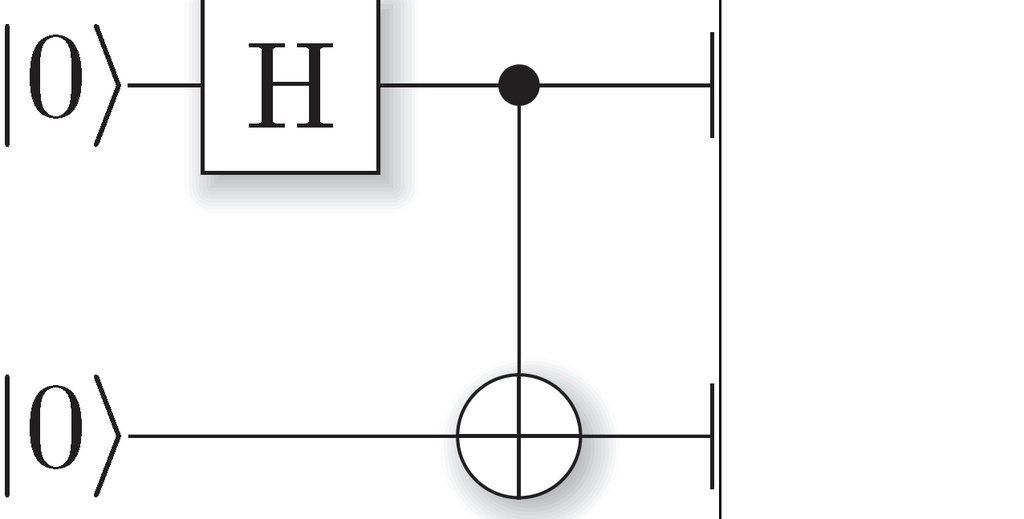
By stringing together these gates into a sequence, known as a quantum circuit, scientists can run algorithms to solve specific problems. The goal is to set up the qubits and gates so that the probabilities of their final states give you the answer you're looking for.
| Feature | Classical Computing | Quantum Computing |
|---|---|---|
| Basic Unit | Bit | Qubit |
| State | 0 or 1 | 0, 1, or superposition of both |
| Core Principles | Boolean logic | Superposition & Entanglement |
| Operations | Logic Gates (AND, NOT) | Quantum Gates (H, CNOT) |
| Best For | Everyday tasks, data storage | Complex simulation, optimization, cryptography |
Because they operate so differently, quantum computers are not meant to replace our classical computers. Instead, they are specialized tools designed to tackle certain types of complex problems that are currently impossible for even the most powerful supercomputers to solve. Now, let's test your understanding.
What is the fundamental unit of information in a quantum computer?
The ability of a qubit to exist as a combination of both 0 and 1 at the same time is known as:
By harnessing the principles of quantum mechanics, these machines open up new frontiers in science, medicine, and technology.