Introduction to Quantum Computing
Introduction to Quantum Computing
Beyond Zeros and Ones
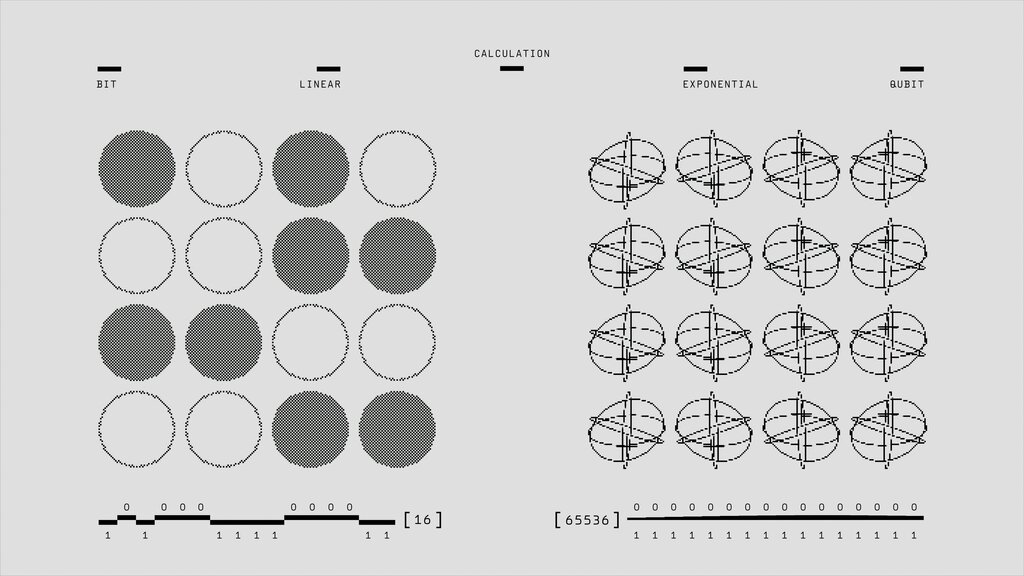
Your phone, your laptop, and even your smart watch are all classical computers. They work by manipulating bits, which are tiny switches that can be in one of two states: on or off, represented as 1 or 0. Every app you use, photo you take, and message you send is ultimately just a very long sequence of these ones and zeros.
Quantum computers are fundamentally different. They don't use bits; they use qubits. A qubit can be a 1 or a 0, just like a classical bit. But it can also be a combination of both at the same time. This strange property is called superposition, and it's the first key to understanding quantum computing.
Think of a spinning coin. While it's in the air, it's neither heads nor tails. It's in a superposition of both states. Only when it lands (when we measure it) does it settle into a definite state of heads or tails. A qubit is like that spinning coin.
Because a qubit can exist in this combination of states, a quantum computer with just a few qubits can explore a vast number of possibilities simultaneously. A classical computer has to check each possibility one by one. This ability to perform many calculations at once is what gives quantum computers their power.
Spooky Connections
The second key principle is entanglement. This is a counterintuitive phenomenon where two or more qubits become linked in a special way. Once entangled, their fates are intertwined. If you measure the state of one qubit, you instantly know the state of the other, no matter how far apart they are.
Albert Einstein famously called this "spooky action at a distance." If you have two entangled coins, and you flip one in New York and it lands on heads, you know its entangled partner in Tokyo instantly landed on tails, without even looking. This connection is faster than the speed of light, and it's a crucial resource for quantum algorithms.
Quantum entanglement is a fundamental resource for quantum computing as it involves the distribution of information in a fundamentally non-classical way.
These two principles, superposition and entanglement, allow quantum computers to solve certain types of problems that are practically impossible for classical computers. We represent the state of a qubit not just as 0 or 1, but as a linear combination of two basis states, written as and .
The Quantum Frontier
So, what can we do with this power? Quantum computers aren't going to replace your laptop for browsing the internet or writing emails. Instead, they are designed to tackle specific, incredibly complex problems.
Potential applications include:
- Drug Discovery: Simulating molecules to design new medicines.
- Materials Science: Creating new materials with desired properties, like better batteries or more efficient solar panels.
- Financial Modeling: Optimizing investment strategies and pricing complex financial instruments.
- Cryptography: Breaking current encryption standards, which also drives the development of new, quantum-resistant encryption.
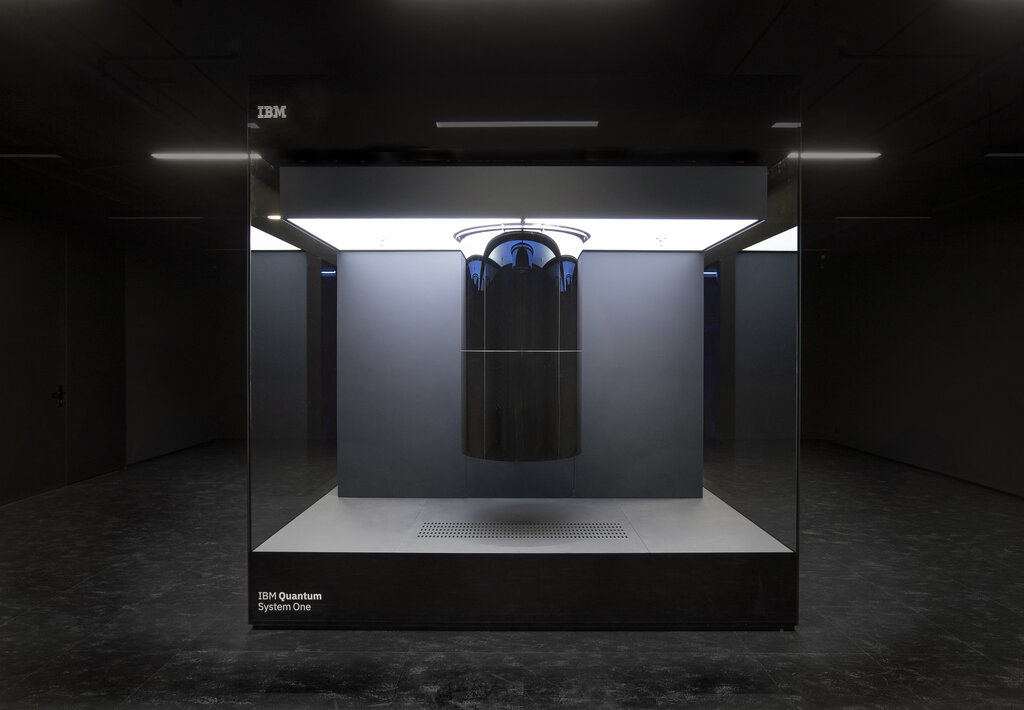
The field is still young. Building and controlling qubits is extremely difficult. They are fragile and easily disturbed by their environment, leading to errors in calculation. Today's quantum computers are known as "Noisy Intermediate-Scale Quantum" (NISQ) devices. They are powerful enough to do things classical computers can't, but they are not yet the perfectly error-corrected machines of the future.
Now, let's review the core ideas we've covered.
Ready to test your knowledge?
What is the fundamental unit of information in a quantum computer?
The ability of a qubit to represent a 0, a 1, and a combination of both at the same time is known as what?
As researchers continue to build larger and more stable quantum machines, we move closer to unlocking the full potential of this revolutionary technology.