Introduction to Quantum Computing
Introduction to Quantum Computing
Beyond Bits and Bytes
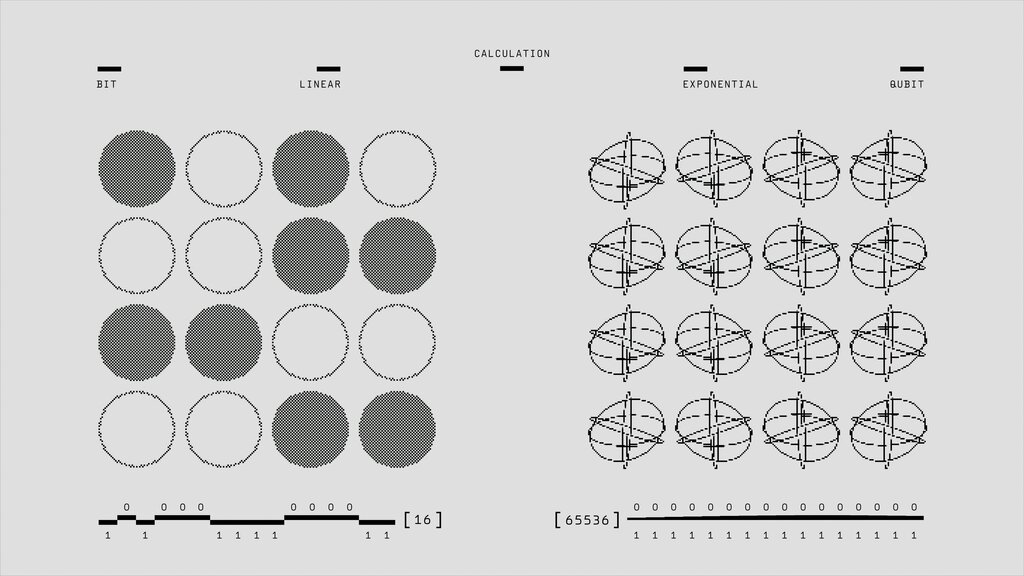
Classical computers, from your smartphone to the most powerful supercomputers, think in a very straightforward way. Everything is broken down into bits, which are tiny switches that can be either on or off. We represent these states as 1 (on) or 0 (off). This simple binary system is the foundation of all digital information.
Quantum computers operate on a completely different level. They use a new kind of information unit called a qubit. While a bit is forced to be either a 0 or a 1, a qubit can be a 0, a 1, or a blend of both at the same time.
qubit
noun
The basic unit of quantum information. It is the quantum analogue of the classical bit.
This ability to exist in multiple states at once is what gives quantum computing its incredible potential. It's like having a switch that can be on, off, and somewhere in between, all at the same time.
The Power of Superposition
The principle that allows a qubit to be both 0 and 1 simultaneously is called superposition. Think of a spinning coin. While it's in the air, it’s not definitively heads or tails—it’s a blur of both possibilities. Only when it lands (when we measure it) does it settle into a single state.
A qubit in superposition is like that spinning coin. It holds the potential for being a 0 and the potential for being a 1. We can represent this mathematically:
In this equation, represents the state of the qubit. The symbols and are probability amplitudes. When we measure the qubit, the probability of it collapsing to is , and the probability of it collapsing to is . The sum of these probabilities must equal 1.
Because a single qubit can represent multiple values, a quantum computer with just a few qubits can explore a vast number of possibilities at once. This parallel processing is what makes them so powerful for certain types of problems.
Superposition allows quantum computers to process a massive number of calculations simultaneously, far exceeding the capabilities of classical computers for specific tasks.
Spooky Connections
Another core concept is entanglement. This is a strange and powerful connection that can exist between two or more qubits. When qubits are entangled, their fates are linked, no matter how far apart they are.
Imagine you have two "magic" coins. You give one to a friend who travels to the other side of the world. You both flip your coins at the same time. If your coin lands on heads, you instantly know your friend's coin landed on tails. Entangled qubits behave in a similar way. Measuring the state of one qubit instantly influences the state of its entangled partner. Albert Einstein famously called this phenomenon "spooky action at a distance."
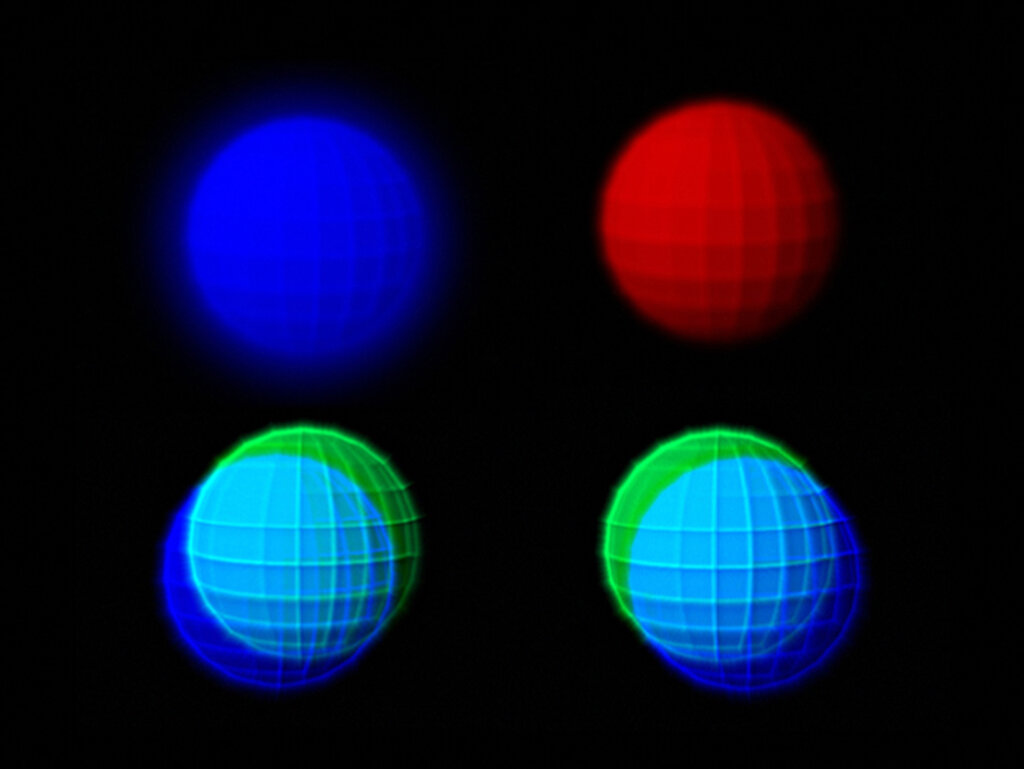
This link creates a single, complex quantum state for the entire system of entangled qubits. This property is crucial for many quantum algorithms, allowing for highly coordinated computations that aren't possible in classical systems.
Quantum entanglement is a fundamental resource for quantum computing as it involves the distribution of information in a fundamentally non-classical way.
Bits vs Qubits
The differences between classical and quantum computing all stem from the fundamental distinction between bits and qubits.
| Feature | Classical Bit | Qubit |
|---|---|---|
| State | Can be 0 or 1 | Can be 0, 1, or a superposition of both |
| Principle | Follows classical physics | Governed by quantum mechanics |
| Interconnection | Independent | Can be entangled with other qubits |
| Power | Linear growth (N bits = N values) | Exponential growth (N qubits = 2^N values) |
These quantum properties don't make classical computers obsolete. Instead, they open the door to solving specific, highly complex problems that are currently intractable, such as discovering new medicines, developing novel materials, and breaking complex codes. Understanding qubits, superposition, and entanglement is the first step toward grasping this computational revolution.
What is the fundamental difference between a classical bit and a quantum qubit?
The principle that allows a qubit to exist in a blend of both 0 and 1 states at the same time is called: