Introduction to Quantum Computing
Introduction to Quantum Computing
Beyond Bits and Bytes
For decades, computers have worked on a simple principle: bits. A bit is the smallest unit of data, and it can exist in one of two states: a 0 or a 1. Think of it like a light switch. It's either on or off. All the incredible things classical computers do, from streaming movies to running complex simulations, are built on billions of these simple on-or-off switches.
Quantum computing takes a completely different path. Instead of relying on definite states like on or off, it dives into the weird and wonderful world of quantum mechanics. Here, the rules of everyday physics don't quite apply. This new approach doesn't just make computers faster; it allows them to solve entirely new classes of problems that are impossible for even the most powerful supercomputers today.
The Quantum Bit
The fundamental building block of a quantum computer is the qubit. Like a classical bit, a qubit can be a 0 or a 1. But it can also be something else entirely: a combination of both 0 and 1 at the same time. This mind-bending property is called superposition.
qubit
noun
The basic unit of quantum information. A qubit can represent a 0, a 1, or a superposition of both states.
Imagine a spinning coin. While it's in the air, it's not quite heads and not quite tails. It's in a superposition of both possibilities. Only when it lands (or when we measure it) does it settle into a definite state of either heads or tails. A qubit behaves in a similar way. It exists in a spectrum of possibilities until you measure it, at which point its state “collapses” into either a 0 or a 1.
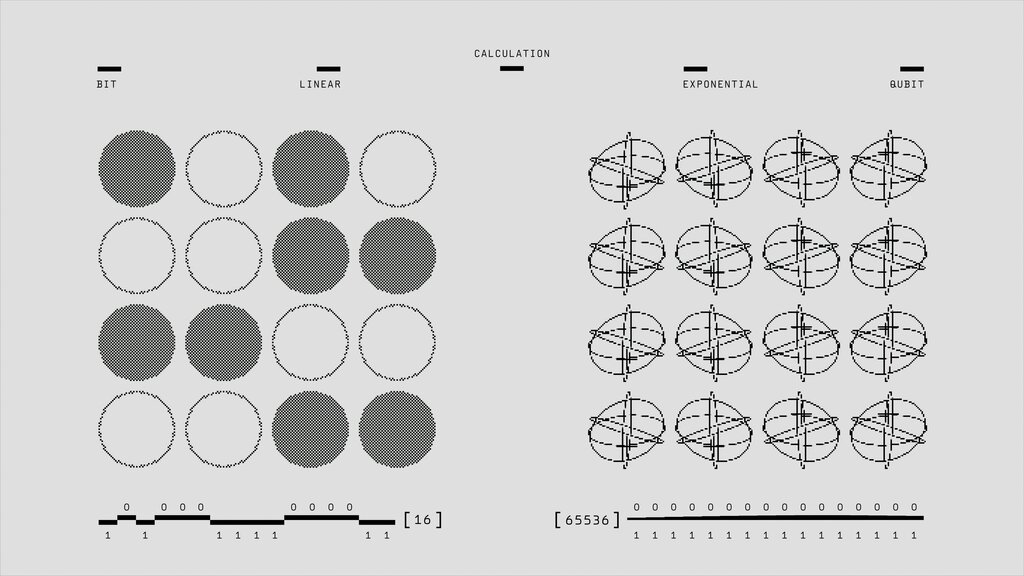
This ability to hold multiple values at once is what gives quantum computers their power. Two classical bits can store one of four possible combinations (00, 01, 10, 11) at any given time. But two qubits in superposition can represent all four of those combinations simultaneously. With just 300 qubits, a quantum computer could represent more values than there are atoms in the known universe. This allows them to explore a huge number of possibilities at the same time.
Spooky Connections
The other key principle of quantum computing is entanglement. This is a special connection that can exist between two or more qubits. When qubits are entangled, their fates are linked, no matter how far apart they are.
Think of two of our spinning coins, but this time they are magically linked. If you stop one coin and see that it landed on heads, you instantly know the other coin, even if it's on the other side of the planet, has landed on tails. Their outcomes are perfectly correlated. Albert Einstein famously called this phenomenon “spooky action at a distance.”
In an entangled system, the state of one qubit is not independent of the others. Measuring one instantly influences the state of its entangled partner.
Entanglement allows quantum computers to perform complex calculations and create powerful correlations between qubits. This interconnectedness is crucial for running quantum algorithms that can break modern encryption or discover new materials by simulating molecules in perfect detail.
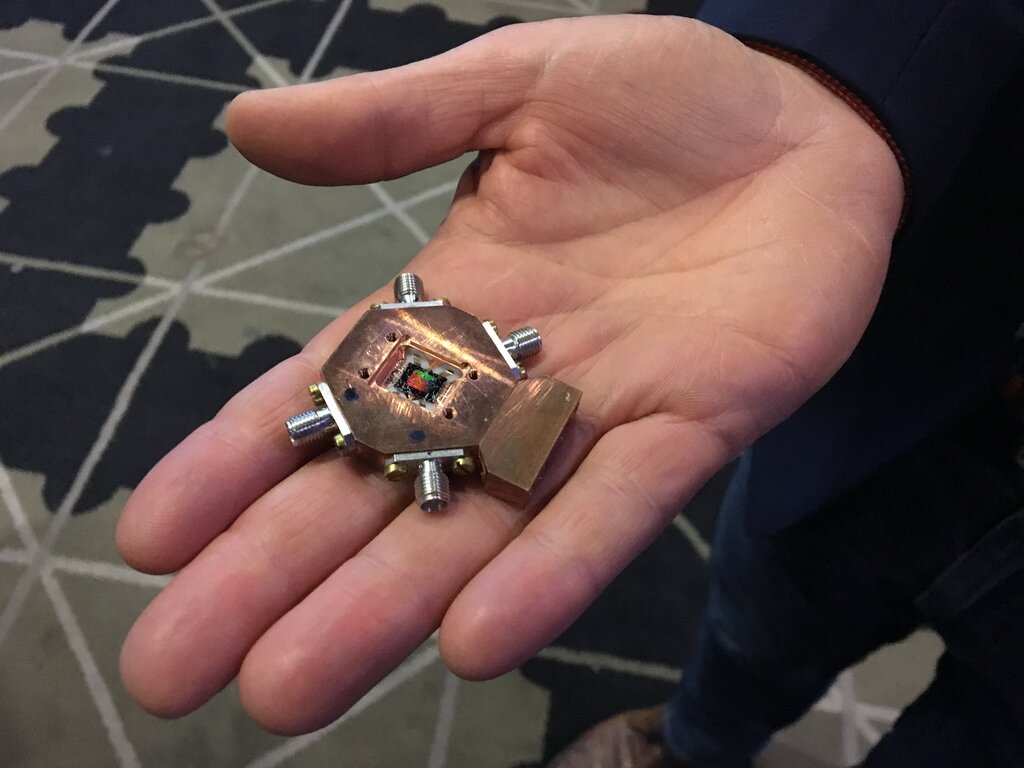
By harnessing superposition and entanglement, quantum computers aren't just doing what classical computers do, but faster. They are computing in a fundamentally new way, opening up frontiers in science, medicine, and technology that were previously unimaginable.