Introduction to Quantum Computing
Introduction to Quantum Computing
A Different Kind of Computer
Classical computers, from your smartphone to the most powerful supercomputers, work with bits. A bit is the smallest unit of data and has a simple job: to be either a 0 or a 1. It's a switch that's either off or on. This binary system is the foundation of all the software and digital media we use every day.
Quantum computers operate on a completely different set of rules, borrowed from the strange world of quantum mechanics. They aren't just faster versions of the computers we have now. They are a new type of tool designed to solve problems that are currently impossible for even the fastest classical machines.
Instead of bits, quantum computers use quantum bits, or qubits. This is where the magic begins.
| Feature | Classical Bit | Quantum Bit (Qubit) |
|---|---|---|
| Basic Unit | Bit | Qubit |
| Possible Values | 0 or 1 | 0, 1, or both at once |
| Governing Physics | Classical Physics | Quantum Mechanics |
The Power of the Qubit
A qubit can be a 0 or a 1, just like a classical bit. But it can also be in a combination of both states at the same time. This property is called superposition.
superposition
noun
The ability of a quantum system, such as a qubit, to be in multiple states simultaneously.
Think of a spinning coin. While it's in the air, it's neither heads nor tails—it's a blur of both possibilities. Only when it lands (when we measure it) does it settle into a definite state of either heads or tails. A qubit in superposition is like that spinning coin. It exists in a combination of 0 and 1 until a measurement forces it to "choose" one state.
Mathematically, we can describe the state of a qubit, written as , like this:
Here, and are complex numbers called probability amplitudes. The square of their magnitudes, and , gives the probability of the qubit collapsing to or upon measurement. The sum of these probabilities must always be 1, because the qubit has to be in one of the two states when measured.
This ability to exist in multiple states at once is what gives quantum computers their immense potential. With just a few qubits, you can represent an enormous number of possibilities simultaneously. For example, two classical bits can be in one of four possible combinations (00, 01, 10, or 11) at any given time. Two qubits in superposition can represent all four of those combinations at the same time.
Entanglement, A Spooky Connection
The other mind-bending principle that quantum computers rely on is entanglement. Albert Einstein famously called it "spooky action at a distance."
Entanglement is a special connection between two or more qubits. When qubits are entangled, their fates are linked, no matter how far apart they are. If you measure the state of one entangled qubit, you instantly know the state of the other. It's as if they are communicating faster than the speed of light, though no information is actually being sent in the classical sense.
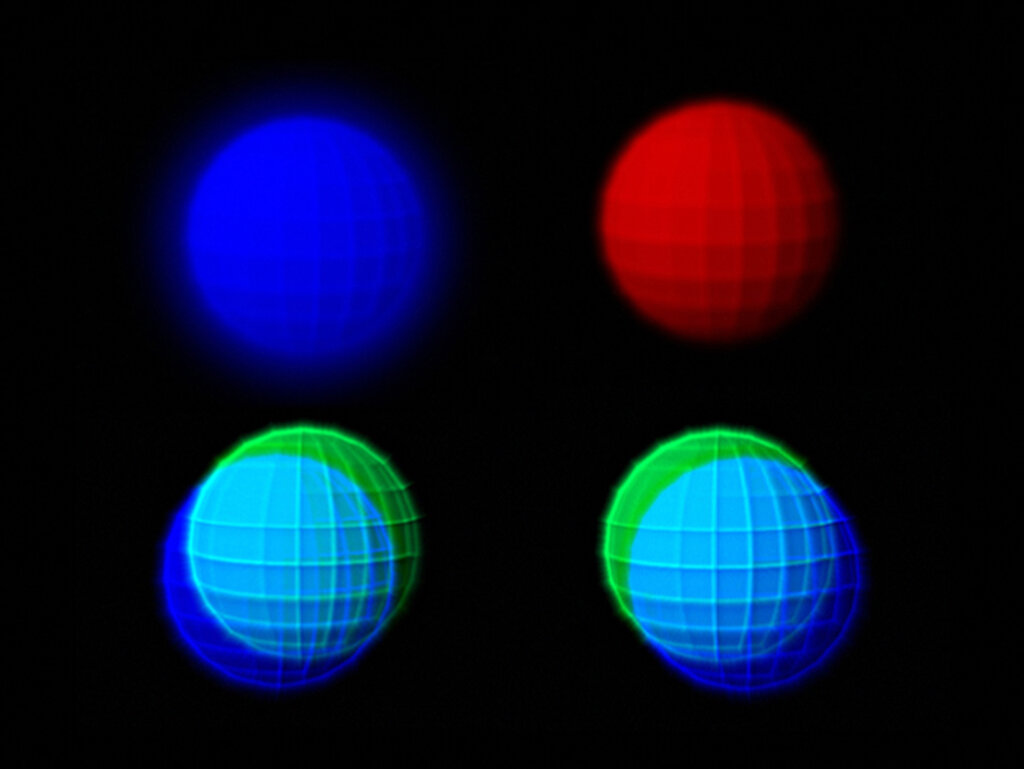
Imagine you have a pair of gloves, one left and one right. You put them into two separate boxes and mail one to a friend on the other side of the world. Before you open your box, you don't know which glove you have. But the moment you open it and see a left glove, you know instantly that your friend has the right one.
Entangled qubits work in a similar, but more profound, way. This deep correlation allows quantum computers to perform complex calculations and create powerful algorithms that are out of reach for classical computers.
Quantum entanglement is a fundamental resource for quantum computing as it involves the distribution of information in a fundamentally non-classical way.
What's the Point?
Quantum computers are not meant to replace your laptop. They won't be better at browsing the internet or writing emails. Instead, they are specialized machines designed to tackle specific kinds of problems that are computationally overwhelming for classical computers.
Potential applications include:
- Drug Discovery and Materials Science: Simulating molecules and materials at the quantum level could lead to the design of new medicines and novel materials with incredible properties.
- Financial Modeling: Optimizing investment strategies and pricing financial derivatives are complex problems that quantum computers could solve more efficiently.
- Cryptography: While quantum computers could break many current encryption methods, they also enable the creation of new, ultra-secure communication methods through quantum cryptography.
- Artificial Intelligence: Quantum machine learning could enhance AI by processing vast datasets and training models in new ways.
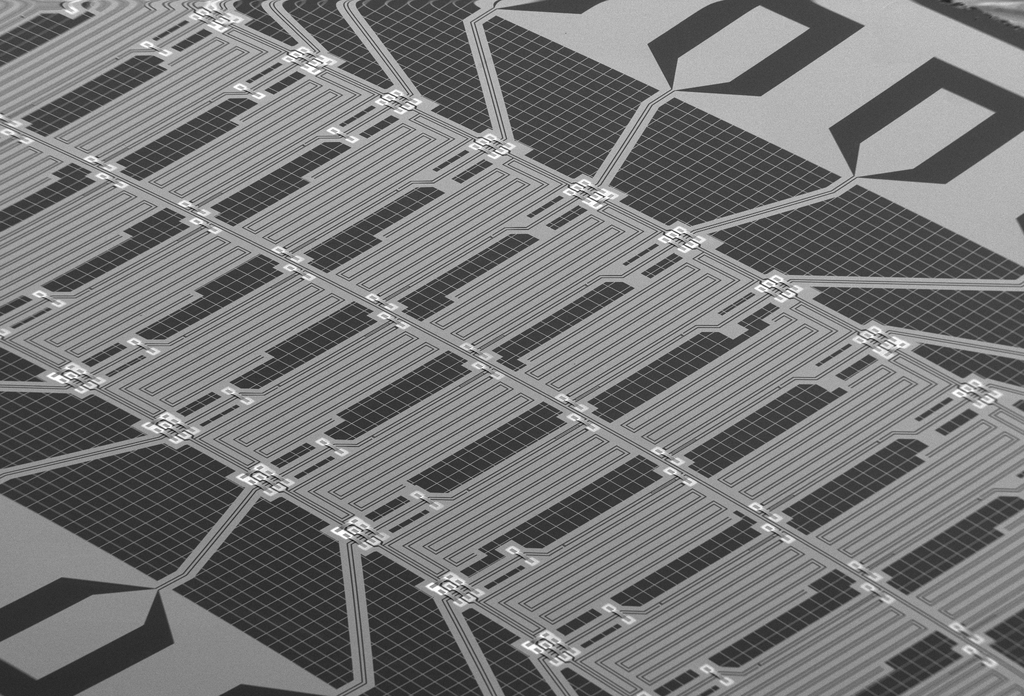
The field is still in its early days, much like classical computing was in the 1950s. But the principles of superposition and entanglement provide a foundation for a completely new way of processing information, opening doors to discoveries we can't yet imagine.
Let's check your understanding of these core concepts.
What is the fundamental unit of data in a quantum computer?
The principle that allows a qubit to exist in a combination of both 0 and 1 states at the same time is called:
By harnessing the principles of quantum mechanics, these machines offer a new path for computation and problem-solving.